
Last updated September 20, 2026
Free on-site gate assessment - hinges, posts, and your LiftMaster or Nice gate operator checked before anything is quoted
The assessment is free and the quote is the invoice.

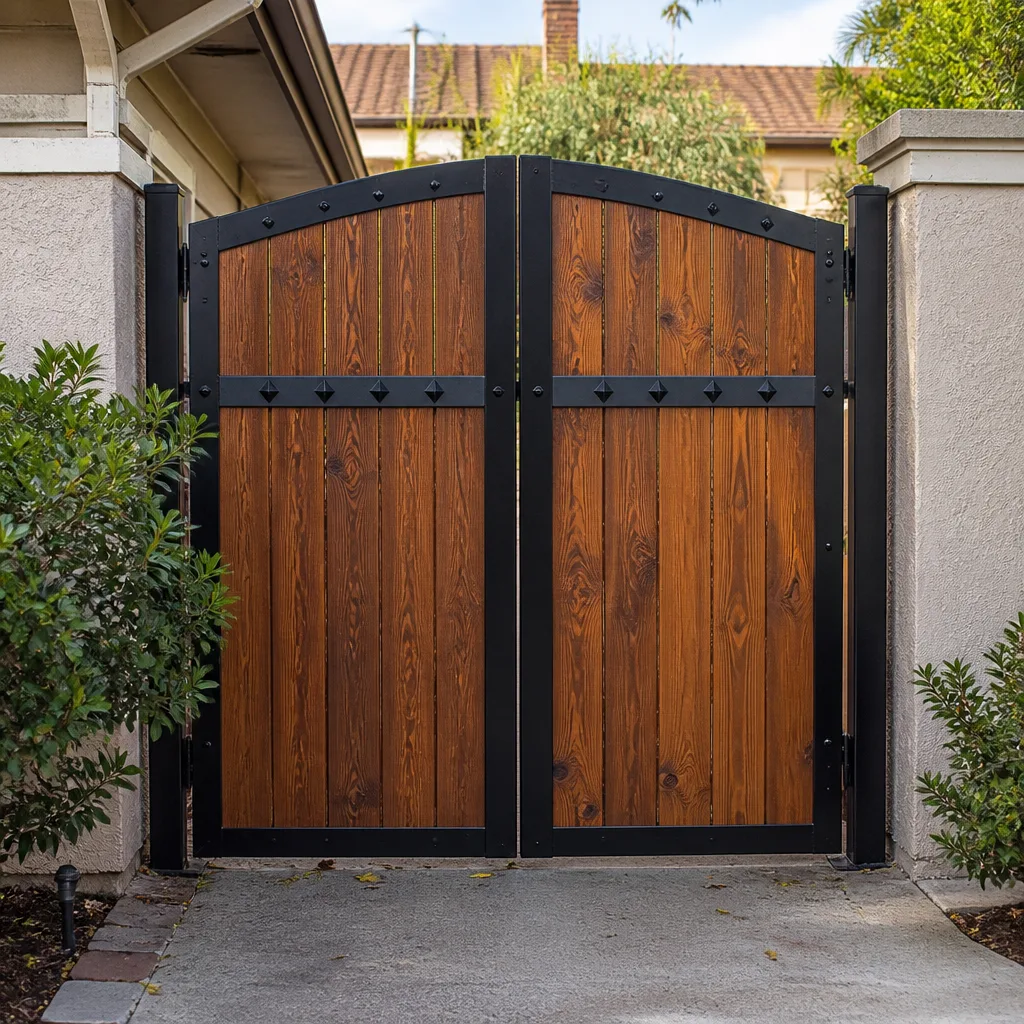

 Before
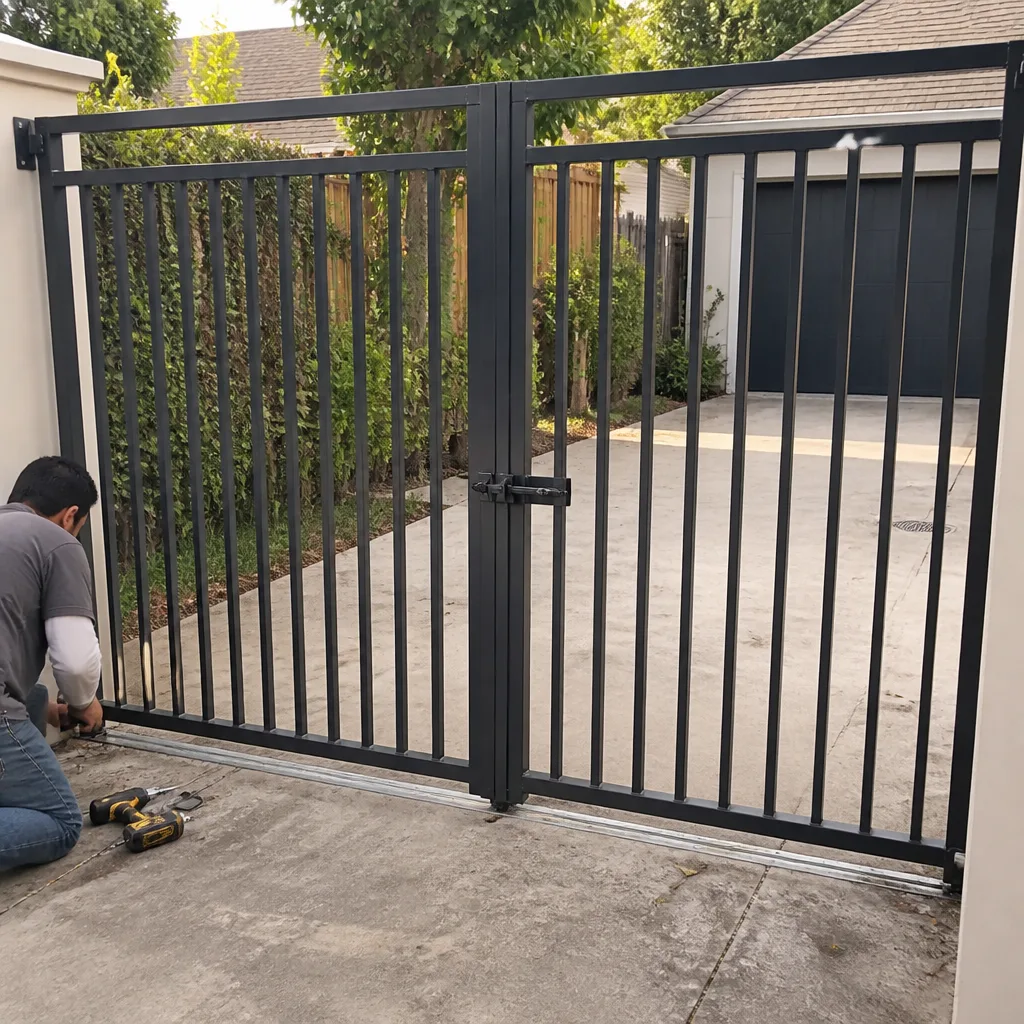 After
After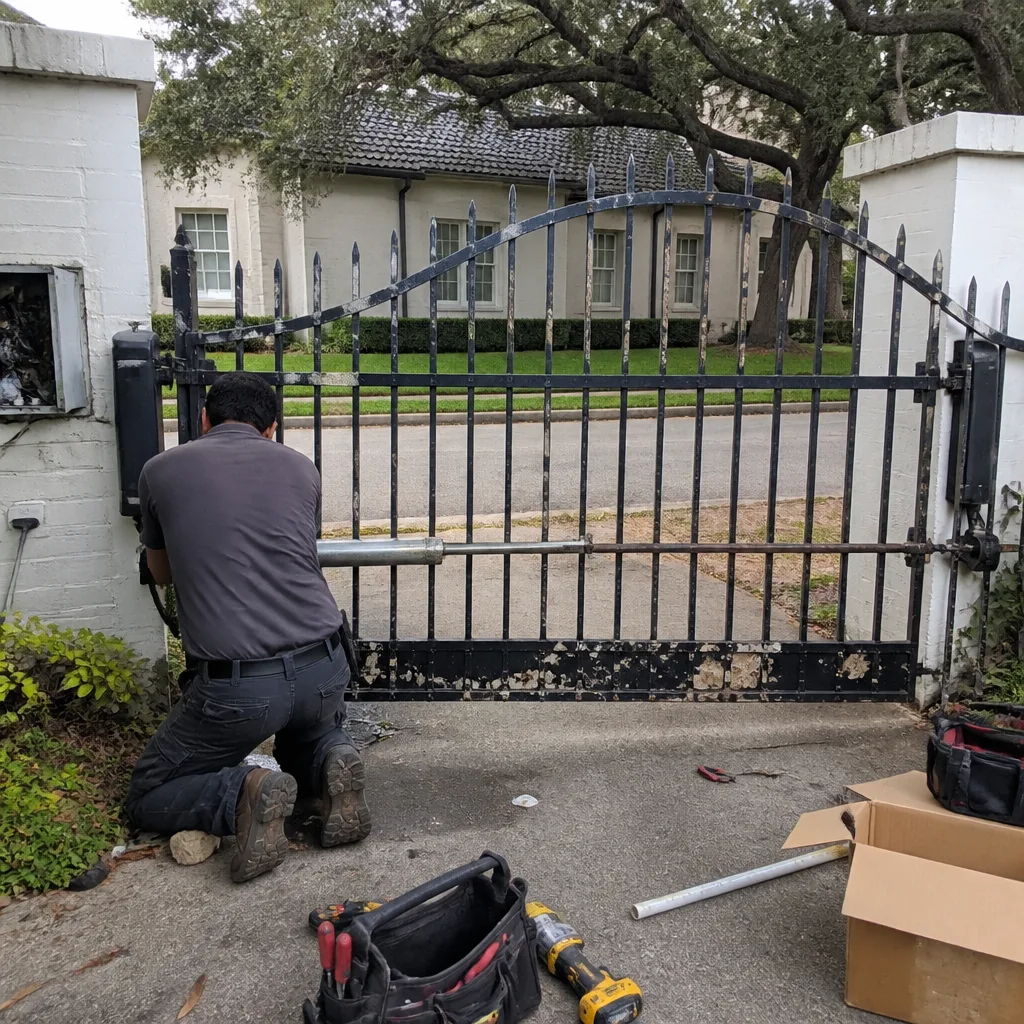 Before
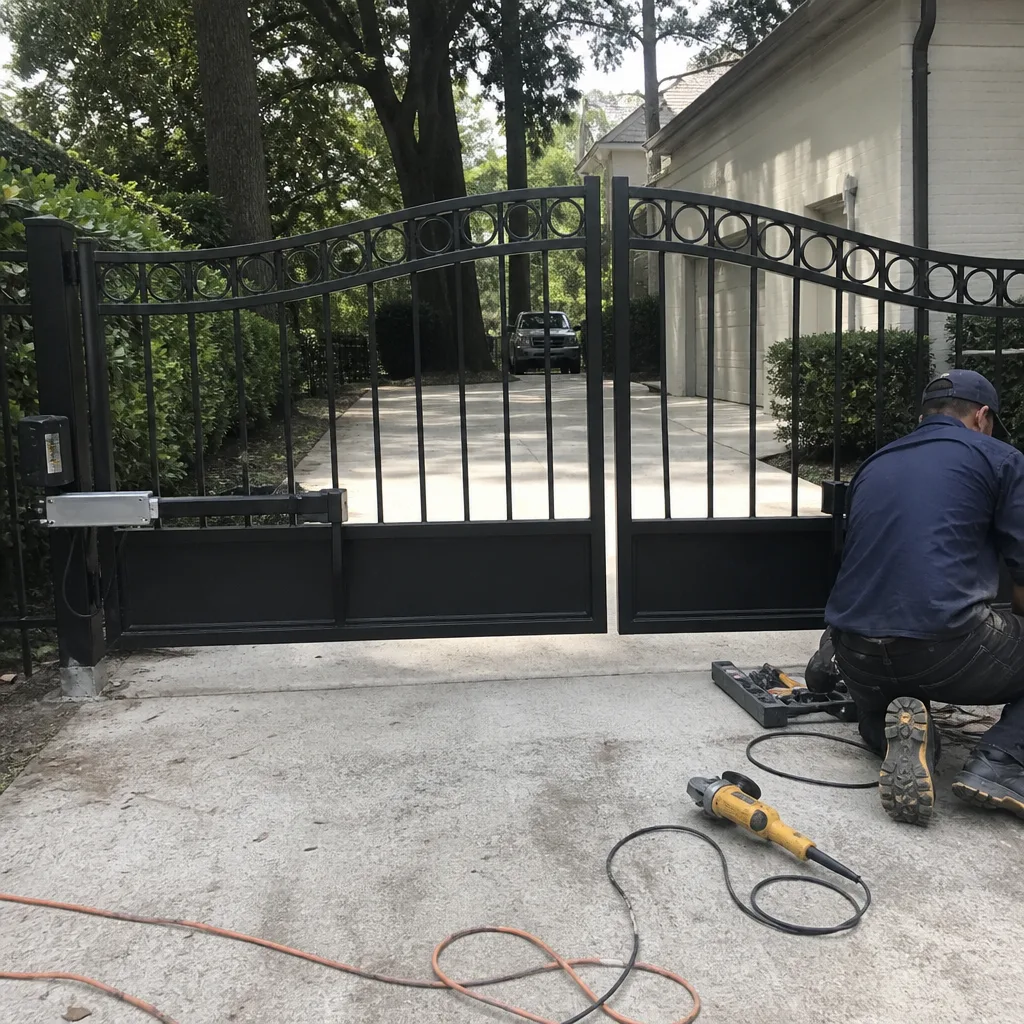 After
After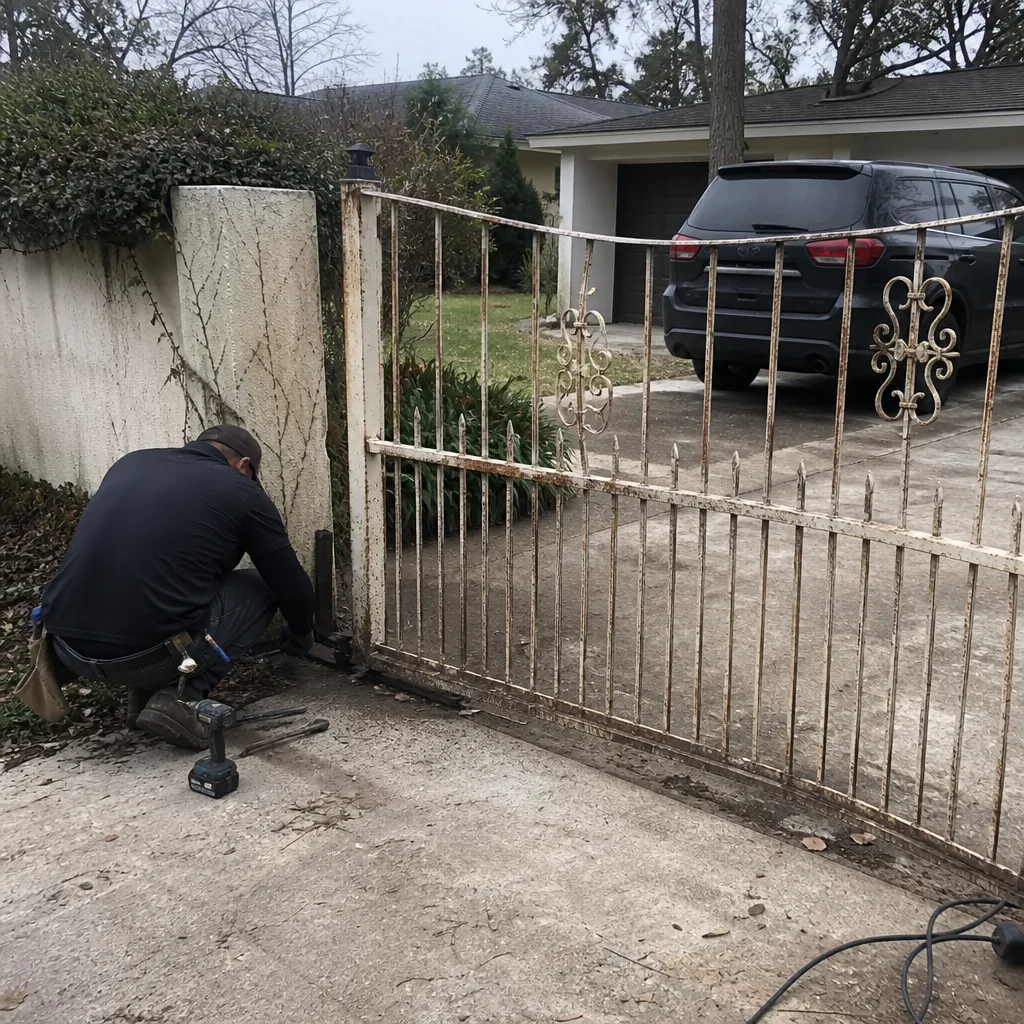 Before
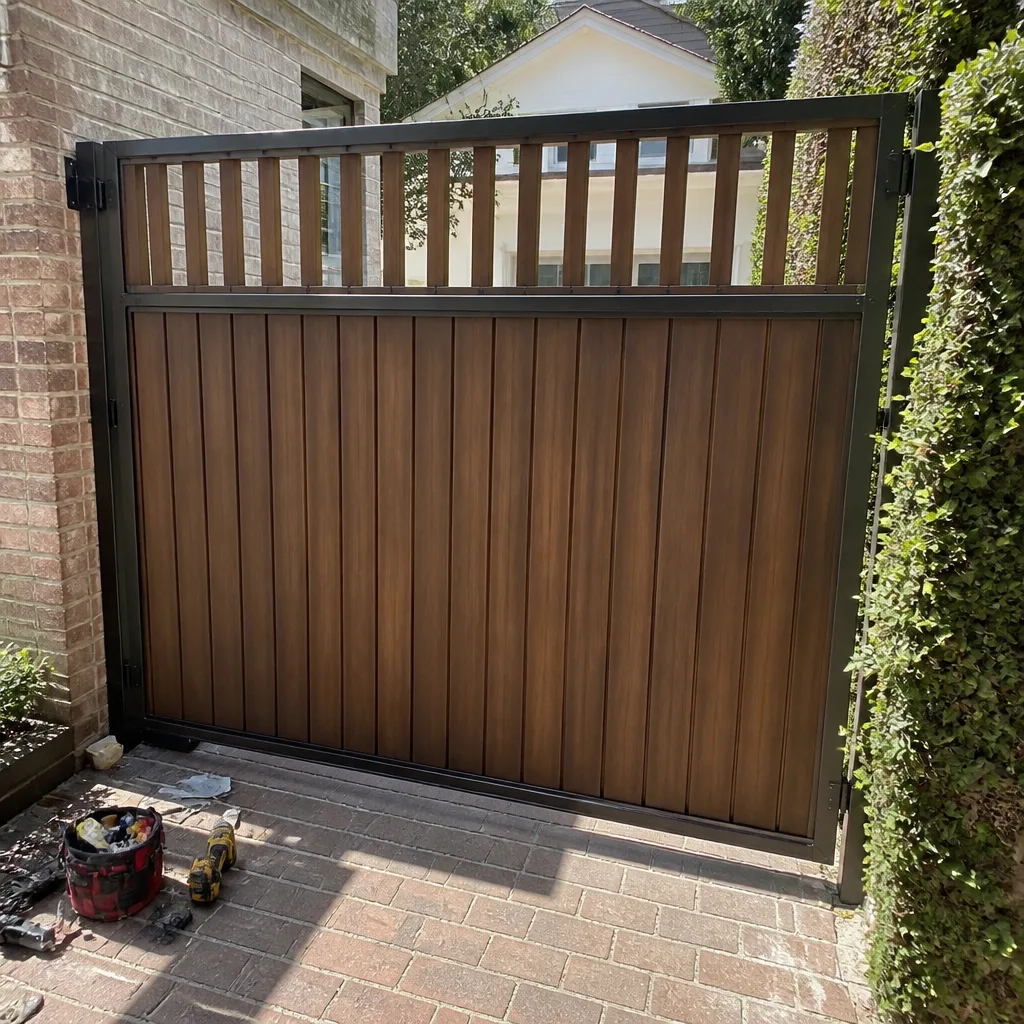 After
AfterThe Complete Guide to Gate Repair in West University Place
Most gate calls in West University Place get misdiagnosed at the first visit. Not because the technician is incompetent, but because the symptom, “gate won’t open,” can trace back to six different root causes across three different systems. A sagging hinge, a failed capacitor, and a misaligned photo-eye all present nearly identical symptoms to a homeowner. This Gate Repair guide maps exactly which problems belong to which discipline: metalwork, low-voltage electrical, and access-control logic. You’ll learn how to identify the failure layer before calling anyone, what a complete repair record should contain, and why West University Place lot sizes and HOA setback rules quietly determine which gate configurations are even legal on your street.
Quick Answer
Gate repair in West University Place typically costs $145 to $1,850 depending on whether the failure is mechanical (hinges, welds, rollers), electrical (motor, capacitor, wiring), or logic-based (limit switches, photo-eyes, control board). Most common repairs are completed the same day. The single most important step is identifying which of the three systems failed before calling a specialist, because a general handyman, an electrician, and a gate technician are three different skill sets that only overlap on roughly a third of the work-something we explore in depth in our DIY vs Professional Gate Repair: The West University Place Homeowner’s Decision Guide.
Table of Contents
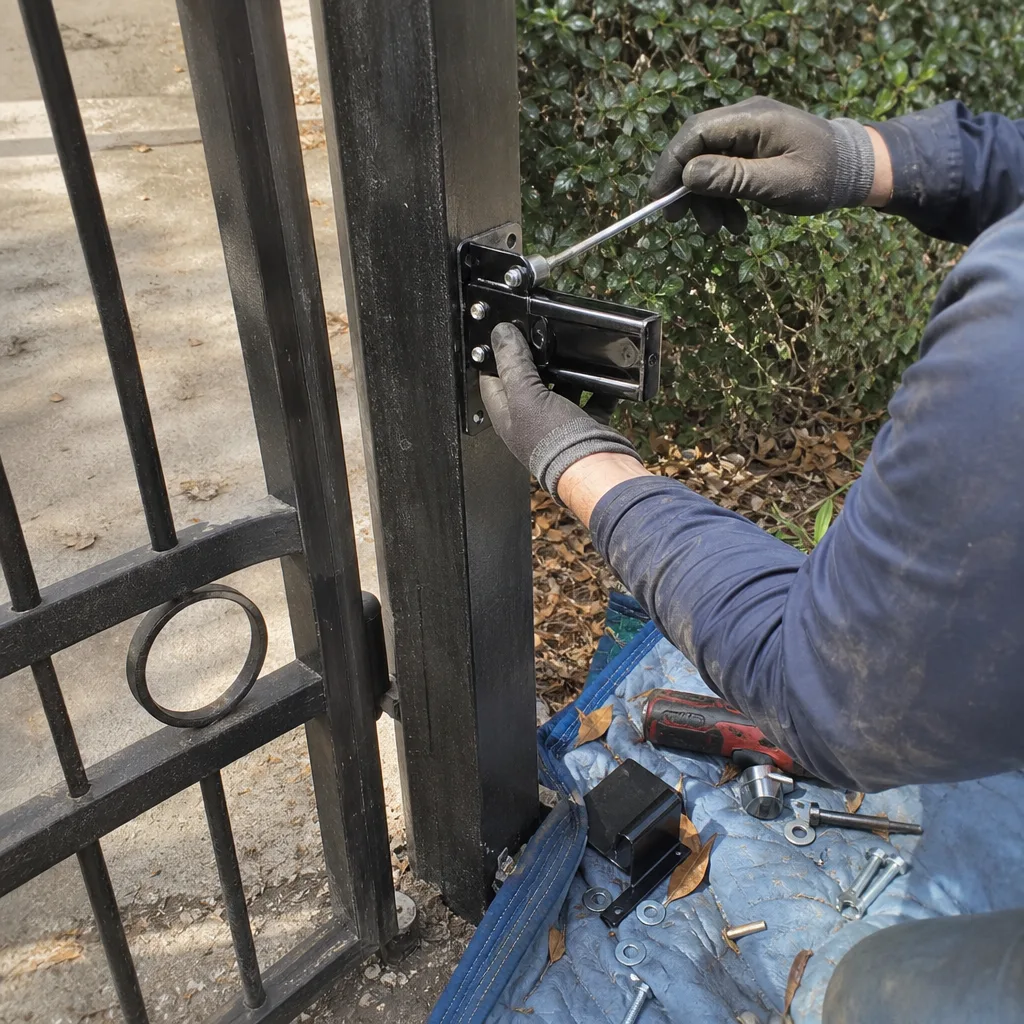
- The Three Disciplines of Gate Repair
- How to Identify the Failure Layer Before Calling Anyone
- Why West University Place Lot Sizes and Setback Rules Affect Gate Work
- Gate Technician vs. Electrician vs. Access-Control Integrator
- What a Complete Repair Record Should Contain
- Repair Paths for the Three Main Gate Types in West University Place
- What Gate Repair Costs in West University Place
- Common Mistakes to Avoid
- When to Call a Professional
- Frequently Asked Questions
- The Bottom Line
BeforeAfterThe Three Disciplines of Gate Repair
Gate repair in West University Place is not one trade. It’s three overlapping disciplines, and most of the frustration homeowners experience comes from hiring someone who only practices one of them.
1. Metalwork: The Mechanical Layer
This is the gate itself: hinges, posts, welds, rollers, track, wheels, and the physical structure that carries weight. A gate that scrapes the driveway, leans to one side, or won’t latch is usually a metalwork problem. In West University Place, where many homes were built between the 1930s and 1960s, original steel gate posts have spent decades in Houston clay soil that expands and contracts with every wet-dry cycle. Posts shift. Hinges bind. Welds crack at the stress point where the gate leaf meets the hinge barrel.
Metalwork failures are diagnosed by feel and sight: does the gate swing freely when the operator is disconnected? Is there a visible gap between the hinge pin and the hinge barrel? Does the gate contact the ground at any point in its travel? These are mechanical questions with mechanical answers.
2. Low-Voltage Electrical: The Power and Motor Layer
The motor, the capacitor, the wiring from the transformer to the control board, and the power supply all belong to the electrical layer. These systems run on 12V or 24V DC in most residential operators, which means they’re low-voltage and generally safe to inspect, but the failure modes are still electrical: a capacitor that’s drifted out of spec, a corroded terminal on the control board, a transformer that’s outputting 19 volts instead of 24.
In West University Place’s humidity, electrical failures have a specific fingerprint. Corrosion on terminals and connector pins is common. We see boards that look fine from the top but have green oxidation on the underside where condensation collects. The electrical layer is where the brand matters: a LiftMaster control board and a FAAC control board do not swap. The motor’s torque curve, the limit-switch logic, and the learning routine are all brand-specific.
3. Access-Control Logic: The “Brain” Layer
This is where the system decides whether to open or not: the control board’s programming, the limit switches that tell the motor where to stop, the photo-eyes that tell it not to crush a car, the keypad, the remote receivers, and the intercom or vehicle-detection loop if one exists. The logic layer is the least understood and most commonly misdiagnosed part of residential gate systems.
A gate that opens halfway and reverses is not a motor problem. It’s a limit-switch or force-setting problem. A gate that won’t close at all is often a photo-eye alignment issue, not a board failure. The logic layer requires a technician who thinks in terms of inputs and outputs: what signal is the board receiving, and what command is it sending in response?
Most general handymen can weld. Most electricians can wire. Neither group typically carries the diagnostic tools or training to read a control board’s error codes and interpret limit-switch behavior. That’s the gap this guide is designed to close.
How to Identify the Failure Layer Before Calling Anyone
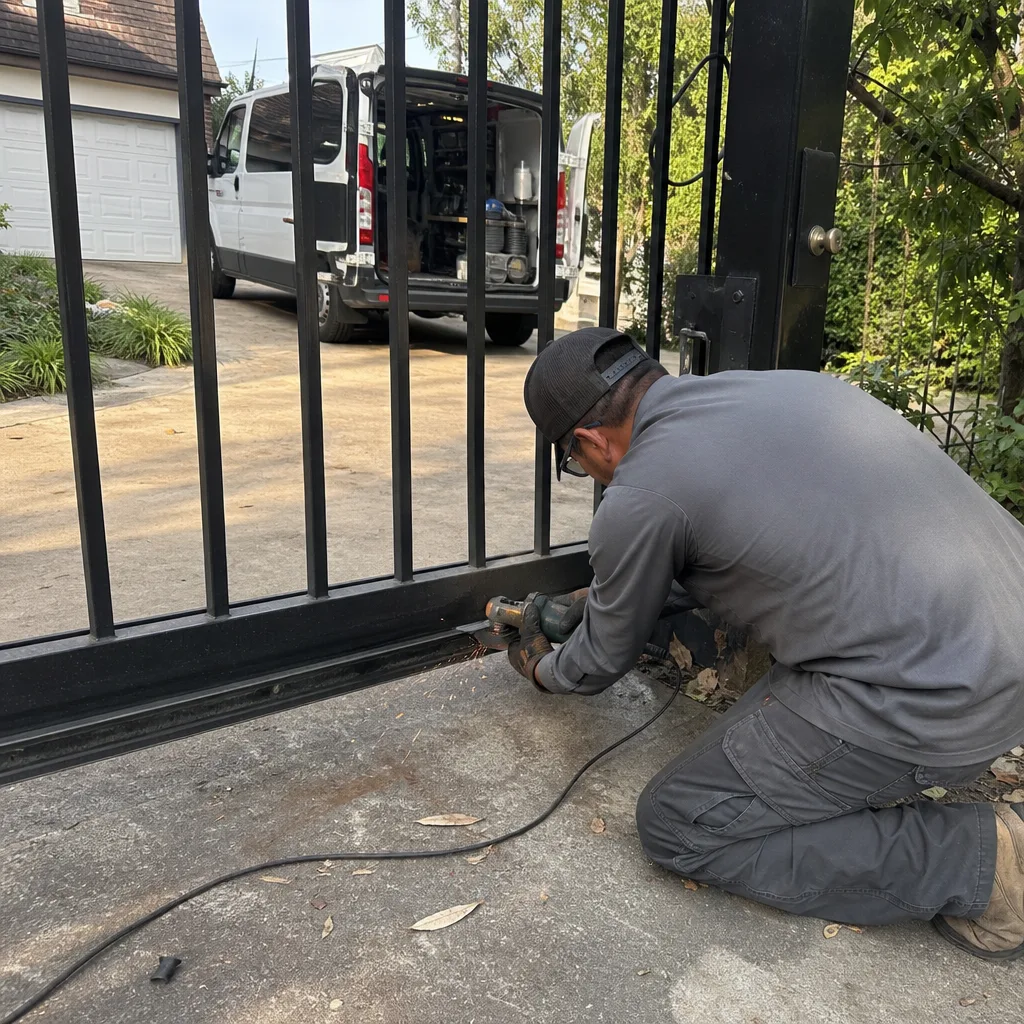
You don’t need any tools to narrow down which of the three systems has failed. You need to ask the gate specific questions and watch how it answers. This ten-minute diagnostic sequence will tell you which discipline to call.
The Disconnect Test
- Locate the manual release. Every automatic gate has one: a pull handle, a keyed release, or a T-handle that disconnects the operator from the gate leaf.
- Disengage the operator. Pull the release and manually swing or slide the gate through its full travel.
- Observe how the gate moves by hand. If it’s stiff, scraping, binding, or takes real muscle to move, you have a mechanical or metalwork problem. Call a gate technician who welds and works on gate hardware, not an electrician.
- If the gate moves freely by hand, the structure is fine. The problem is in the electrical or logic layer. Reconnect the operator and watch what happens when you trigger it.
The Symptom Map
- Gate does nothing when you press the remote or keypad: power supply, transformer, control board, or receiver failure. This is electrical or logic. Not mechanical.
- Gate hums but doesn’t move: capacitor failure or motor start circuit. Electrical. The motor is trying to turn but can’t start. A failing capacitor is the most common cause in our experience, and it’s a $45 to $90 part.
- Gate opens but won’t close: photo-eye misalignment or obstruction, force-sensitivity setting too low, or a failing edge sensor. Logic layer. The board thinks something is in the way.
- Gate opens halfway and reverses: limit switch travel setting wrong, obstruction detected by force-sensitivity circuit, or the gate is binding at the halfway point and the motor’s force sensor is triggering. Could be mechanical or logic. This is the single most misdiagnosed symptom we see because both causes look identical to the homeowner.
- Gate scrapes the ground or the post: hinge wear, post lean, or wheel/track wear. Mechanical.
- Gate slams when it closes: hydraulic cylinder low on fluid, limit switch set short, or motor brake failure. Depending on the operator type, this is logic or mechanical. A slamming gate is a safety hazard and should be addressed immediately.
Write down exactly what you observed before you call anyone. “Gate opens halfway and reverses” is a much more useful starting point than “gate is broken,” and a technician who knows the trade will want to hear the specific symptom pattern.
Why West University Place Lot Sizes and Setback Rules Affect Gate Work
West University Place is not Houston. The city has its own building codes, its own permitting process, and HOA deed restrictions that are older and stricter than most of the surrounding metro. This affects gate work in ways that national gate companies and out-of-area contractors routinely miss.
Most lots in West University Place are 50 to 60 feet wide, with the house set back 20 to 30 feet from the street. That leaves a driveway approach that’s shorter than the typical suburban Houston lot. On a 50-foot lot, a sliding gate often doesn’t have enough setback rail to slide fully open without the gate leaf overhanging the driveway or the sidewalk. We’ve seen homeowners buy slide-gate kits online, install them, and only then discover that the gate can’t fully retract within the property line. The city requires that a sliding gate never extend beyond the property line when open, and most West U lots physically can’t accommodate a single-piece slide gate that does this.
For that reason, swing gates dominate in West University Place. Single swing gates are the most common because dual swing gates require two operators, two sets of hinges, and double the logic coordination. On a narrow lot with a short driveway, a dual swing gate also reduces the effective driveway width during the open cycle, which can conflict with HOA requirements that driveways remain usable for two vehicles side by side.
Setback rules also limit the gate’s height and style. Many West University Place HOAs restrict front-yard structures to 6 feet in height, and some historic-district overlays restrict gate materials to match the original architectural style of the home. A wrought-iron gate that looks right on a 1930s brick Tudor may violate a specific HOA guideline on a 1950s ranch, even if the city code allows it.
Before you spend money on a gate repair that’s substantial enough to count as a structural change, check two things: the city’s current setback ordinance for driveway gates, and your HOA’s deed restrictions if your street has them. A good gate company will ask about both before quoting. If they don’t ask, they don’t know the area.
Gate Technician vs. Electrician vs. Access-Control Integrator
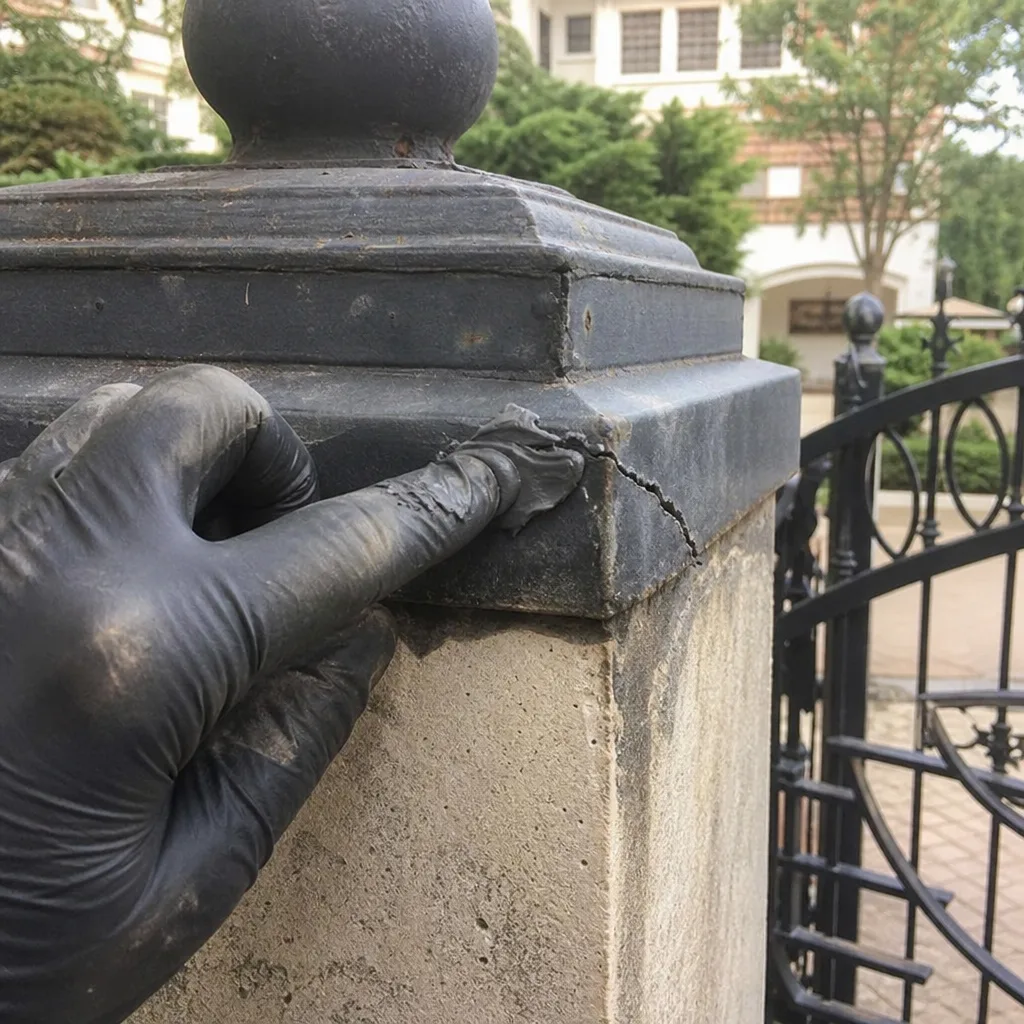
There is a real and persistent confusion about who actually fixes a broken automatic gate. Here’s the honest breakdown of what each trade can and cannot do, based on the way the work is actually divided in West University Place.
What a Gate Technician Does
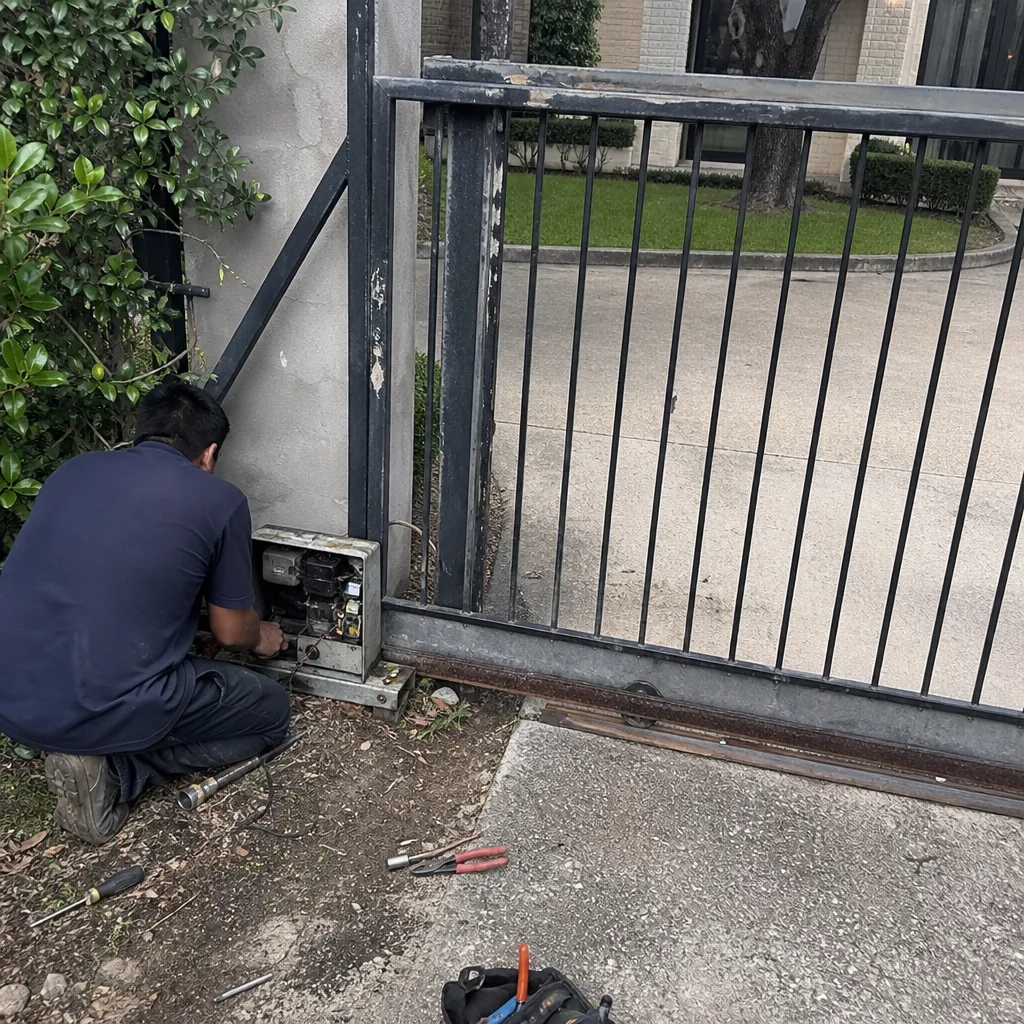
A gate technician handles the physical gate and the operator system that moves it. That includes welding, hinge and post work, roller and track repair, installing or replacing the operator arm or slide motor, setting limit switches, aligning photo-eyes, programming remotes, and diagnosing control-board behavior. A good gate technician is competent in all three layers: metalwork, electrical, and logic.
What an Electrician Does
A residential electrician handles line-voltage AC power: the circuit that feeds the gate’s transformer. If the outlet that powers the gate has a GFCI that keeps tripping, or the conduit running to the gate post is cracked and water is getting in, an electrician is the right call. Most electricians will not work on the gate motor itself, the control board, or the operator logic, and they shouldn’t be expected to. The exception is running new power to a gate location where none exists, which requires pulling wire inside conduit from the house panel to the gate post. That’s line-voltage work and it belongs to a licensed electrician.
What an Access-Control Integrator Does
An access-control integrator designs and installs the entry system: keypads, card readers, intercoms, vehicle-detection loops, telephone-entry systems, and multi-gate logic for properties with more than one controlled entry point. This is a commercial discipline that rarely applies to a single-family home in West University Place, but it does apply when the gate is on a shared driveway, a multi-home compound, or a property with a separate pedestrian gate tied to the same system. Adrian Vance started in commercial access-control work in 2014, and that experience is why Vance Gate Repair writes wiring diagrams and documents limit-switch settings on residential jobs.
The common thread: when a job involves structural metalwork plus low-voltage electrical plus control logic, you need all three skill sets on the same job. Most companies have one or two. Ask the company you’re considering: who handles the weld repair if a hinge is cracked, who diagnoses the board, and who documents the settings when the job is done?
What a Complete Repair Record Should Contain
This is the section most guides skip, and it’s the one that saves West University Place homeowners the most money over the lifetime of a gate. A gate is not a one-and-done appliance. It’s a mechanical system that gets serviced over years, and the single biggest source of repeat cost is lost information. A homeowner pays $285 to have a limit switch adjusted. Two years later the gate fails for the same reason, and a different technician charges another $250 to make the same adjustment because nobody wrote down what was done the first time.
Here’s what a real repair record should contain, every time, on every job.
- A written scope of work. What was diagnosed, what was repaired or replaced, and what was not touched. This should be in plain English, not trade shorthand.
- The exact part numbers. Not “a new control board.” Which board: brand, model, revision. If the part fails again in three years, the next technician can order the right replacement in one call instead of spending an hour on visual identification.
- Limit-switch readings. Where the gate was set to stop in both directions, measured in inches or degrees. This is the setting that gets bumped, drifted, or reset by power surges, and it’s the first thing a good technician checks on a gate that opens too far or not far enough.
- Photographs of the work. Photos of the control board before and after, photos of the wiring connections, photos of the limit-switch position, photos of the finished weld or hinge. A photo takes 30 seconds and can save a $150 diagnostic charge on every future visit.
- Voltage and current readings. What the transformer was outputting, what the board was drawing, and what the motor was pulling under load. These numbers are the electrical fingerprint of the system, and they change before failures happen.
Under the Haven Standard, every Vance Gate Repair visit includes a documented photo record and a written record of every part number installed. This is not an upsell. It’s the difference between a gate system that gets cheaper to maintain over time and one that costs the same $200 to $400 every time it hiccups because no one can see what the last person did.
Verbal-only work creates repeat costs. If your gate company hands you a receipt that says “gate repair: $280” and nothing else, you didn’t get documentation. You got a bill.
Repair Paths for the Three Main Gate Types in West University Place
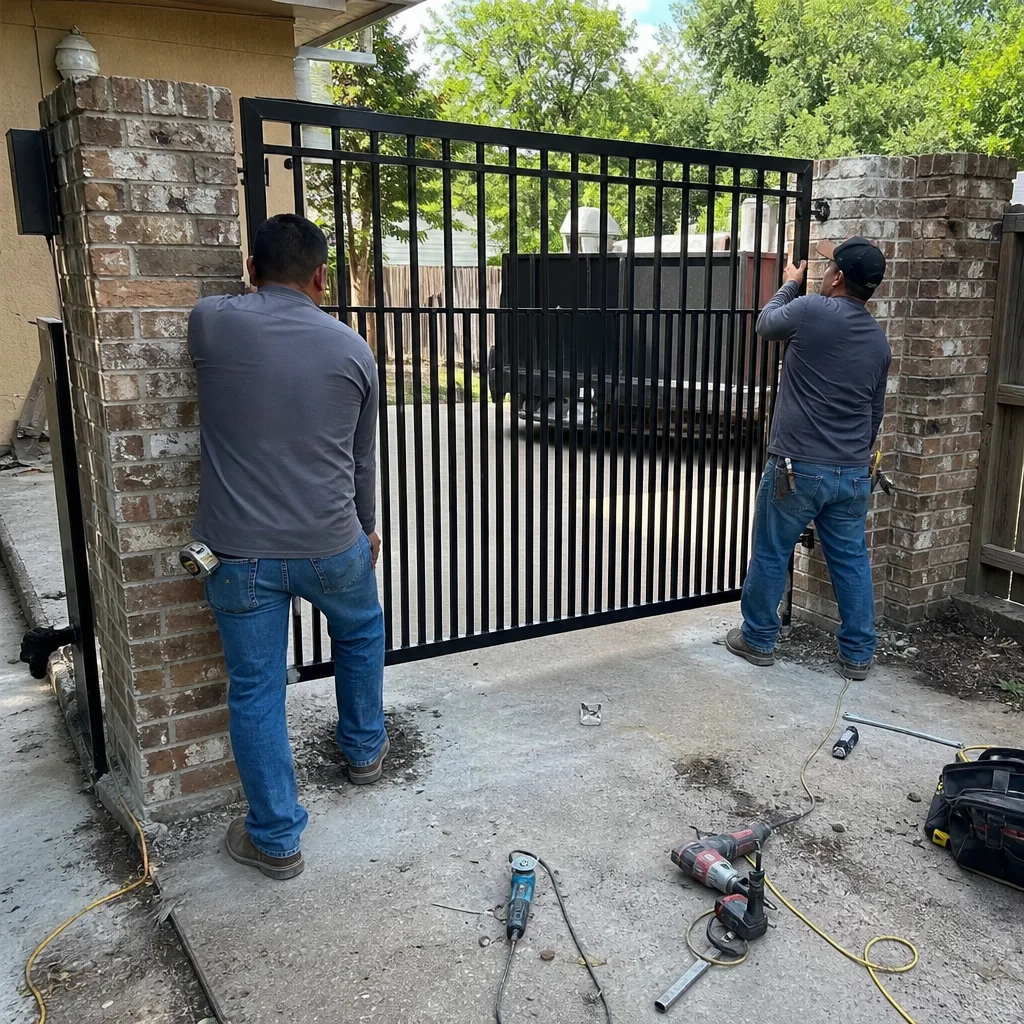
West University Place sees three gate configurations dominate the residential market: single swing, dual swing, and slide. Each has its own failure fingerprint and its own typical repair path. Here’s what we actually see, in order of prevalence.
Single Swing Gates
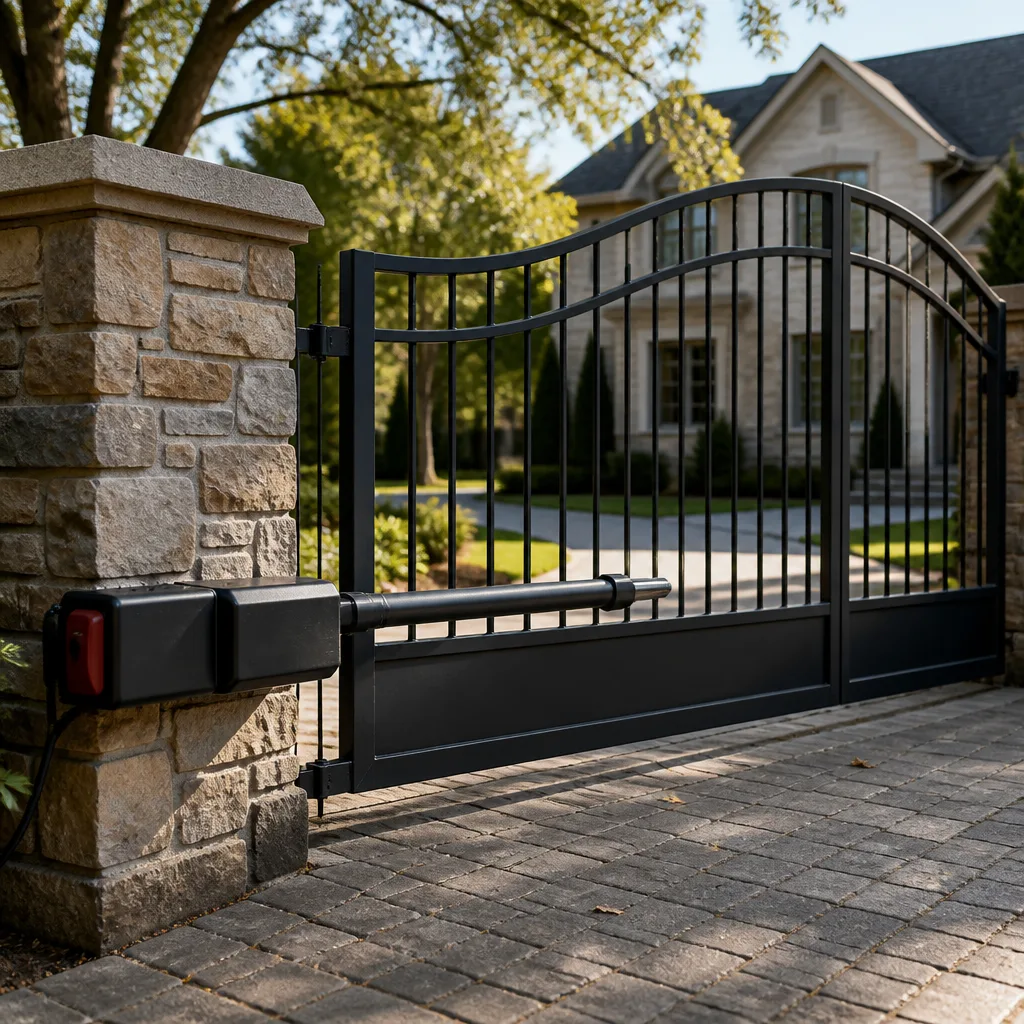
The workhorse of West U driveways. A single leaf, roughly 12 to 16 feet wide, pivoting on a post or pillar. These gates are simple, which is why they last, but they concentrate all their stress on two points: the bottom hinge and the post.
The most common repair on a single swing gate in West University Place is hinge wear. A 16-foot gate leaf weighing 300 to 500 pounds exerts constant lever force on the hinge barrel. Over ten years of wet-dry Houston clay shifting the post, the leaf drops. The gate starts scraping at the latch end. The fix is usually a hinge rebuild or replacement, sometimes a post re-set if the post has moved more than a quarter inch out of plumb. We see this on gates that are 8 to 15 years old, which is the typical lifespan of a steel gate post in this soil.
The second most common repair: operator arm failure. The linear arm or articulated arm that pushes the gate open wears at its pivot joints, or the internal gear train strips. A LiftMaster or FAAC swing operator typically costs $650 to $1,400 to replace depending on brand and whether the arm bracket needs refabrication.
Dual Swing Gates
Two leaves that meet in the middle, each with its own operator or a single operator with a mechanical linkage. Dual gates are more common on wider driveways, and they introduce a failure mode that single gates don’t have: synchronization. If one operator’s limit switch is off by even a few degrees, the leaves don’t close evenly. The gate looks lopsided, the latch doesn’t engage, and the force-sensitivity circuit may trigger a reverse because one leaf is binding against the other.
Dual swing gate repair in West University Place takes longer and costs more than single swing work because every diagnosis has to consider both operators. A dual swing gate with a BFT or Linear system that’s lost synchronization typically requires resetting both limit switches, re-learning the travel path, and then testing the photo-eye alignment across the full width of the opening. That’s a 90-minute to 3-hour job depending on the system’s age and whether the control board still responds predictably.
Slide Gates
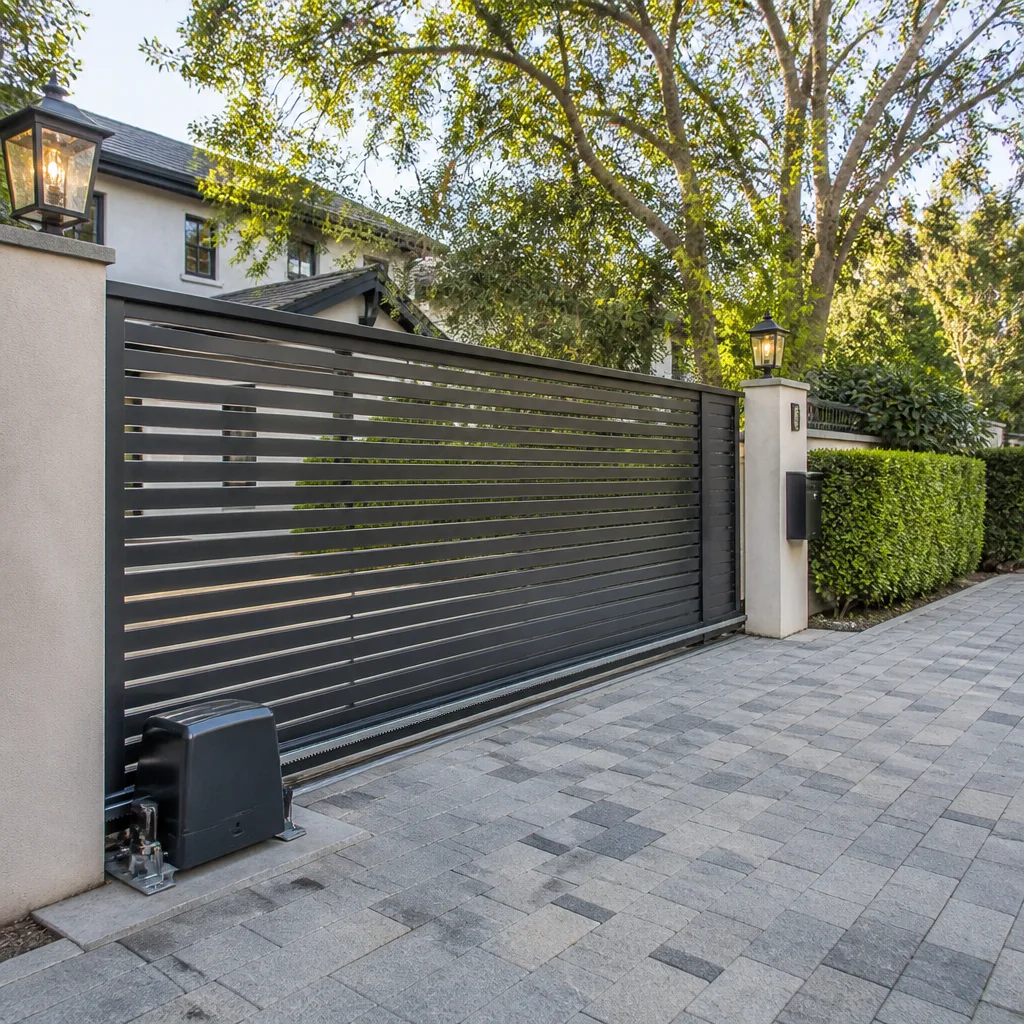
Slide gates are the minority in West University Place because of the setback issue described earlier, but they exist, usually on wider lots or properties with long side-yard runs. Slide gates fail differently: the track builds up debris, the rollers wear flat-spotting on the bottom, and the chain or belt drive stretches. A stretched drive chain on a Viking or Ghost Controls slide operator causes a jerky, hesitant motion that homeowners often describe as the gate “stuttering.”
Slide gate repair tends to be more mechanical and less logic-based than swing gate work. The track and roller system takes most of the abuse. We typically see roller replacement as the first repair at the 5 to 7-year mark, and operator replacement at the 10 to 12-year mark. The electrical side of a slide gate is easier to access and diagnose because the operator sits in a box at ground level rather than on a post arm, which makes photographic documentation quicker.
For a fuller picture of what a gate installation or replacement entails in this area, see our Gate Repair in West University Place page.
What Gate Repair Costs in West University Place
You should see real numbers before you call anyone. Here’s what gate repair costs in West University Place based on the repair categories we’ve described, as of 2025, with full detail in our Gate Repair Cost Breakdown: The West University Place Homeowner’s Reference for 2026. These are the ranges we quote and honor in writing before any work starts.
| Repair Type | Typical Cost Range | Time on Site |
|---|---|---|
| Photo-eye alignment or replacement | $145 to $225 | 45 to 90 minutes |
| Limit-switch adjustment | $175 to $275 | 1 to 2 hours |
| Capacitor replacement | $185 to $310 | 45 to 60 minutes |
| Control board replacement | $450 to $950 | 1.5 to 3 hours |
| Hinge rebuild (single gate) | $360 to $680 | 2 to 4 hours |
| Operator arm replacement (swing) | $650 to $1,400 | 2 to 3 hours |
| Roller and track repair (slide) | $280 to $520 | 1.5 to 2.5 hours |
| Complete operator replacement (motor + board) | $1,100 to $1,850 | 3 to 5 hours |
The wide ranges reflect reality: a LiftMaster control board does not cost the same as a BFT control board, and a hinge rebuild on a gate with a cracked weld is a different job than replacing a worn hinge pin. The price you’re quoted should be specific to your gate’s brand, condition, and configuration. That’s why we write the price down before work starts and hand it to you. You sign the scope, not a blank check.
If you need a more detailed breakdown of installation costs for a new gate or a full replacement, our Gate Installation in West University Place page covers that in depth.
Common Mistakes to Avoid
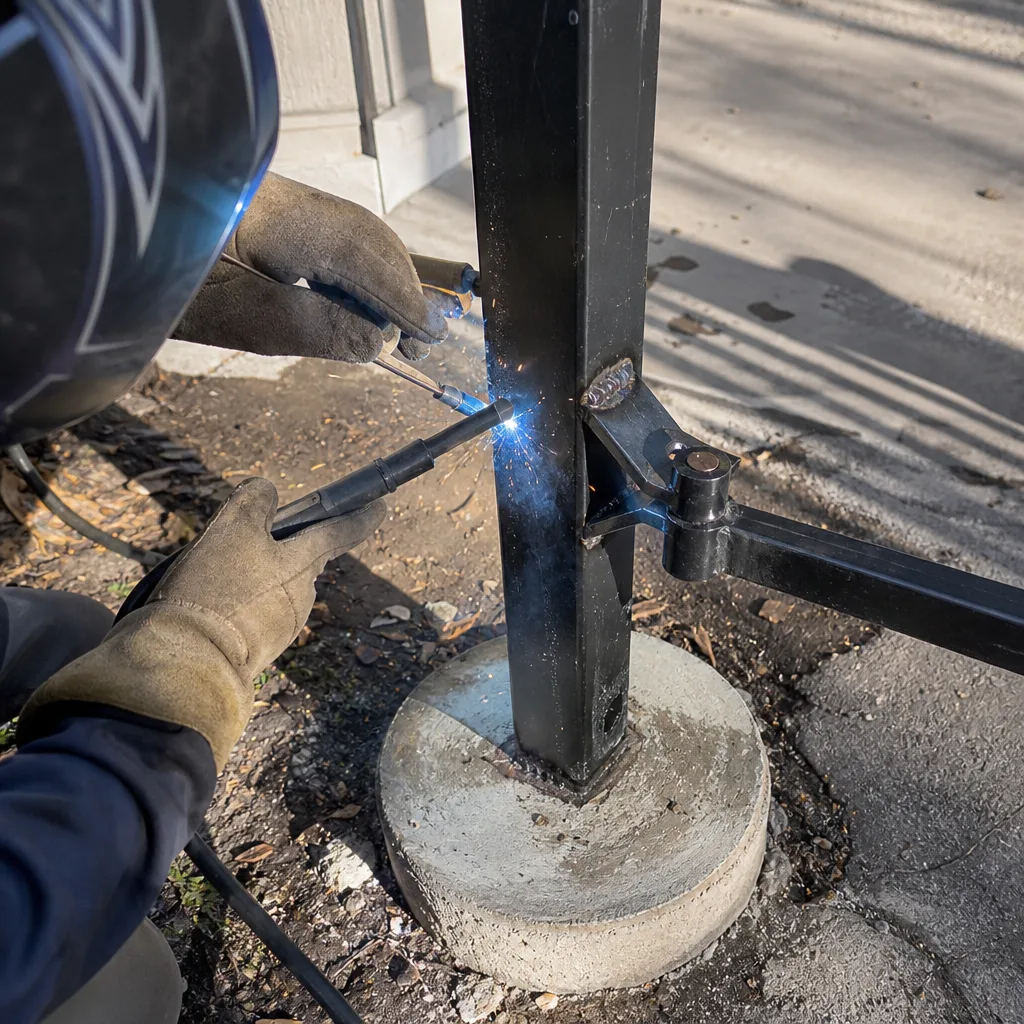
- Hiring a handyman to diagnose an automatic gate. A handyman can fix a sagging hinge, but a handyman does not carry the diagnostic equipment to read a control board, and most don’t know how to tell a failed capacitor from a failed motor. You’ll pay for the hinge repair and then pay a gate technician to fix the electrical problem the handyman never found.
- Calling an electrician for a gate that hums. The electrician will check the power supply, confirm it’s fine, and hand you a bill. The capacitor or motor start circuit inside the operator is gate work, not electrical-panel work. Call a gate technician.
- Ignoring a gate that reverses halfway. It’s early-stage warning, not a quirk. The force-sensitivity circuit or limit switch is detecting something wrong, and every cycle adds wear. Fix it now for $200 or fix it later for $900.
- Buying a slide gate for a short West U driveway without checking setback. West University Place lot widths and setback rules make many slide-gate configurations unusable. Measure the full gate travel and the property line before you buy anything.
- Accepting a verbal quote on a repair. If the price isn’t written down before the work starts, you have no protection when the invoice comes. In West University Place, gate repair costs are well known and a company that won’t commit to a written price before touching your gate is not giving you a deal. They’re keeping the invoice open.
- Skipping the photo documentation. Every future visit to your gate gets cheaper when the next technician can see what was done last time. Without photos and a written record, you pay $150 to $250 for rediscovery every single time.
- Replacing the operator when the problem is the gate. A sagging leaf, a seized hinge, or a broken weld creates extra load on the motor. Replace the motor without fixing the structure and you’ll burn out the new motor the same way. This is the most expensive misdiagnosis in residential gate work, and we see it at least once a month in West University Place.
When to Call a Professional
Call a gate professional the moment you notice the first symptom: a gate that reverses on its own, a humming sound with no movement, a visible lean, a scrape, or a remote that works intermittently. These problems do not self-heal, and every cycle of continued operation adds wear to the underlying fault. The earlier the diagnosis, the cheaper the fix. If you’re unsure whether you’re looking at a mechanical, electrical, or logic problem, a gate technician can run the disconnect test and the diagnostic sequence in about 30 minutes. For more guides & resources, visit our blog. Vance Gate Repair West University Place offers free estimates in West University Place. Call (346) 375-5416 and a live person answers, day or night.
If motor or opener work turns out to be the issue, see our Gate Motor & Opener in West University Place page for a detailed breakdown of operator-specific diagnostics and brand-level repair paths.
Frequently Asked Questions
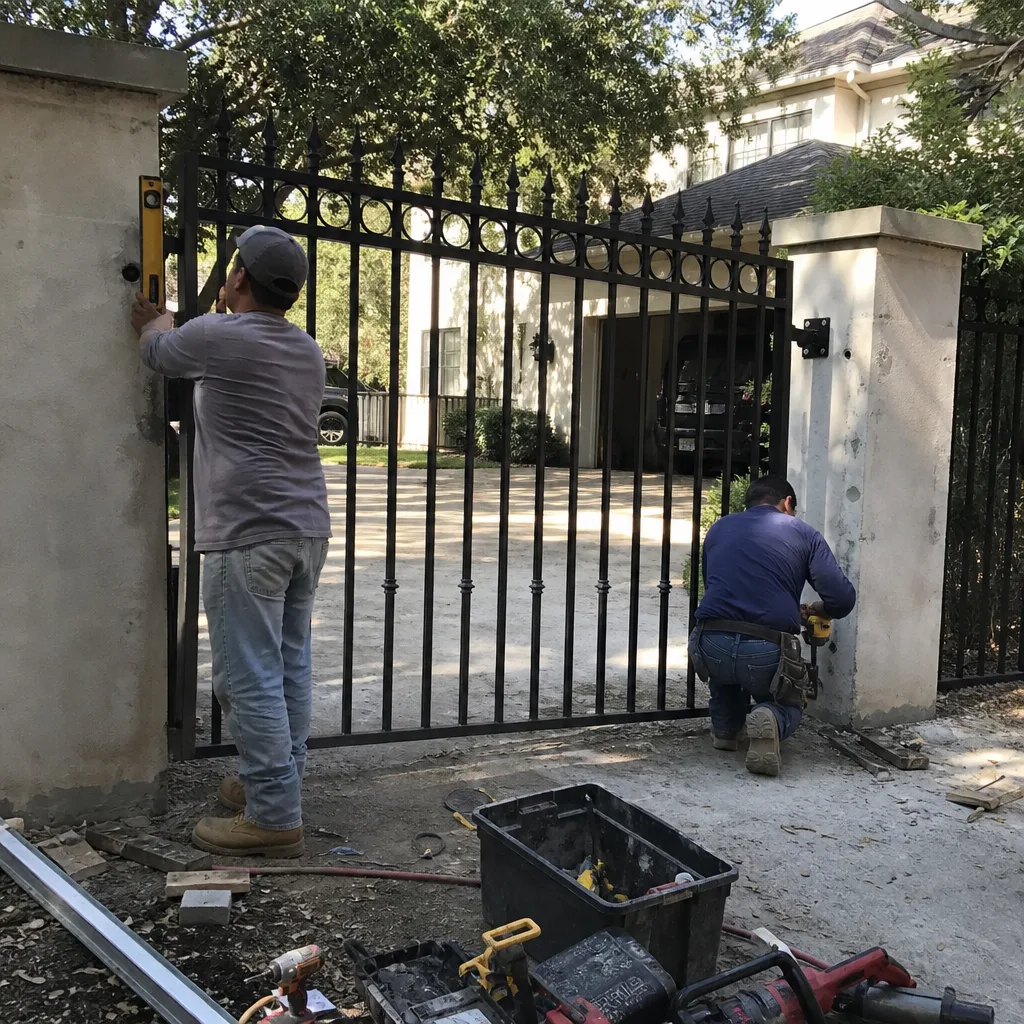
Gate repair in West University Place typically costs between $145 and $1,850 depending on the failure type. Photo-eye alignment runs $145 to $225, limit-switch adjustment runs $175 to $275, and a complete operator replacement falls between $1,100 and $1,850. The price depends on the brand of your operator, the condition of your gate structure, and whether the failure is mechanical, electrical, or logic-based. Call (346) 375-5416 for a written estimate, which is free.
Most gate repairs in West University Place are completed the same day. Photo-eye and limit-switch work takes 45 minutes to 2 hours on site. Hinge rebuilds take 2 to 4 hours. A full operator replacement is a 3 to 5 hour job. The limiting factor is usually parts availability for a specific brand like FAAC or BFT, not the labor time.
A gate that reverses before fully closing is sensing resistance: the force-sensitivity circuit is detecting something that reads as an obstruction. The cause is usually a misaligned photo-eye, a limit switch set too short, or mechanical binding at the point where the gate reverses. It can also be a failing edge sensor. This is a safety circuit working as designed, not a motor failure.
Simple repairs (hinges, operator replacement, control board work) typically don’t require a permit in West University Place. New gate installation, post setting with concrete, or electrical work that involves running new line-voltage power does require a permit and possibly an electrician’s license. Check with the city’s permitting office before structural or electrical work begins. A qualified gate company will know which jobs trigger permit requirements.
Vance Gate Repair services nine major gate-automation brands: LiftMaster, FAAC, BFT, Linear, Viking, Ghost Controls, DoorKing, Elite, and Mighty Mule. We diagnose and repair existing systems rather than steering you toward replacement. We quote the repair and the replacement options side by side with written prices for both, and the decision stays yours. Our Vance Gate Repair West University Place home page has more on how we handle brand-specific operator work.
A repair invoice should show the scope of work in plain English, the exact part numbers installed, the limit-switch settings before and after, and photographs of what was found and what was left. If your invoice says “gate repair” with a dollar amount and nothing else, that’s not documentation. That’s a receipt for rediscovery that you’ll pay for again next time.
The Bottom Line
Gate repair in West University Place is a systematic discipline, not a guess. Identify which layer failed before you call anyone. Get the price in writing before work starts. Demand documentation when the work is done. A gate that gets repaired with real records costs less to maintain every year after. A gate that gets repaired with a verbal handshake costs the same $200 to $400 every time it hesitates. The difference is not the technician’s skill. It’s whether the work leaves a trail. That’s the standard that matters, and it’s the one we build every job around.
Written by Adrian Vance, Owner at Vance Gate Repair West University Place, serving West University Place since 2014.
For gate repair in West University Place, call (346) 375-5416. Free estimates. Written prices. Documented work.