
Last updated September 20, 2026
Free on-site gate assessment - hinges, posts, and your LiftMaster or Nice gate operator checked before anything is quoted
The assessment is free and the quote is the invoice.

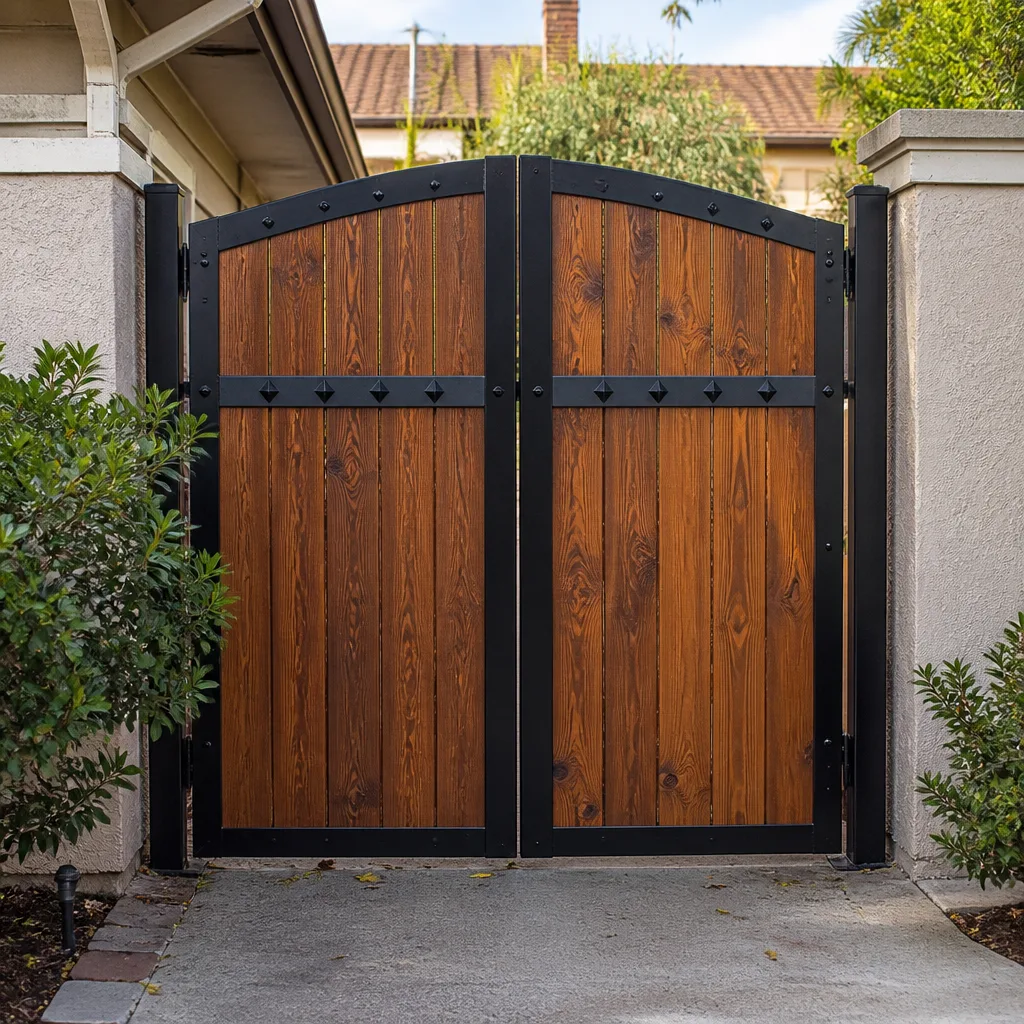

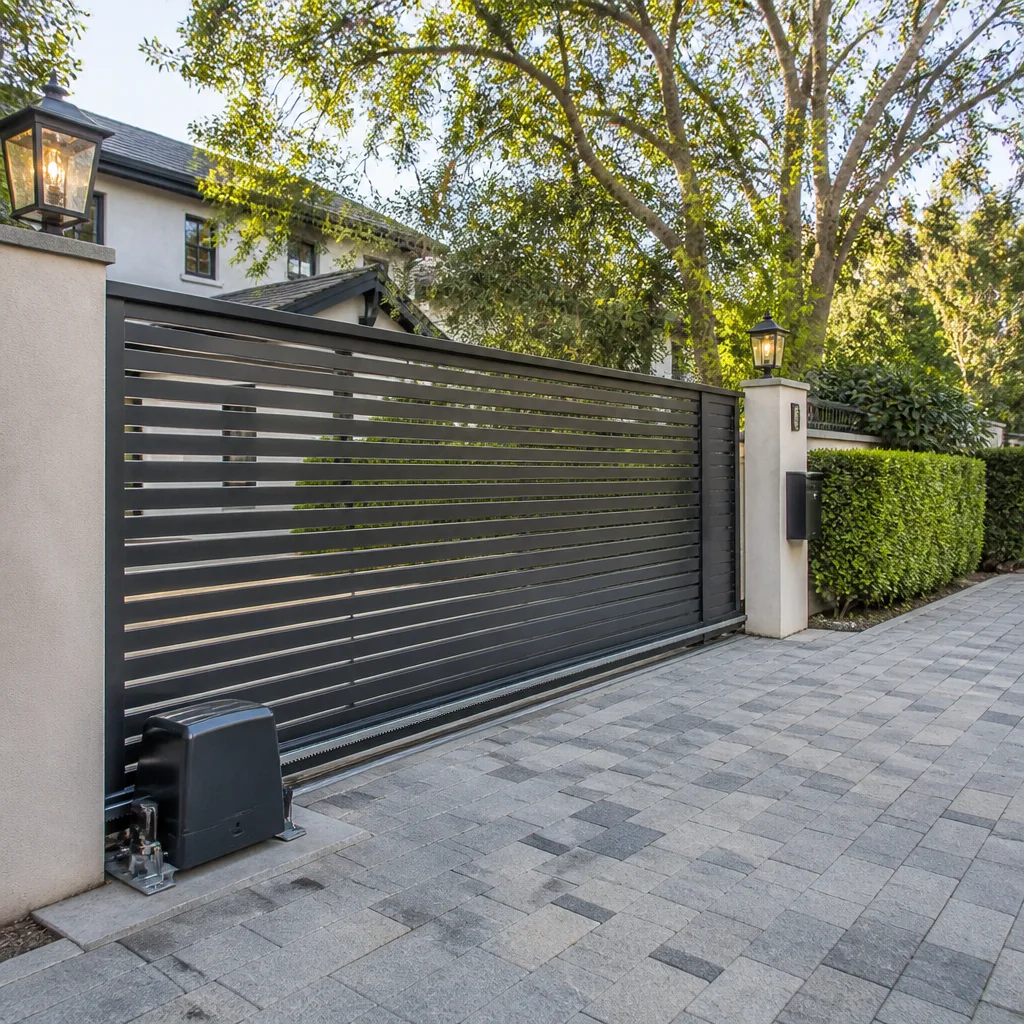
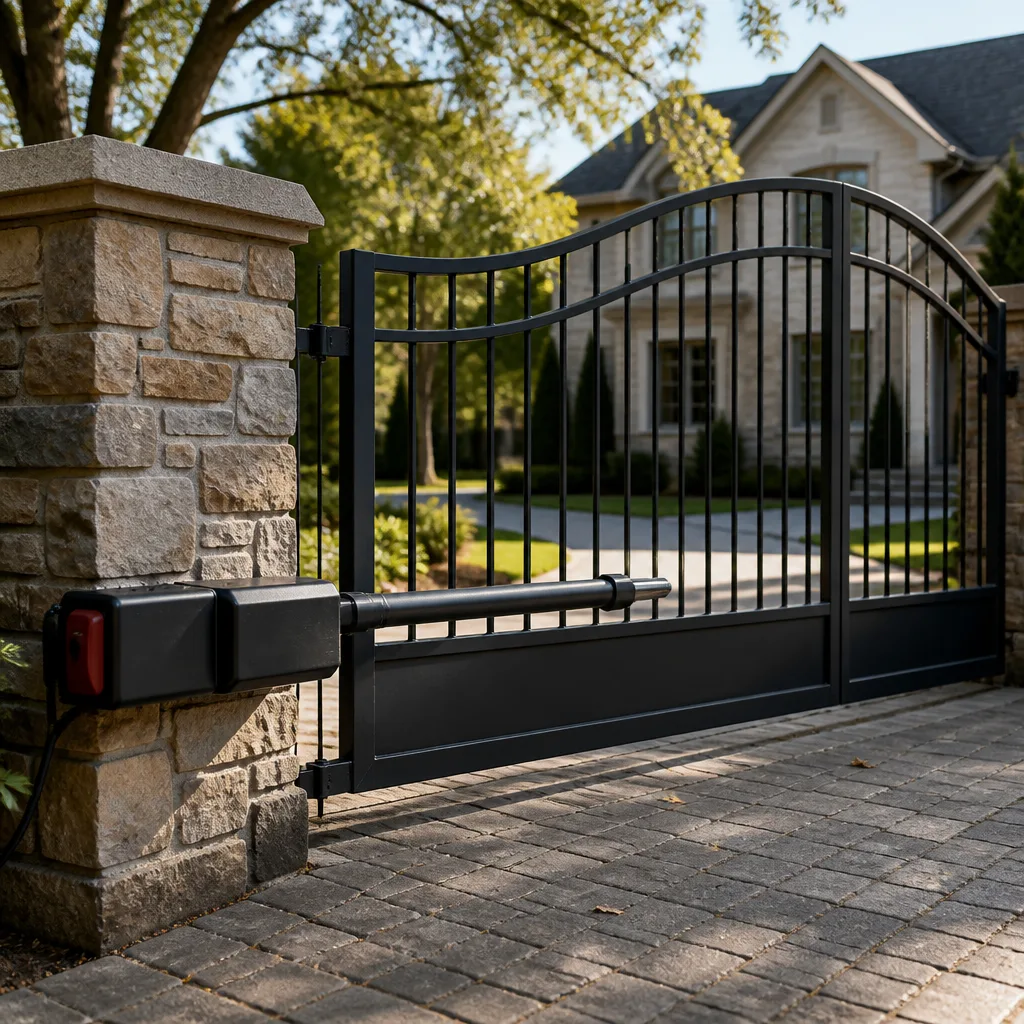
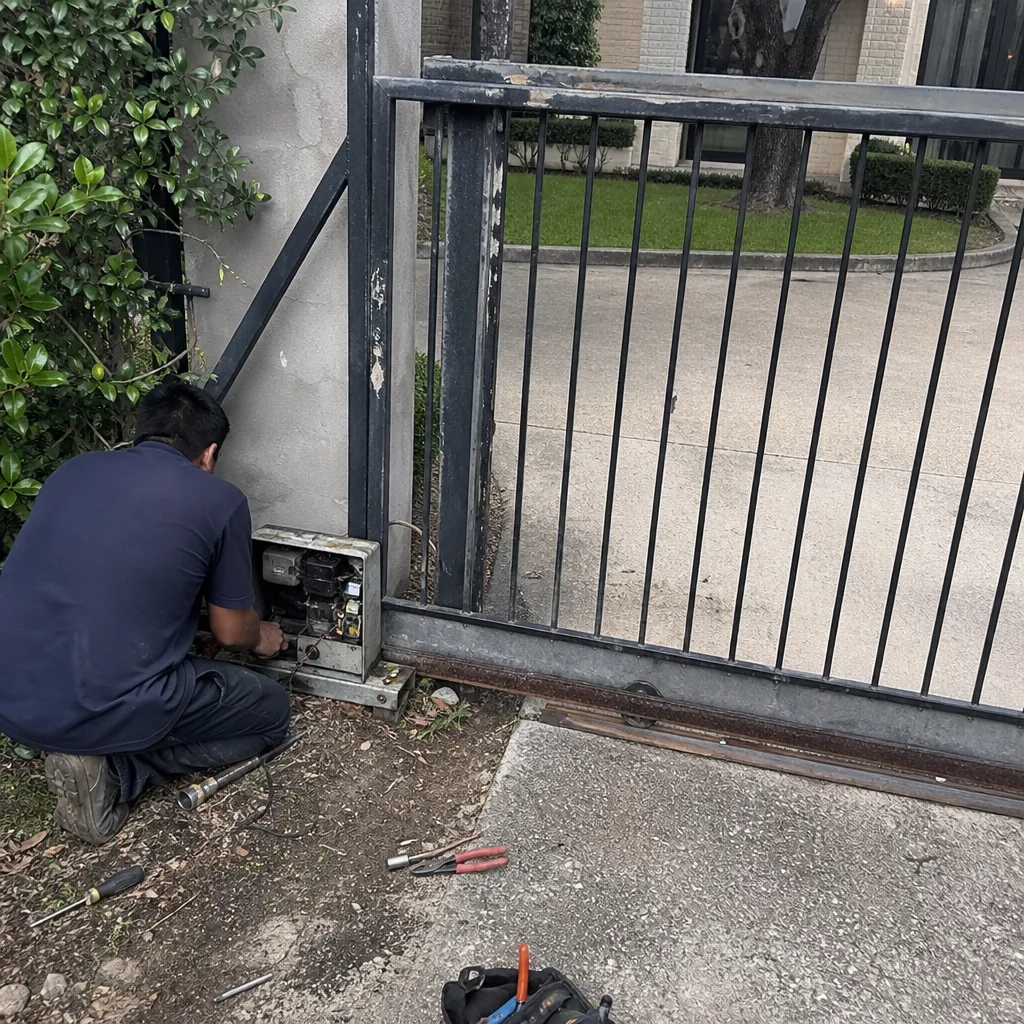 Before
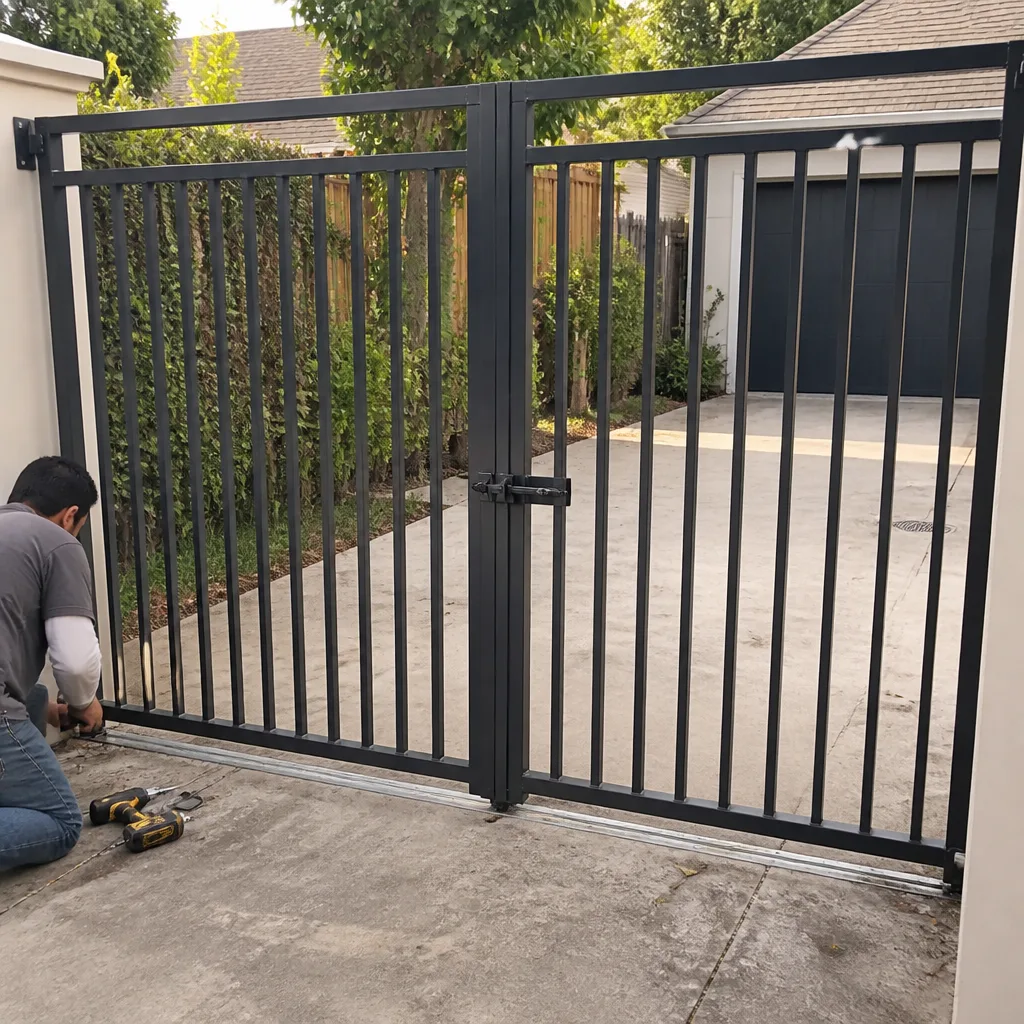 After
After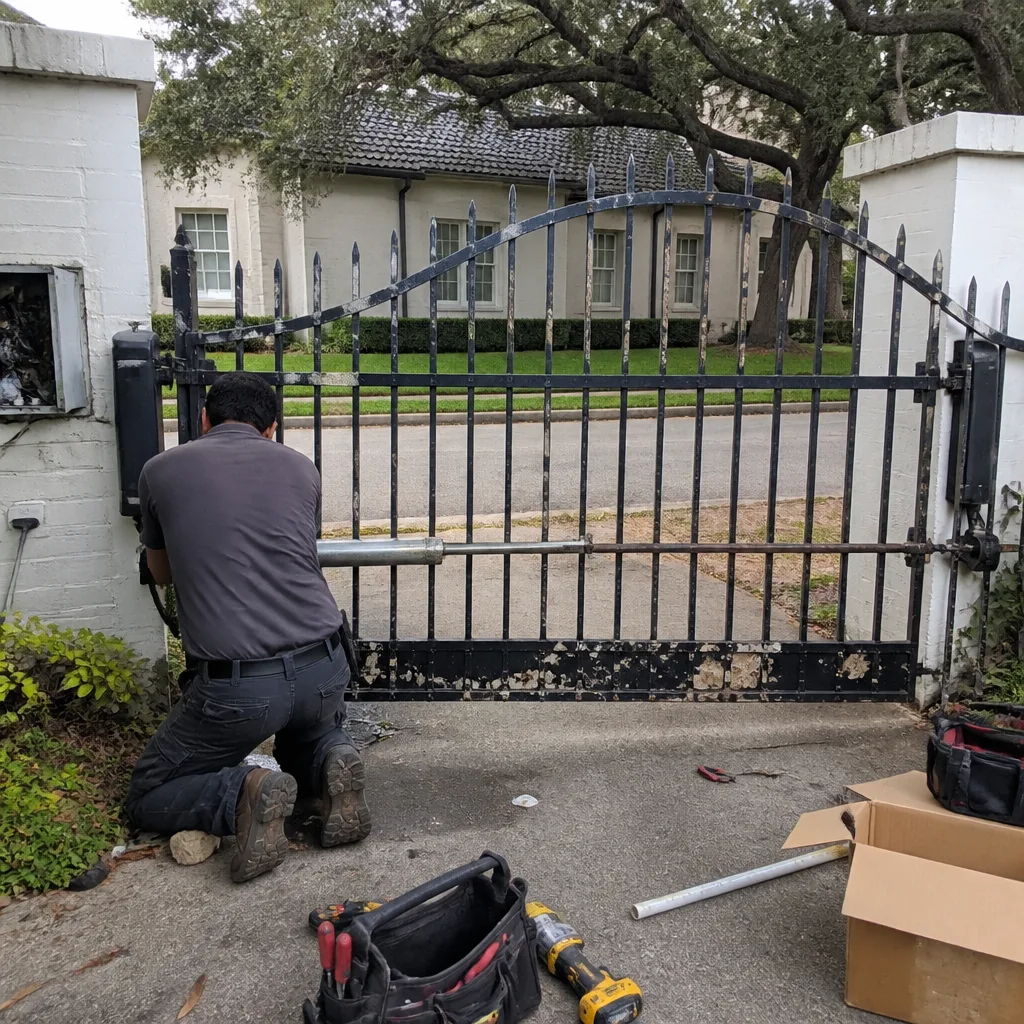 Before
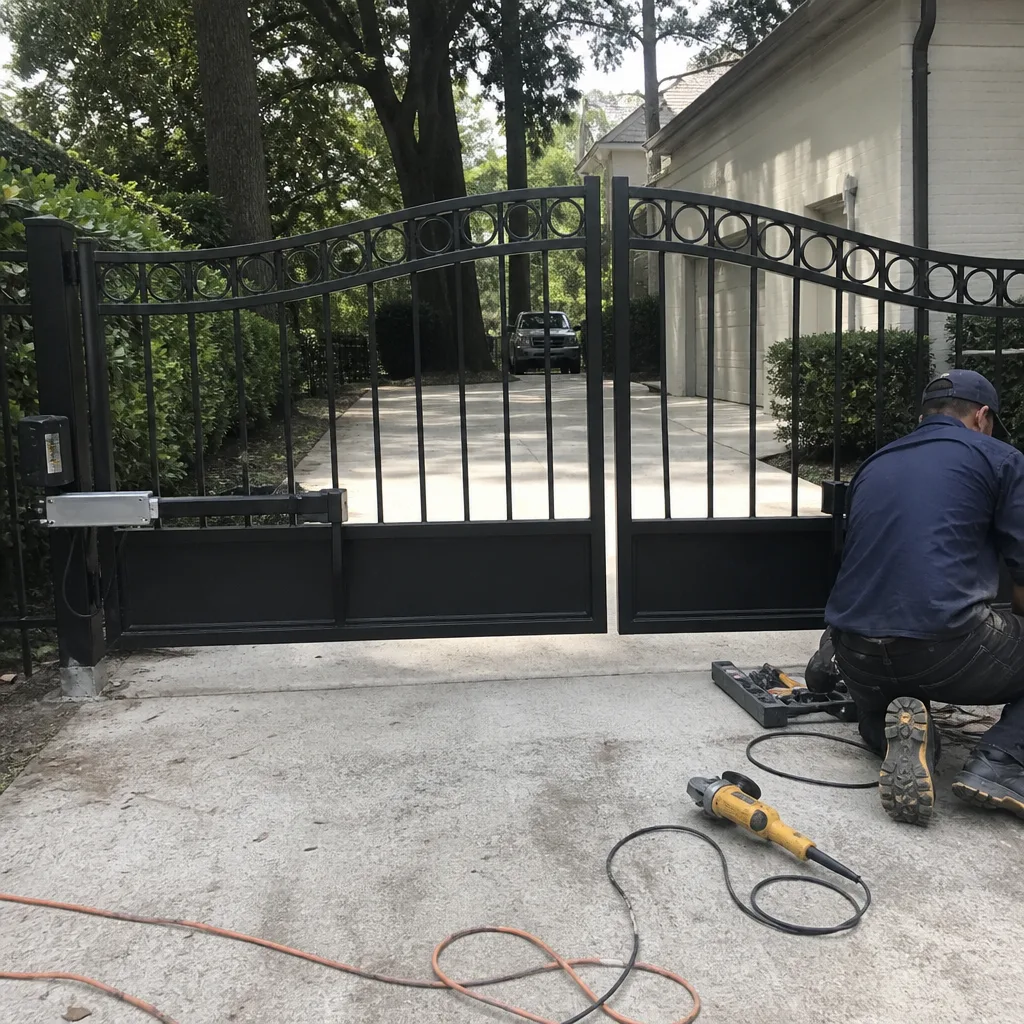 After
After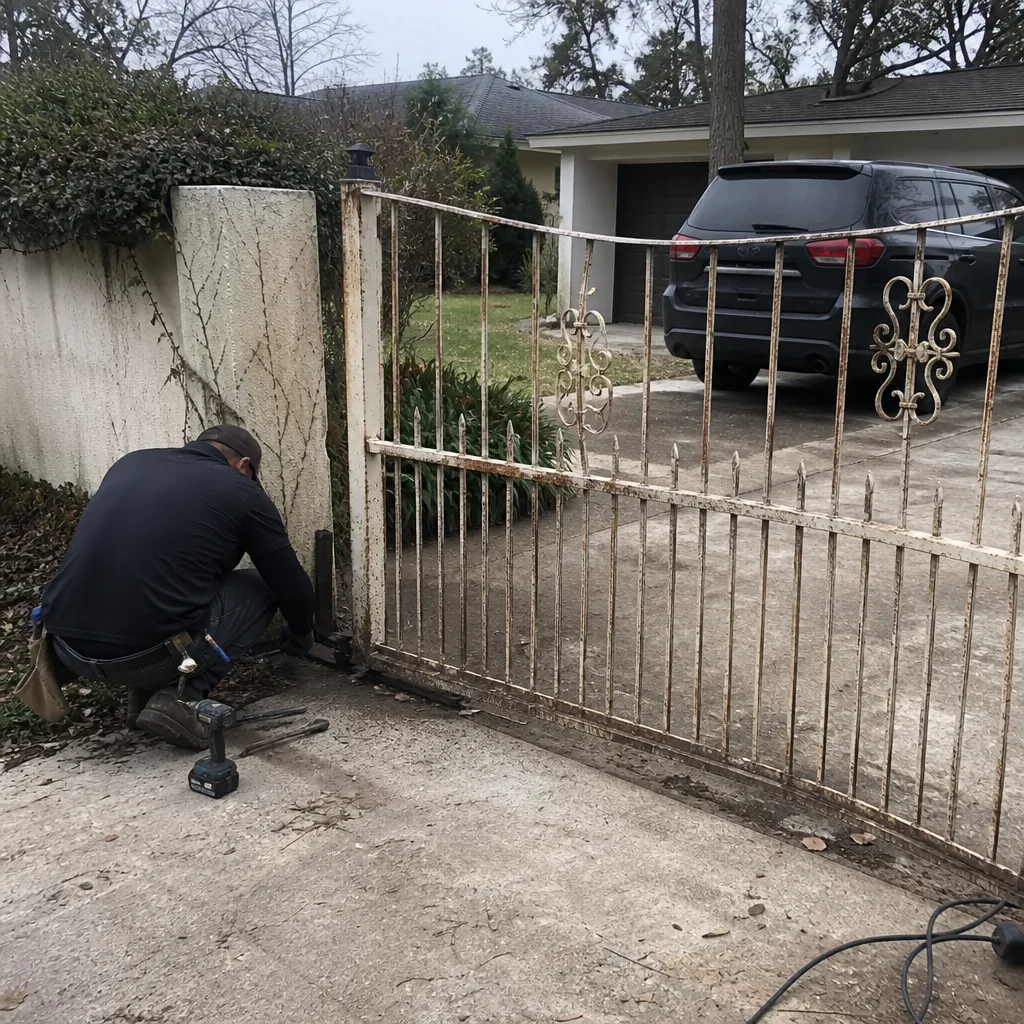 Before
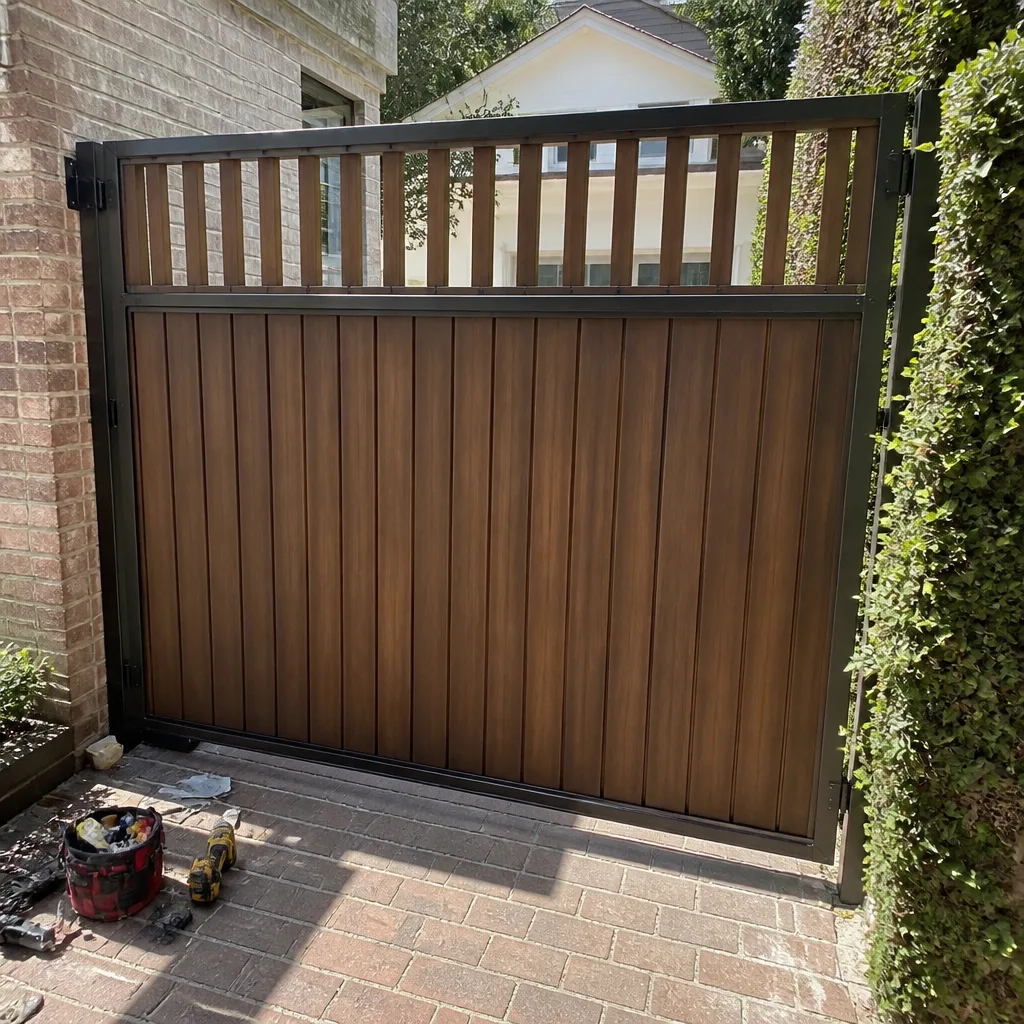 After
AfterDIY vs Professional Gate Repair: The West University Place Homeowner’s Decision Guide
You can legally replace your own gate hinges in Texas. You cannot legally replace and wire your own gate operator without a low-voltage license. That line, not your confidence with a wire stripper, is where a DIY gate repair in West University Place becomes a liability instead of a savings. This guide walks through which layers of a driveway gate you can safely service yourself, which ones Texas law reserves for a licensed contractor, and what a repair actually costs when the first attempt goes wrong. We’ve provided Gate Repair services on over 22,000 gates since 2014 out of Houston’s inner loop, and we work in West University Place weekly. What follows is the same distinction we give homeowners before they touch a screwdriver.
Quick Answer
Most mechanical gate repairs in West University Place, like hinge replacement, chain tensioning, and roller-track adjustments, are legal and realistic for a careful homeowner. Electrical work on gate operators, including board replacement, limit-switch calibration tied to wiring, and any line-voltage or low-voltage connection, legally requires a licensed low-voltage contractor in Texas and realistically requires a technician familiar with the specific motor on the property. The cleanest split: DIY the steel, hire a licensed pro for the circuit board and wire.
Table of Contents
- What Texas Law Says You Can (and Cannot) Touch
- The Decision Matrix: Five Repairs Ranked by DIY Viability
- The Real Cost of a DIY Attempt That Needs Correction
- What to Document If You Do Your Own Mechanical Work
- Why Some Manufacturers Void Operator Warranties on DIY Installation
- West University Place Specifics: Climate, Codes, and Properties
- What You Can Safely Check Before Calling Anyone
- Common Mistakes to Avoid
- When to Call a Professional
- Frequently Asked Questions
- The Bottom Line
BeforeAfterWhat Texas Law Says You Can (and Cannot) Touch
The Texas Department of Licensing and Regulation draws the line at low-voltage electrical work. Installing, servicing, or replacing a gate operator, photo-eye, keypad, loop detector, or any wiring connected to the motor falls under the state’s electrical contractor licensing rules. A homeowner working on their own property is not automatically exempt when low-voltage circuits are involved, and in West University Place, where the city’s permit office mirrors Harris County’s enforcement posture more often than not, unpermitted electrical work has consequences that go beyond a failed inspection.
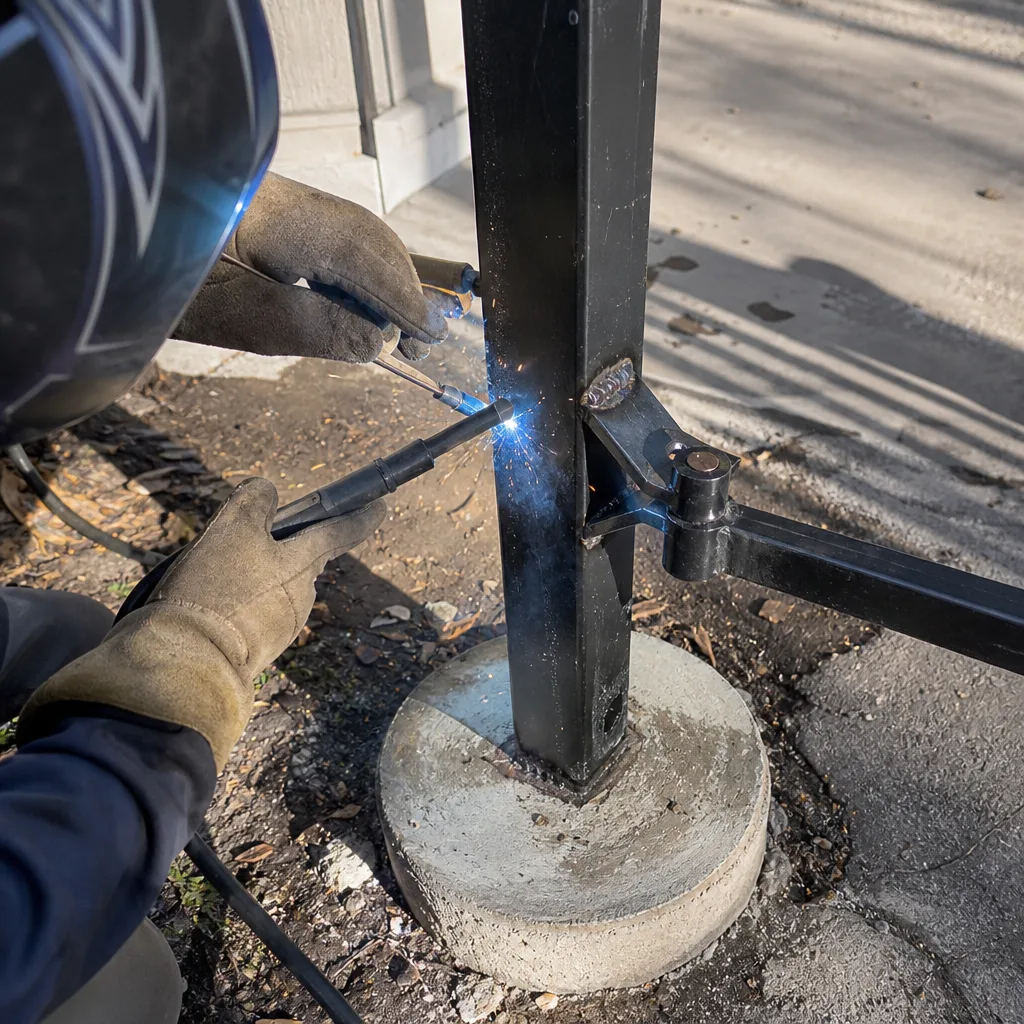
The mechanical side is different. Hinges, gate frames, track wheels, chains, bolts, and weld points are structural. Texas building code governs the installation of the gate frame and fall-protection requirements, but nothing in state law prevents a homeowner from tightening a hinge or replacing a wheel. If the gate swings or slides without a motor involved, you are on the right side of the legal line.
Here is the boundary set out clearly:
- You can legally do: hinge replacement, track-wheel replacement, chain and belt tensioning, post stabilization, gate-frame repair, latch adjustment, and painting.
- You cannot legally do without licensing: operator installation, control-board replacement, limit-switch calibration when it requires opening the operator housing, photo-eye wiring, keypad wiring, loop-detector wiring, and any connection to household power.
In practice, we’ve never seen a West University Place homeowner cited for swapping a limit switch in their own garage. But we have seen insurance claims denied after an unlicensed operator installation failed and caused property damage. That is the risk most DIY guides skip. The legal question is not whether anyone will knock on your door. It is whether your insurer will pay when the gate does something expensive. More on that in the Gate Motor & Opener in West University Place page.
The Decision Matrix: Five Repairs Ranked by DIY Viability
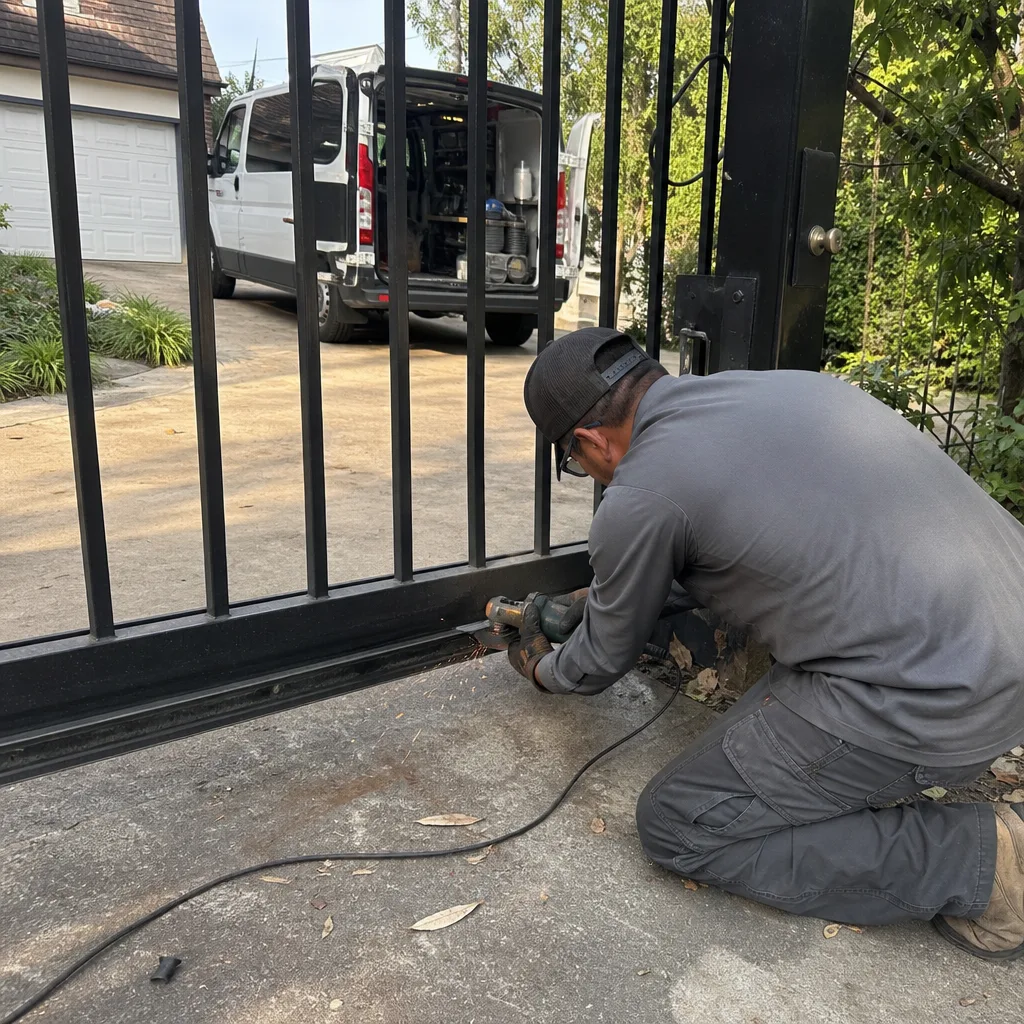
We break gate work into five layers. Each has a different answer to the DIY question, and the answer has little to do with how handy you are. It has to do with what happens when the repair fails.
1. Hinge Replacement: DIY Viable
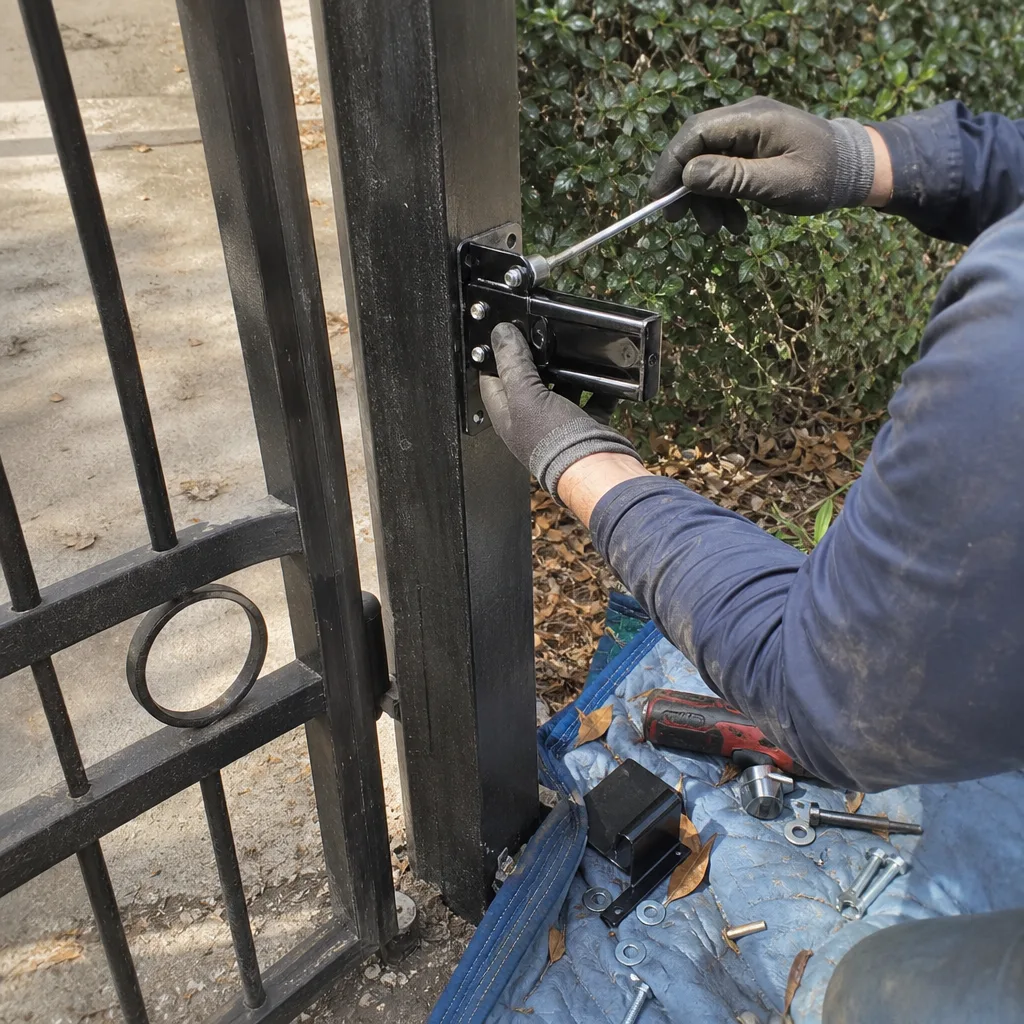
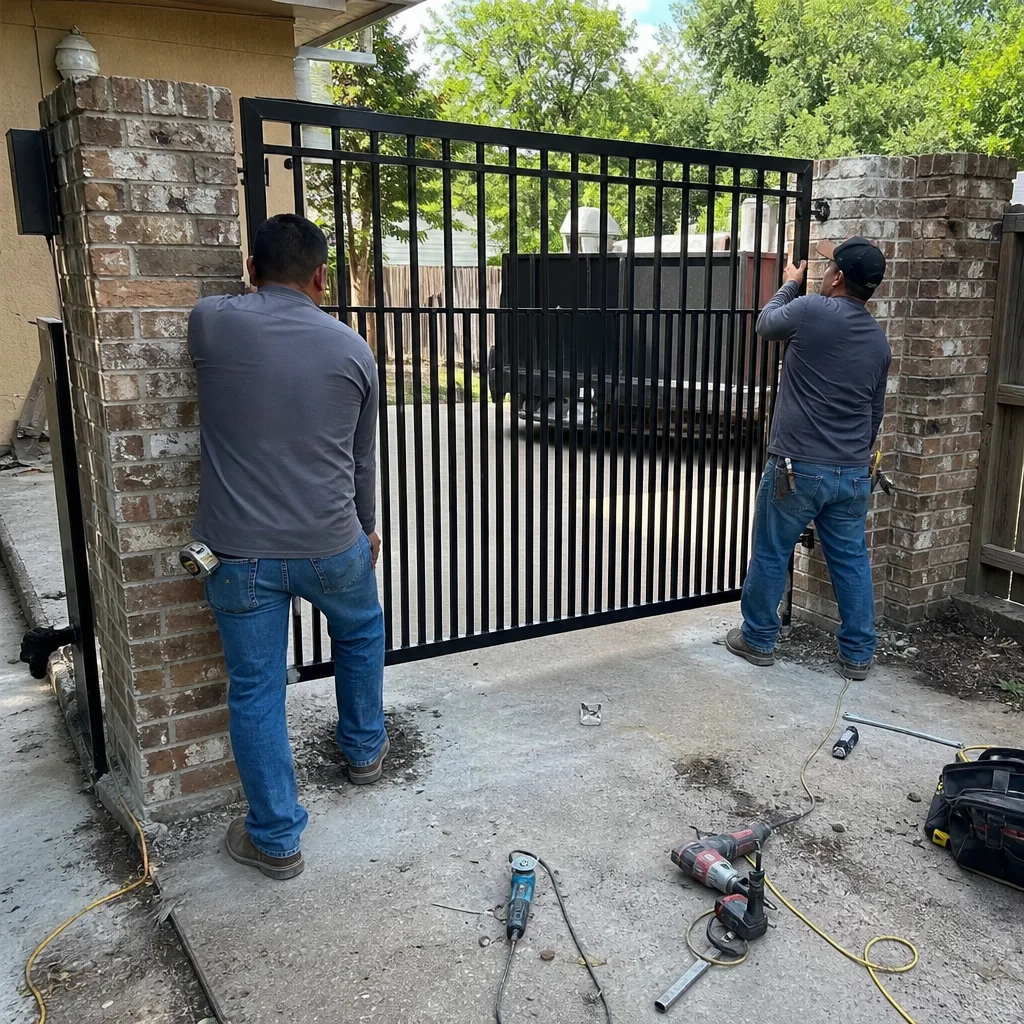
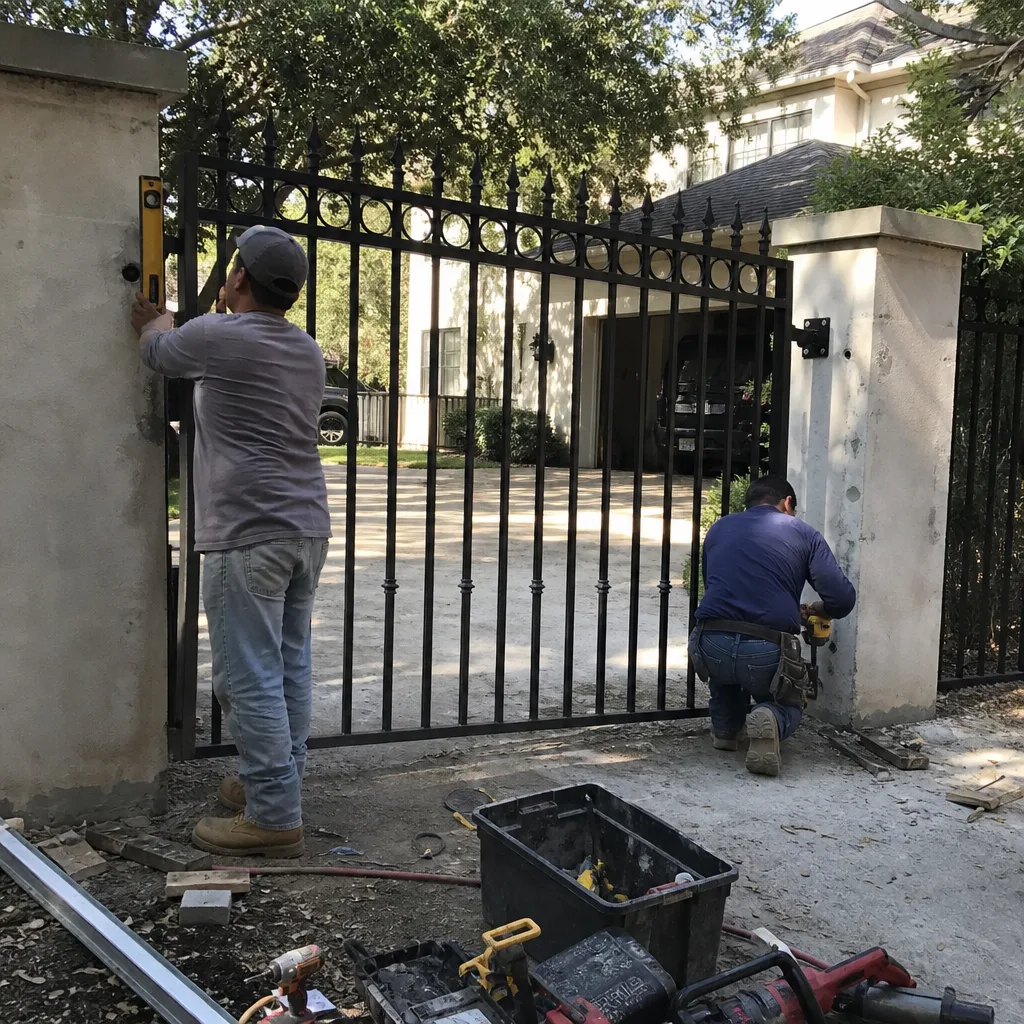
A tired hinge announces itself by the gate dragging, sagging, or setting itself against the post. The work is mechanical: unbolt the old hinge, bolt in the new one, check the swing. You need a level, a socket set, and a helper to hold the gate. Most hinge replacements on West University Place properties take under two hours. The one caution is weight. A steel ornamental gate is heavy, and a dropped gate causes real injury. If the gate is wider than 12 feet or built from solid steel plate, this is where DIY stops being worth the risk.
2. Chain and Rack Adjustment: DIY Viable, With Limits
A chain-drive gate that jerks or slips usually has slack in the chain. Tightening a chain tensioner is a ten-minute job with a wrench. A rack-and-pinion gate that rattles as it travels usually has debris in the rack teeth. Clearing and lubricating the teeth is also DIY-friendly. The limit: if the chain is stretched past the manufacturer’s specification, true repair means replacing the chain and realigning the sprockets. At that point you are adjusting motor mounts, which crosses into mechanical-plus-electrical territory.
3. Limit-Switch Calibration: Not DIY
A limit switch tells the operator where to stop. When it is set wrong, the gate slams into the end stop, reverses too early, or stalls before fully closed. Calibrating it correctly requires opening the operator housing, working with live low-voltage connections, and understanding how the motor’s travel logic reads the switch position. That is electrical work under Texas law. It is also the single most common fix we perform on gates in West University Place, and the one homeowners most often attempt before calling us, which costs them more. The switch costs $30. The labor to diagnose a mis-set one is $85 to $150. Diagnosing one that a homeowner adjusted incorrectly, where the original position was never photographed, takes longer and costs more.
4. Control Board Replacement: Not DIY
When a gate operator board fails, replacement means matching the board revision to the motor, transferring wiring, and re-programming force settings, travel limits, and accessory inputs. Do it wrong and the operator can crush the gate against a car. Board replacement on common residential brands like LiftMaster and DoorKing runs between $450 and $900 installed in West University Place, parts included. A board purchased online costs $150 to $350, but without the programming step, the savings disappear into a service call to fix what was miswired. We service all nine major motor brands, so when a board fails we replace it with the correct revision rather than steering you toward a new operator.
5. Operator Wiring and Installation: Professional Only
This is the layer where every DIY guide should stop. Operator installation involves line voltage, low-voltage control wiring, photo-eye safety circuits, and the layering of safety edges and entrapment protection that Texas law and manufacturer specifications require. Get one wire landing wrong and the gate will open when the photo-eye is triggered, or not stop when it should. The failure mode is not “the gate won’t open.” The failure mode is “the gate closes on someone.” No tutorial can make that risk acceptable. This is also the category in which Elite and Mighty Mule operators commonly appear in West University Place, and both brands specify licensed installation for warranty coverage.
The Real Cost of a DIY Attempt That Needs Correction
The invoice is never just the re-work. When a homeowner attempts an electrical repair and then calls us, we bill from a different starting point. The technician must first undo the incorrect work before the correct repair can begin. That diagnostic time is real and it is billed.
Here is a realistic breakdown of a common West University Place scenario: a homeowner replaces a limit switch on a slide gate, sets it by feel, and the gate now stops four inches short of closed. The subsequent professional correction looks like this:
- Site arrival and system audit: $89. The technician inspects the operator, opens the housing, and photographs what is currently wired where.
- Diagnostic time to reverse the DIY work: $85 to $140. The original switch position was never documented, so the correct calibration must be derived from scratch.
- Limit-switch calibration and testing: $85 to $150. This includes cycling the gate through full travel multiple times under photo-eye and safety-edge observation.
- Documentation and close-out: included. The homeowner receives a photo log of the corrected setting, the part number, and a written record of the wiring changes.
Total: $260 to $380 for a repair that would have cost $170 to $240 if the switch had been diagnosed correctly the first time. The lesson is not “never try.” The lesson is that electrical-layer work carries a correction premium, and the premium is almost always larger than the savings from the original attempt. For a detailed look at typical expenses, see our Gate Repair Cost Breakdown: The West University Place Homeowner’s Reference for 2026.
Mechanical DIY mistakes are cheaper to correct. A misaligned hinge, a reversed wheel, a chain tensioned too tight: these take one hour to un-do and the labor is lower. But the principle holds. Document what you did, and the correction gets faster. Which brings us to the next section.
What to Document If You Do Your Own Mechanical Work
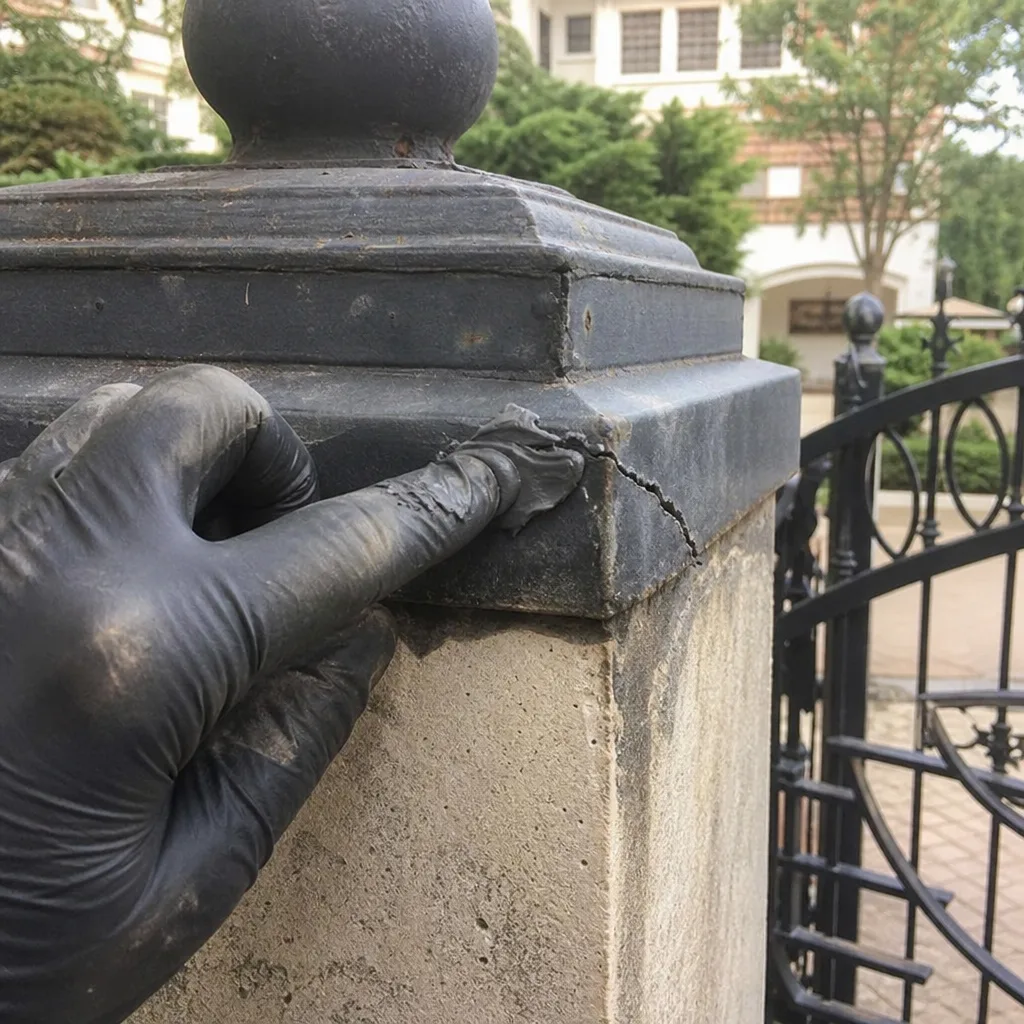
If you replace a hinge, swap a wheel, or tighten a chain on a gate in West University Place, take four photos before you close the toolbox-this is step one in our Gate Repair Maintenance Checklist for West University Place Homeowners. This costs you nothing and saves the next technician an hour. Here is the exact list we tell homeowners:
- Before photo, wide shot: the full gate and operator from the same position you will use for the after photo. This shows the pre-repair alignment and sag.
- Before photo, close-up: the specific part you are about to touch, with any adjustment points visible.
- After photo, close-up: the new or adjusted part, with the same framing as the before shot.
- After photo, wide shot: the full gate again, same position as the first photo.
Write down the date, the part replaced, and the torque setting or wrench size you used. Store the photos with the receipt. When a future technician visits, that photo pair is worth an hour of labor. It shows exactly what moved and exactly what changed. We file this same evidence on every job we do in West University Place, and the habit comes directly from commercial access-control documentation practices Adrian Vance started in 2014. The homeowner who documents is never billed twice for the same discovery.
Why Some Manufacturers Void Operator Warranties on DIY Installation
Operator warranties are contracts, and most contain an installation clause. The clause typically states that the warranty is void if the unit is installed by an unlicensed person, mis-wired, or operated without the specified safety accessories connected. You can check this before buying any replacement operator.
Pull the model number from the motor housing on your current unit. Search the manufacturer’s published warranty terms for that model. Look for the phrase “authorized installer” or “qualified technician.” On Mighty Mule and Elite consumer units, the warranty language is explicit about installation requirements. On LiftMaster residential operators, the terms vary by model line; some require dealer installation for the full warranty term, others shorten the coverage period when installation is not documented. The check takes ten minutes and tells you whether the $200 you save on installation is actually a $600 warranty loss.
One practical note for West University Place: humidity accelerates corrosion on exposed terminals, and most operator warranty claims in this area involve water intrusion at the wiring. A DIY-installed unit with unsealed conduit entries will fail before the warranty matters, and the manufacturer’s response will point to installation error. A licensed installer who seals the entries and photographs the work gives you a warranty claim that is far harder to deny.
West University Place Specifics: Climate, Codes, and Properties
West University Place is not a generic suburb. The properties are close-set, the soil is Gulf Coast clay, and the weather cycles between flooding rain and long dry spells. All three facts affect gate repair decisions in specific ways.
Soil movement. The clay under West University Place expands and contracts aggressively. Gate posts shift seasonally. A gate that swings cleanly in March may drag in July after the ground dries and the post settles. Hinge replacement is the DIY repair homeowners attempt most often in West University Place, but the underlying cause is sometimes the post, not the hinge. Replacing a hinge on a post that has moved 1.5 degrees fixes nothing. Check the post plumb before you buy hardware.
Humidity and corrosion. Salt air is not a factor this far inland, but sustained humidity is. Exposed steel, untreated hinge pins, and unsealed electrical enclosures corrode faster here than in drier parts of Texas. We see rusted limit-switch bodies and green-tinted terminal corrosion on gates throughout West University Place. The DIY firewall is straightforward: if corrosion has reached the electrical enclosure, you are no longer in mechanical-repair territory.
Lot geometry. Many West University Place properties have narrow side yards and short driveway approaches. Slide gates are less common than swing gates because of lot width. Swing-gate operators, particularly those on DoorKing and Elite arms, work harder here because the gates are heavy ornamental steel and the travel arc is tight. Limit-switch and force-setting wear is the dominant service item, and it is electrical work. A homeowner who understands this should not feel bad about skipping the DIY attempt. The correct move is to call a gate repair specialist in West University Place who can set the force curve correctly on the first visit.
What You Can Safely Check Before Calling Anyone
There is a middle layer between DIY repair and calling a technician: the pre-diagnosis inspection. These checks are safe, require no disassembly, and produce useful information that shortens any future service call.
- Look at the gate in its resting position. Is it hanging level? A visible sag points to a hinge or post problem, not an operator problem.
- Move the gate manually. Disconnect the operator using the manufacturer’s release mechanism. The gate should move smoothly by hand. Resistance, grinding, or a hard stop points to a mechanical issue.
- Listen for the sound. Does it start and then stop with a click? That is a limit-switch symptom. Does it hum and not move? That is a capacitor or motor symptom. Both are electrical.
- Inspect the photo-eyes. The small beam units near ground level should face each other, with lenses clean and aligned. A misaligned photo-eye, off by as little as two inches, stops most operators from closing.
- Check the chain or belt tension. Slack beyond about half an inch of vertical deflection on a chain drive is a do-it-yourself adjustment on most units.
These five checks give you enough information to describe the problem accurately when you call a professional. They also tell you which layer of the system has failed, which is the entire decision matrix in miniature. For a deeper look at how a gate should behave across its travel, see our Vance Gate Repair West University Place home page or the Gate Installation in West University Place guide, which covers what a correctly installed gate feels like.
Common Mistakes to Avoid
- Photographing nothing. Every DIY repair without before-photos costs extra when it needs professional correction, because the technician must reverse-engineer the original state.
- Setting limit switches by sound. A limit switch set “by ear” without measuring travel in degrees or distance will be wrong by enough to cause a safety fault.
- Using a generic replacement board from an online seller. Board revisions matter. A board that is electrically compatible but one revision older will not accept the current firmware, and programming will fail.
- Ignoring the post and replacing the hinge. In West University Place clay, a sagging gate is often a moved post, not a worn hinge. Replace the hinge and the gate still drags.
- Wiring a photo-eye backward. A reversed photo-eye circuit causes the classic “opens fine, won’t close” symptom. The fix is a two-wire swap, but a homeowner who follows the wire colors without understanding circuit logic swaps them back the wrong way.
- Lubricating the rack and chain with household oil. Household lubricants attract dust and accelerate wear on West University Place driveways. Use a dry graphite or silicone product made for gate mechanisms.
- Running the gate through a full cycle with the safety edges disconnected. This is the most dangerous wiring habit we see from DIY attempts. A gate cycling without entrapment protection is a serious injury risk to anyone nearby.
When to Call a Professional
Call a professional when the work is electrical, when the gate weighs more than you can safely control, when a post has moved, when any part of the operator housing must be opened, or when the symptom involves the gate behaving unpredictably rather than simply not moving. In each of those cases, the correct repair requires tools and diagnostic habits that are not DIY territory. We respond to these situations in West University Place every day. Vance Gate Repair West University Place offers free estimates in West University Place. You can call (346) 375-5416 and a live person answers, any hour, any day. You will get a written price before any work starts, and a photo record when the technician leaves. That is the standard on every job.
Frequently Asked Questions
No. Gate operators are low-voltage electrical devices, and Texas law requires a licensed low-voltage contractor for installation, repair, and wiring work on them. Homeowners can legally perform mechanical repairs like hinge replacement and chain tensioning, but the operator, control board, photo-eye, and any connected wiring are outside the homeowner exemption. Call (346) 375-5416 if you want the repair done by a licensed team in West University Place.
Most gate repairs in West University Place run between $170 and $900 depending on the layer. Mechanical repairs like hinge replacement and chain adjustment typically cost $150 to $400. Electrical repairs like limit-switch calibration run $170 to $240, board replacement $450 to $900, and full operator replacement $1,200 to $2,800. Call (346) 375-5416 for a written estimate based on your specific gate.
Limit-switch and force-setting failures on swing-gate operators are the most common repair we perform in West University Place. The clay soil, the weight of ornamental steel gates, and the tight swing arcs on narrow lots combine to put constant stress on travel logic. The symptom is usually a gate that stops short, reverses, or slams before the fix is simple but requires opening the operator housing.
You will save money on mechanical work if you document what you do and the part is genuinely the problem. You will not save money on electrical work, because correcting a DIY electrical repair usually costs more than the original repair would have, once diagnostic time to undo the incorrect work is billed. The savings from a $30 limit switch disappear into a $200-plus service call to correct a mis-set one.
Operator installation falls under the city’s electrical permitting requirements when line voltage is involved, and a licensed contractor pulls the permit. Mechanical gate and fence work generally does not require an electrical permit. The city’s permit office treats work performed by a licensed contractor differently than self-performed electrical work. Call (346) 375-5416 if you want the permit handling done for you.
We service nine major gate-automation brands: LiftMaster, FAAC, BFT, Linear, Viking, Ghost Controls, DoorKing, Elite, and Mighty Mule. Whatever motor is already on your property, we can work on it rather than steering you toward a replacement. Call (346) 375-5416 and describe the symptom; the operator brand is usually visible on the motor housing.
The Bottom Line
The DIY versus professional gate repair question in West University Place is settled by which layer of the system has failed. Hinges, chains, wheels, and mechanical adjustments are legal and realistic for a careful homeowner. Anything that touches the operator, the control board, the photo-eyes, or the wiring is licensed-professional territory under Texas law, and the cost of correcting a DIY electrical attempt exceeds the cost of getting it right the first time. Document your mechanical work with photos, check your operator’s warranty terms before replacing anything electrical, and call a professional when the housing needs to be opened. You can also explore more guides & resources on our blog. In West University Place, the gate is heavy, the soil moves, and the humidity never quits. The right decision is usually to put the wrench down at the electrical enclosure and pick up the phone instead.
Written by Adrian Vance, Owner at Vance Gate Repair West University Place, serving West University Place since 2014.