
Last updated September 20, 2026
Free on-site gate assessment - hinges, posts, and your LiftMaster or Nice gate operator checked before anything is quoted
The assessment is free and the quote is the invoice.


 Before
 After
After Before
 After
After Before
 After
AfterGate Repair Permits, Codes & Inspections in TX: What You Need to Know
Most Texas homeowners get the permit question on gate work wrong in one of two directions. Either they pull a permit for a simple operator swap that never needed one, adding three weeks and several hundred dollars to a job that should have been done by Thursday. Or they extend a driveway gate, add a new brick column, or run a fresh 120-volt circuit and never tell the city anything, assuming “it’s just a gate.” Both mistakes cost money. The first costs time. The second can cost you when you sell the house, file an insurance claim, or stand in front of a code inspector explaining why your new gate swings over the sidewalk. This guide draws the exact line between what triggers a permit, what doesn’t, and what inspectors in West University Place and the surrounding Harris County area actually check when they show up.
Quick Answer
Gate repair in Texas generally does not require a permit when you’re replacing an existing operator, hinges, wheels, or hardware without changing the gate’s footprint or its electrical supply. A permit does kick in when you alter the gate structure, pour new footings, relocate a column, run new electrical wiring, or install an operator on a gate that never had one. In West University Place, which operates as its own municipality inside Harris County, the permit pathway runs through the city’s own building department, not the county, and the inspection focuses on electrical safety, gate clearance, and UL 325 compliance.
Table of Contents
- The Three-Part Test: What Actually Triggers a Texas Gate Permit
- West University Place vs. Harris County: Why the Jurisdiction Matters
- NEC Article 670 and UL 325: The Codes Behind Gate Operators
- Pulling a Permit Yourself vs. Using a Licensed Contractor
- What an Inspector Actually Checks on a Gate Installation
- Repair vs. Replacement vs. New Installation: Where the Lines Sit
- Permit Costs and Timeline in West University Place
- Common Mistakes to Avoid
BeforeAfterThe Three-Part Test: What Actually Triggers a Texas Gate Permit
Forget the word “gate” for a second. The question isn’t whether you’re working on a gate. It’s whether you’re touching structure, electrical, or the operator. Each one trips a different trigger under the Texas Residential Code and local amendments in places like West University Place, and confusing them is where most homeowners land in trouble.
Part One: Structural Work
Structural changes are the clearest permit trigger, and the test is simple: are you changing the gate’s footprint, its anchoring, or its load path? Replacing a rotted wood gate leaf with a new one the same size, hung on the existing posts, is a repair. Widening the driveway opening from 12 feet to 16 feet, setting new posts in concrete, and hanging a heavier steel gate is new construction. That requires a permit in West University Place and essentially every other Texas municipality that enforces the Texas Residential Code.
Here’s what counts as structural and what doesn’t:
- Permit required: new posts or columns, new concrete footings, moving an existing post, changing the gate’s swing direction into new territory, adding a second leaf where one existed before, building a masonry pillar, extending the gate width, or hanging a gate heavier than the original post design assumed.
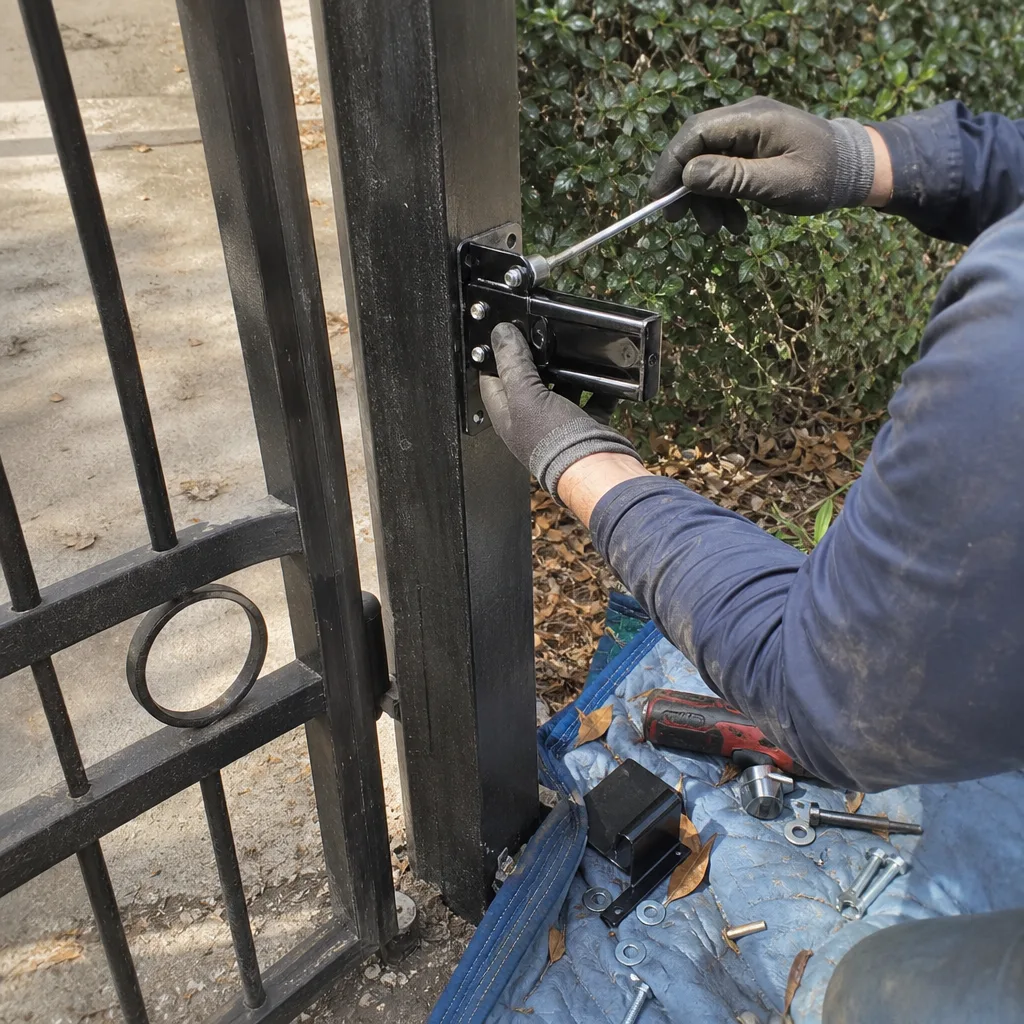
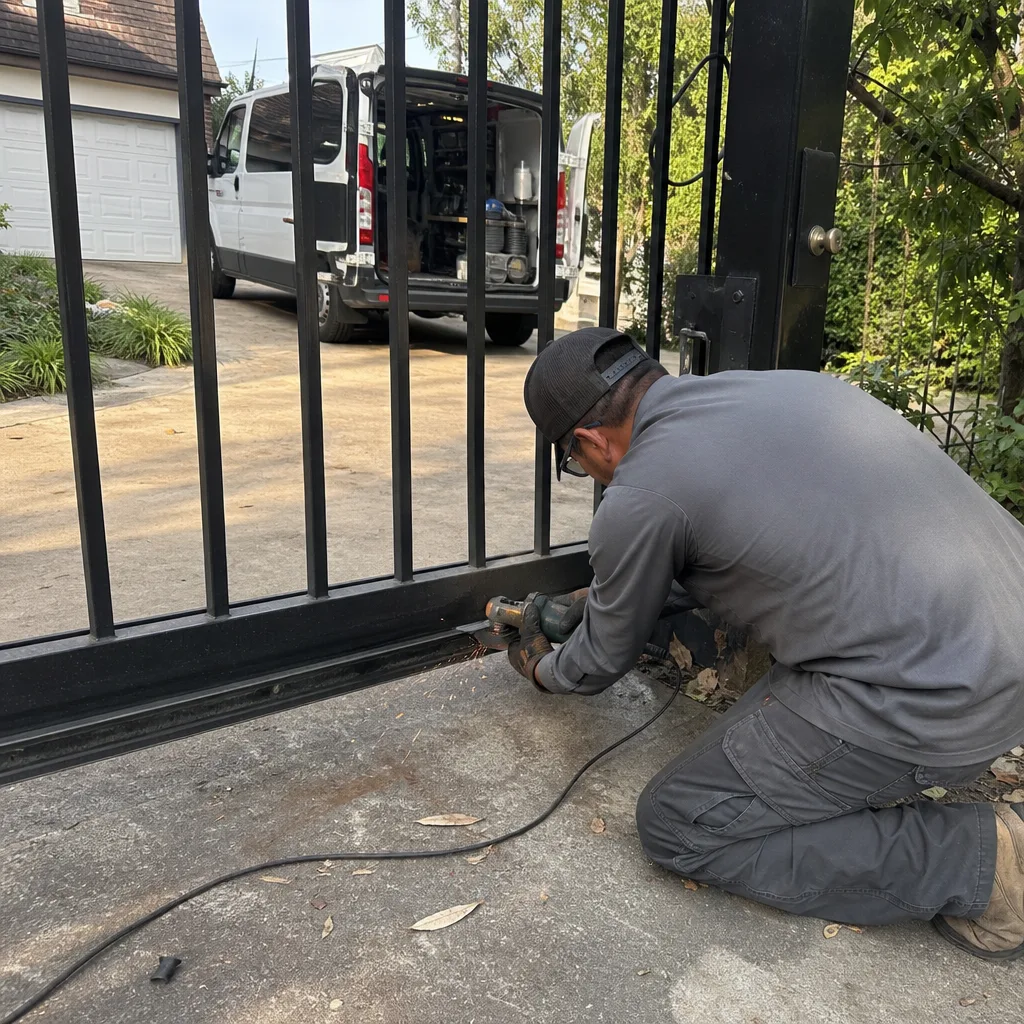
- No permit: replacing hinges, replacing a gate leaf on existing posts at the same size and weight, replacing wheels or track on a sliding gate, welding a cracked joint on an existing gate frame, replacing a sagging gate with the same material and dimensions.
In our experience in West University Place, the structural trigger that surprises people most is the swing direction change. A homeowner wants the gate to open inward instead of outward to stop it blocking the sidewalk on a compact lot. That sounds minor. But it changes the safety clearance, the photo-eye placement, and potentially the encroachment onto the public right-of-way. The city treats that as new geometry, not maintenance. You need a permit, and honestly, you want the inspector’s sign-off so no neighbor complaint turns into a forced reinstallation later.
Part Two: Electrical Work
Electrical work triggers permits under the National Electrical Code (NEC), which Texas adopted statewide and which West University Place enforces through its own amendments. The rule of thumb: if you’re modifying or extending a circuit, you need an electrical permit. If you’re plugging a low-voltage operator into an existing GFCI outlet, you almost never do.
What that looks like in practice:
- Permit required: running a new 120-volt branch circuit from the panel to the gate location, adding a new subpanel, installing a new dedicated outlet where none existed, upgrading from a 15-amp to a 20-amp circuit to serve the motor, burying new conduit from the house to a gate location.
- No permit: plugging a low-voltage operator (like a Mighty Mule or Ghost Controls unit) into an existing outdoor GFCI outlet, replacing a failed transformer with the same voltage and amperage, swapping a damaged extension cord for a proper direct-wire setup on a circuit that already exists.
One nuance that trips people up: many gate operators run on low-voltage DC power from a transformer that plugs into a standard outlet. The operator itself isn’t an electrical permit issue. But if that outlet doesn’t exist yet and an electrician has to pull wire from the panel, it becomes one. Vance Gate Repair has corrected several West University Place installations where a previous contractor ran an extension cord through a flower bed to power a gate motor. That’s not just a code violation; it’s a fire hazard and an NEC 400.8 violation (flexible cords can’t be used as permanent wiring). The fix is a proper branch circuit, and yes, that one needs a permit.
Part Three: Operator Replacement
Operator replacement is the category where people most often assume they need a permit and don’t. Here’s the plain version: replacing an existing gate operator with a new operator of the same type, on the same posts, using the existing electrical supply, is a repair. No permit required in West University Place or unincorporated Harris County. That includes swapping a dead LiftMaster for a new LiftMaster, changing a failed FAAC board, replacing a Linear arm operator with a compatible model, or upgrading a basic swing motor to a higher-capacity motor when the existing wiring and posts support it.
The permit trigger appears in one specific scenario: installing an operator on a gate that has never had one before. That’s not an operator replacement; it’s a new automated gate installation. The gate now moves under power, which means it falls under UL 325 safety requirements, and the city wants to confirm the safety edges, photo-eyes, and force settings were installed and tested. That installation triggers a permit in West University Place because it changes the gate from a passive structure to an active one with entrapment risk.
The three-part test in one breath: structural change = permit, new electrical circuit = permit, operator swap on existing setup = no permit, automating a previously manual gate = permit.
West University Place vs. Harris County: Why the Jurisdiction Matters
West University Place is its own municipality inside Harris County, and that changes the permit pathway in ways that confuse homeowners who assume everything around them is just “Houston rules.” It isn’t. West University Place has its own building department, its own permit fees, its own inspection scheduling, and its own amendments to the Texas Residential Code. If you live inside the city limits of West University Place, you do not deal with Harris County for gate permits. You deal with the city. If you live in an unincorporated part of the county or a different municipality like Bellaire or Southside Place, the rules shift.
Why this matters practically:
- Inspection timelines differ. West University Place tends to run inspections on a tighter schedule than Harris County because the volume is far lower. We’ve seen West U inspections scheduled within 5 to 10 business days of permit approval. Harris County, with its much larger unincorporated service area, can push that to 2 to 3 weeks depending on the season.
- Amendments add requirements. Municipalities can layer local amendments on top of the state-adopted codes. West University Place, given its dense residential lots and mature tree canopy, has specific requirements around gate clearance from the property line and the public sidewalk that aren’t enforced with the same rigor in unincorporated Harris County.
- Right-of-way encroachment is taken seriously. In West U, where lot frontages are compact, a gate that swings outward over the sidewalk can draw a code complaint from a neighbor and an inspector’s visit. The city actively enforces the clear-zone requirement because narrow streets and pedestrian traffic make an over-swinging gate a real hazard. In unincorporated Harris County, that enforcement is far less consistent, which is exactly why a home inspector flags the issue at resale instead.
If you’re not sure which jurisdiction you’re in, go to the city tools. West University Place’s building department maintains a permit portal, and Harris County’s Engineering Department has a jurisdiction lookup for unincorporated areas. Don’t guess. We’ve walked onto jobsites in what the owner assumed was Houston city jurisdiction, only to find the property was in West U or in an unincorporated pocket with entirely different rules.
NEC Article 670 and UL 325: The Codes Behind Gate Operators
Two standards govern almost every automated gate in Texas: the National Electrical Code and UL 325. Neither is local law on its own, but both are adopted by reference by Texas and enforced by municipalities like West University Place. Here’s the practical translation.
NEC Article 670: Industrial Machinery, Applied to Gates
Article 670 of the NEC covers “industrial machinery” electrical installations, and gate operators fall under this umbrella when they’re hardwired. The article establishes requirements for disconnecting means, motor overload protection, and nameplate data. The part most relevant to a residential gate owner is the disconnect requirement: the operator must have a means to disconnect power within sight of the gate and lockable in the open position. If your gate operator is hardwired to a branch circuit and there’s no visible disconnect switch near the gate, that’s an NEC violation, and an inspector in West University Place will flag it and fail the inspection. For plug-connected operators on a GFCI outlet, the plug itself serves as the disconnect, which is why low-voltage systems are so much simpler from a code standpoint.
UL 325: Entrapment Protection is the Real Issue
UL 325 is the safety standard for automated gate operators, and it’s the document behind every entrapment protection requirement you’ve heard about. Since January 2016, every gate operator installed in a residential setting must have at least two independent entrapment protection devices when the gate is operated by a non-monitored device like a keypad or remote. The standard defines four device types:
- Type A (inherent) - the operator’s internal force detection system that reverses the gate when it hits an obstruction. This is built into every modern LiftMaster, Elite, and FAAC operator.
- Type B1 (photo-eyes) - infrared beams that detect an object or person in the gate’s path and stop or reverse the gate.
- Type B2 (contact edges) - pressure-sensitive edges mounted on the gate’s leading and trailing edges that reverse the gate on contact.
- Type C (inherent adjustable clutch or pressure relief) - an older category that’s being phased out of residential use.
The liability point here is serious. If you install an automated gate operator without proper entrapment protection and someone gets hurt, the homeowner and the installer both carry liability. Texas doesn’t soften this. The UL 325 standard is referenced in the state’s adopted codes, and an insurance claim after a gate-related injury will involve discovery of who installed the operator and whether entrapment protection was present and functional. We’ve seen gates where a previous contractor disconnected the photo-eyes because the beams kept misaligning in the wind. That’s not a fix. That’s removing the exact safety device that stops a 400-pound gate from crushing a child on a bicycle. When we encounter those, we reinstall the photo-eyes, verify the beam alignment, adjust the mounting to prevent wind movement, and document the test with photos.
Pulling a Permit Yourself vs. Using a Licensed Contractor
Texas allows homeowners to pull permits for work on their own residence under what’s commonly called a homestead permit or homeowner permit exemption. The conditions are specific, and the rule is straightforward: you can pull the permit if you’re doing the work yourself, on your own primary residence, and you’re not renting the property out. The moment the work is done by a contractor, that contractor must pull the permit under their license.
Here’s what that means for gate work in West University Place:
- DIY structural work: if you’re setting two new posts and hanging a new gate yourself, you can pull the permit as the homeowner, schedule the inspection, and close it out. The city will still inspect the work to the same standard. The permit isn’t waived; it’s just issued to you instead of a licensed contractor.
- DIY electrical work: technically, Texas homestead permits extend to electrical work on your own residence, but West University Place and most Harris County municipalities require the electrical work to be done by a licensed electrician. The city doesn’t generally allow a homeowner to pull an electrical permit for a new branch circuit without either a master electrician’s license on record or proof that the homeowner holds the relevant license. In practice, if your gate needs a new circuit, a licensed electrician is pulling that permit.
- Contractor-installed work: when you hire a gate company, that company should pull the permit if one is required. That’s not a favor. That’s Texas law. An unlicensed contractor who tells you to “just pull the permit yourself” is asking you to assume liability for their work under your name. Don’t do it. If the contractor isn’t licensed or refuses to pull the permit on permitted work, get a different contractor.
One thing worth stating plainly: not all gate repair requires a permit, and a reputable company will tell you which scenario you’re in. We’ve had West University Place homeowners call us after another company insisted a $400 permit was needed for a hinge replacement. It wasn’t. A permit for like-for-like hardware replacement is pure overhead. Conversely, we’ve seen operators installed without permits on previously manual gates, and the homeowner paid for it when the resale inspection flagged the unpermitted automation. The rule is simple, and if a company can’t explain which side of the line your job sits on, that’s a signal in itself.
What an Inspector Actually Checks on a Gate Installation
Homeowners worry about the inspector showing up with a clipboard and finding ten things wrong. In our experience, West University Place inspectors on gate work focus on a narrow, predictable checklist. If you know what’s on that list before the inspection, you’re not nervous; you’re prepared. Here’s what we prep for on every permitted gate job:
- Disconnect means (NEC 430.102). The inspector wants to see a lockable disconnect within sight of the gate motor for hardwired installations. On plug-connected low-voltage systems, the GFCI outlet in a weatherproof enclosure satisfies this. We photograph the disconnect location before the inspector arrives and test the GFCI with a button test.
- Entrapment protection (UL 325). For automated gates, the inspector will verify that at least two independent entrapment protection devices are present and functional. We run a live test: place an obstruction in the gate path, confirm the operator reverses within two seconds, and document the response. The inspector usually spots this themselves; having it done and demonstrated ahead of time shortens the visit and removes doubt.
- Gate clearance from the public right-of-way. In West University Place, an outward-swinging gate cannot extend over the sidewalk or into the right-of-way when fully open. The inspector will measure the swing arc at full travel. If your gate’s design conflicts with this, now is when you find out, not after a neighbor files a complaint.
- Footing depth and post anchoring (on structural work). The inspector checks that posts are set on concrete footings sized for the gate’s weight and wind load. In this part of Texas, wind uplift matters; the Texas Residential Code references design wind speeds that a 9-foot steel gate acts like a sail under. Shallow footings fail inspection.
- Wiring method. Any new electrical run must be in conduit rated for the environment - UF cable direct-buried at the proper depth or THHN in PVC conduit. Exposed Romex on a gate post fails instantly.
- Operator nameplate and UL listing. The inspector will verify the operator bears a UL or ETL listing mark. This is one reason Vance Gate Repair services the nine major brands (LiftMaster, FAAC, BFT, Linear, Viking, Ghost Controls, DoorKing, and Elite among them): every unit we install carries proper listing, and we leave the nameplate photo in the job record.
If you’re pulling a permit yourself, bring photos, bring receipts for materials, and have the gate operational before the inspector arrives. An inspector who can’t see the gate cycle can’t pass the entrapment test, and you’ll be back for a second visit.
Repair vs. Replacement vs. New Installation: Where the Lines Sit
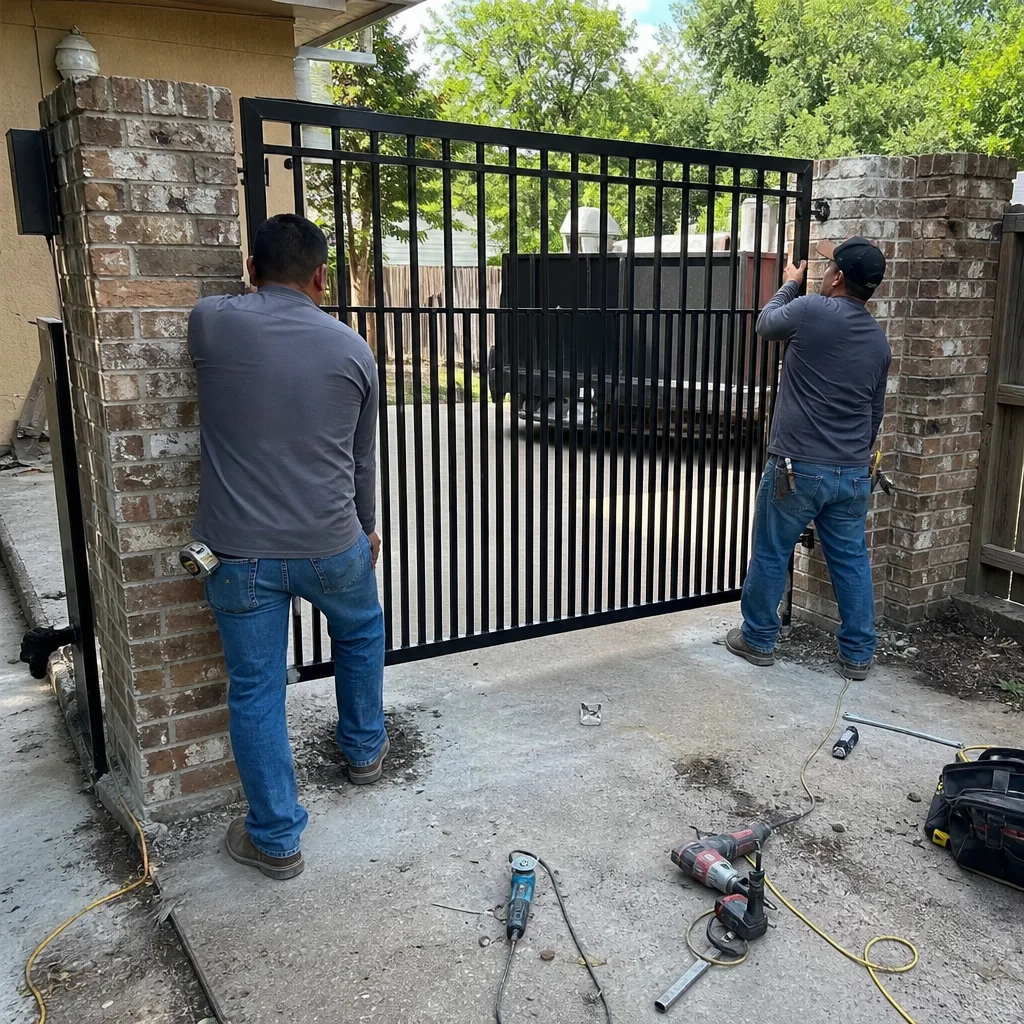
The permit question is really a classification question, and most confusion dissolves when you classify the job correctly from the start. Here’s the practical breakdown for Texas gate work:
Repair: No Permit In Almost Every Case
- Replacing a broken hinge, wheel, roller, or bracket on an existing gate
- Replacing a failed operator on a gate that already had one, using the existing electrical supply
- Repairing a cracked weld or bent gate frame without moving posts or changing dimensions
- Replacing a damaged photo-eye, keypad, or receiver
- Adjusting limit switches, force settings, or closing speed on an existing operator
None of these change the structure, the electrical supply, or the gate’s automation status. No permit needed in West University Place or anywhere else in Harris County under current codes.
Replacement: Permit Depends on Scope
- Replacing an entire gate leaf on existing posts, same size and approximately same weight - no permit
- Replacing posts because the old ones rotted or rusted out - permit required (structural)
- Replacing a hardwired operator with a different hardwired operator on the same circuit - no permit
- Replacing a hardwired operator with a low-voltage plug-in operator - no permit (electrical work actually decreases)
New Installation: Permit Required
- Installing a gate where none existed before (new posts, new gate, new everything) - structural permit
- Installing an operator on a previously manual gate - electrical and/or automation permit depending on how it’s powered
- Running new electrical service to a gate location - electrical permit
- Adding a second gate operator for a new driveway approach - structural plus electrical
What this means for your timeline: a simple operator swap is a same-day or next-day job with no inspection. A new automated gate in West University Place is a two-to-four-week project with permit, inspection, and closeout. Plan accordingly, and don’t let a contractor compress the timeline by skipping the permit. The inspection isn’t bureaucracy; it’s the record that protects you when you sell the house.
Permit Costs and Timeline in West University Place
Permit fees vary by municipality, but West University Place gate work generally falls into predictable ranges. Here’s what we tell customers based on recent jobs:
- Structural permit (new posts, new gate, gate width change): typically $150 to $350 depending on the project valuation and whether plans or site drawings are required. Most residential gate projects fall at the low end.
- Electrical permit (new branch circuit, new outlet at gate): typically $75 to $250 depending on the number of circuits and whether the panel needs work beyond the gate run.
- Combined structural + electrical (new automated gate installation): typically $300 to $600 all-in for permits and inspection fees.
- Inspection re-visit fee (if you fail the first inspection): typically $50 to $100 per additional visit, which is why prep matters.
Timeline in West University Place: plan on 3 to 7 business days for a simple permit to be issued after application, then 5 to 10 business days for the inspection scheduling window. The whole permit-to-closeout cycle for a new automated gate typically runs 2 to 4 weeks when nothing goes wrong, and 4 to 6 weeks if corrections are needed. Unincorporated Harris County runs similar on the low end but can stretch to 6+ weeks on inspection scheduling during peak building season (spring and early summer, when everyone in Southeast Texas builds at once).
Here’s the part that surprises people: the permit fee is the cheap part. The expensive part of doing it right is the licensed electrician’s time for a new circuit, or the structural engineering confirmation if you’re hanging a heavy custom gate on new posts. The permit itself is rarely the cost driver. It’s the work the permit requires that makes the job cost what it costs.
Common Mistakes to Avoid
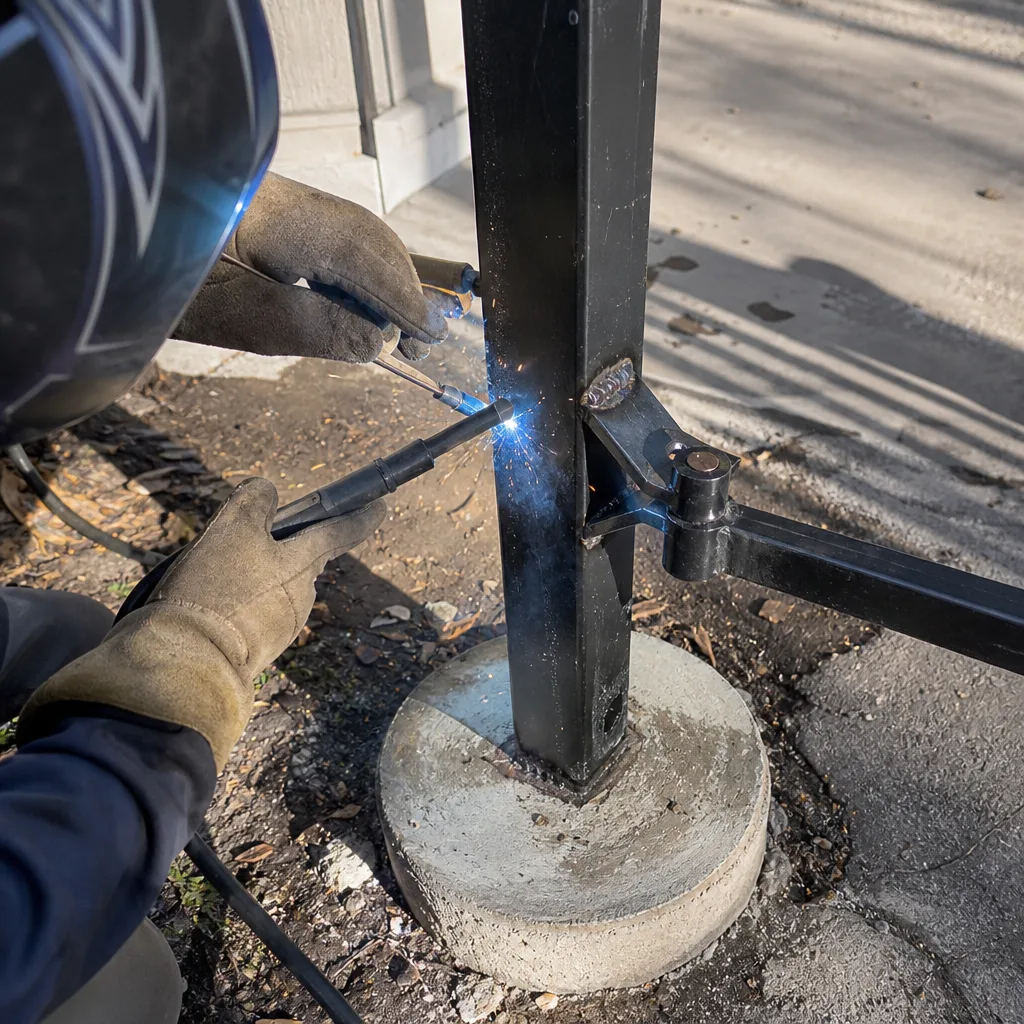
- Skipping the permit on a gate that swings over the public sidewalk. In West University Place, this is the single most common code complaint we see, and it’s almost always discovered at resale or after a neighbor files with the city. The cure is re-hanging the gate or rebuilding the swing geometry, and that costs more than the permit ever would have.
- Pulling a permit for a like-for-like operator swap. A dead LiftMaster replaced by a new LiftMaster on the same posts, same electrical, same gate is a repair. Paying $200 for a permit that wasn’t required doesn’t make the job more official; it just makes it more expensive.
- Assuming “Houston permit rules” apply inside West University Place. West U is its own municipality with its own code amendments and its own inspection pathway. County rules don’t govern inside city limits.
- Letting an unlicensed contractor pull a permit in your name. If the contractor is doing the work, the permit must be under their license in Texas. A contractor who asks you to pull the permit for their work is shifting liability onto you. Walk away.
- Disconnecting entrapment protection to stop false reversals. We see this too often: a photo-eye that keeps misaligning in the wind gets disconnected instead of properly remounted. That removes the safety device that UL 325 requires and that the inspector will check for. The fix isn’t removal; it’s better mounting.
- Running an extension cord to power a gate operator permanently. This violates NEC 400.8, is a fire hazard, and will fail any inspection that looks. The correct fix is a dedicated branch circuit in conduit, which does require an electrical permit.
- Pouring shallow footings for a heavy gate. Texas wind loads are real, and a 10-foot steel gate on under-sized footings will sag, drag, and eventually tear the posts out of the ground. The inspector checks footing depth for a reason, and in West U’s dense soil and frequent rain, depth matters more than most homeowners assume.
When to Call a Professional
Some permit items you can handle yourself, and some you shouldn’t try. If your gate work involves running a new electrical circuit, pouring new concrete footings, automating a manual gate, changing swing direction, or installing entrapment protection devices, that’s not a DIY weekend. A licensed electrician and an experienced gate contractor who will pull the permit under their own credentials are the right call. If you’re in West University Place and not sure which side of the permit line your project sits on, Vance Gate Repair in West University Place offers free estimates and a written scope of work, including the permit determination, before any tool leaves the truck. Call (346) 375-5416 and describe your gate. We’ll tell you if you need a permit, why or why not, and what the job costs in writing.
Frequently Asked Questions
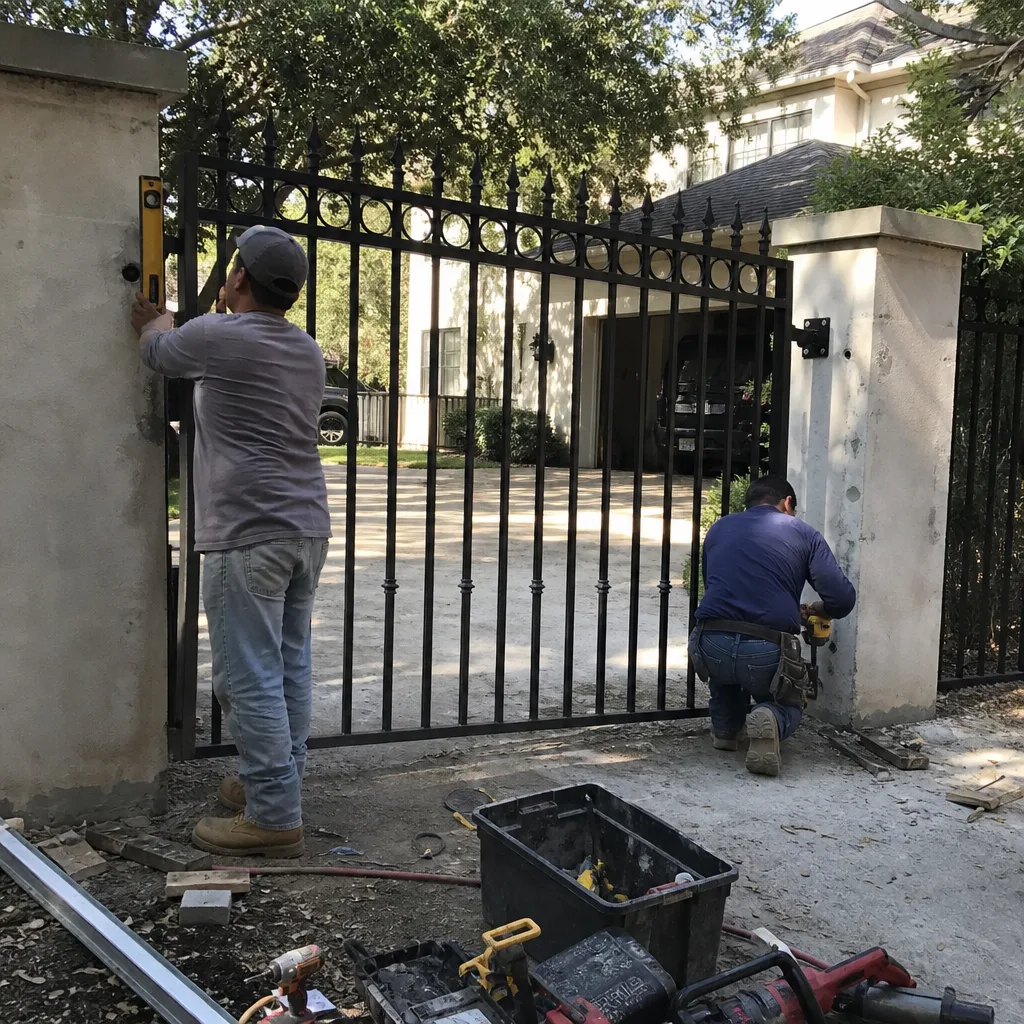
No, replacing an existing gate operator with a new operator on the same gate, posts, and electrical supply is a repair, not new construction, and does not require a permit in Texas under current residential codes. The permit only kicks in if you’re automating a gate that never had an operator before, running new electrical, or making structural changes. Call (346) 375-5416 if you want a written confirmation for your specific situation.
Yes, you can pull a homeowner permit for structural gate work you’re doing yourself on your own primary residence, but electrical permits in West University Place almost always require a licensed electrician on record. If a contractor is doing the work, the permit must be pulled under their license, not yours.
Most gate permits in West University Place run between $150 and $600 depending on scope: a structural permit for new posts or a new gate typically lands in the $150 to $350 range, an electrical permit for a new circuit runs $75 to $250, and a combined permit for a new automated gate usually totals $300 to $600 including inspection fees. The permit is rarely the expensive part of the job; the licensed work it requires is.
UL 325 is the safety standard governing automated gate operators, requiring at least two independent entrapment protection devices on residential gates. It matters because it’s incorporated into Texas code and because liability falls on the homeowner and installer if an automated gate injures someone and entrapment protection was absent or disabled. Every modern LiftMaster, FAAC, Elite, and Mighty Mule operator includes inherent force detection as one of the two devices.
Yes, installing a gate where none existed before triggers a structural permit in West University Place, and automating that gate triggers additional electrical and UL 325 inspection requirements. The only gate work that doesn’t require a permit is like-for-like repair or replacement on an existing gate, posts, and electrical supply. For new installations, gate installation in West University Place should always include the permit determination in the written quote.
In West University Place, unpermitted gate work is typically discovered at resale inspection or after a neighbor complaint, and the remedies range from paying double permit fees and scheduling a retroactive inspection to tearing out nonconforming work and redoing it to code. If the unpermitted work involves an automated gate without proper entrapment protection, the liability exposure is the larger problem. The fix is always more expensive than the original permit would have been.
The Bottom Line
The gate permit question in Texas isn’t a yes-or-no, and the people who treat it as one are the reason permit offices send out correction notices every week. The actual rule is simple to state: repair no permit, structure and new electrical permit, automating a manual gate permit. If you live in West University Place, that rule runs through the city’s building department, not Harris County, and the inspector will mostly check disconnect means, entrapment protection, right-of-way clearance, and footings. A gate operator swap on an existing gate is one of the most straightforward repairs in the trade, and it almost never needs a permit. A new automated gate is a construction project with code obligations, and the permit is the record that protects your resale. If you’re on the fence, get a gate motor professional in West University Place to give you a written determination: it takes one visit to know which side of the line you’re on. Call (346) 375-5416 for a free estimate, in writing, before any work starts.
Written by Adrian Vance, Owner at Vance Gate Repair West University Place, serving West University Place since 2014. Browse our more guides & resources for Texas gate owners.