
Last updated September 20, 2026
Free on-site gate assessment - hinges, posts, and your LiftMaster or Nice gate operator checked before anything is quoted
The assessment is free and the quote is the invoice.

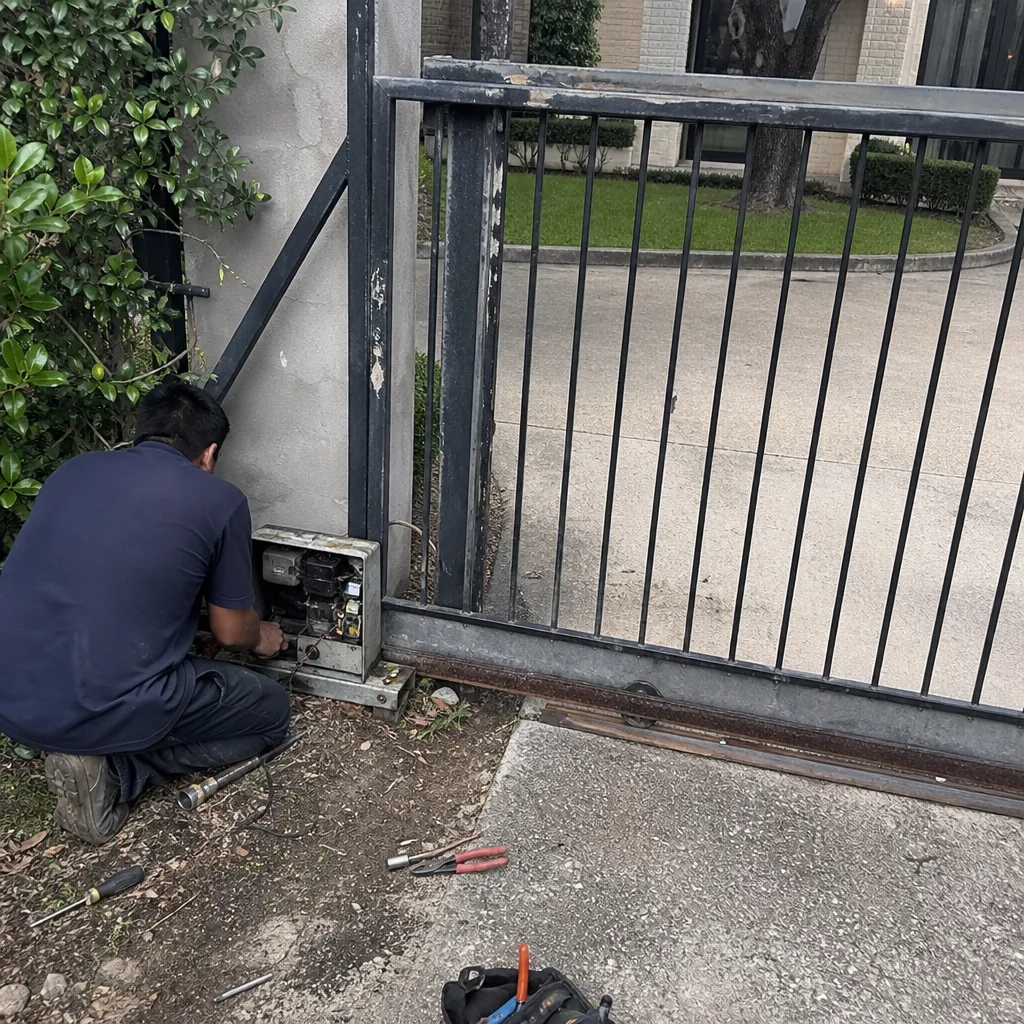 Before
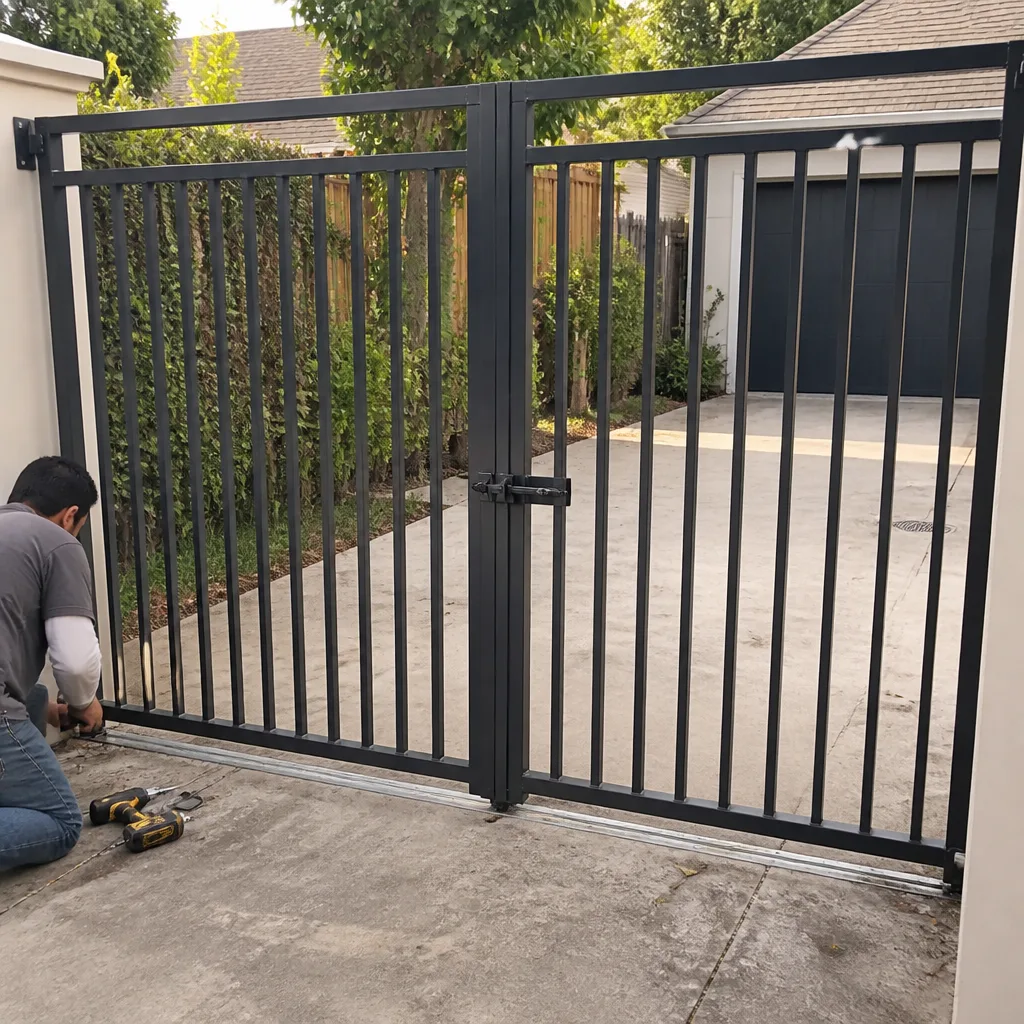 After
After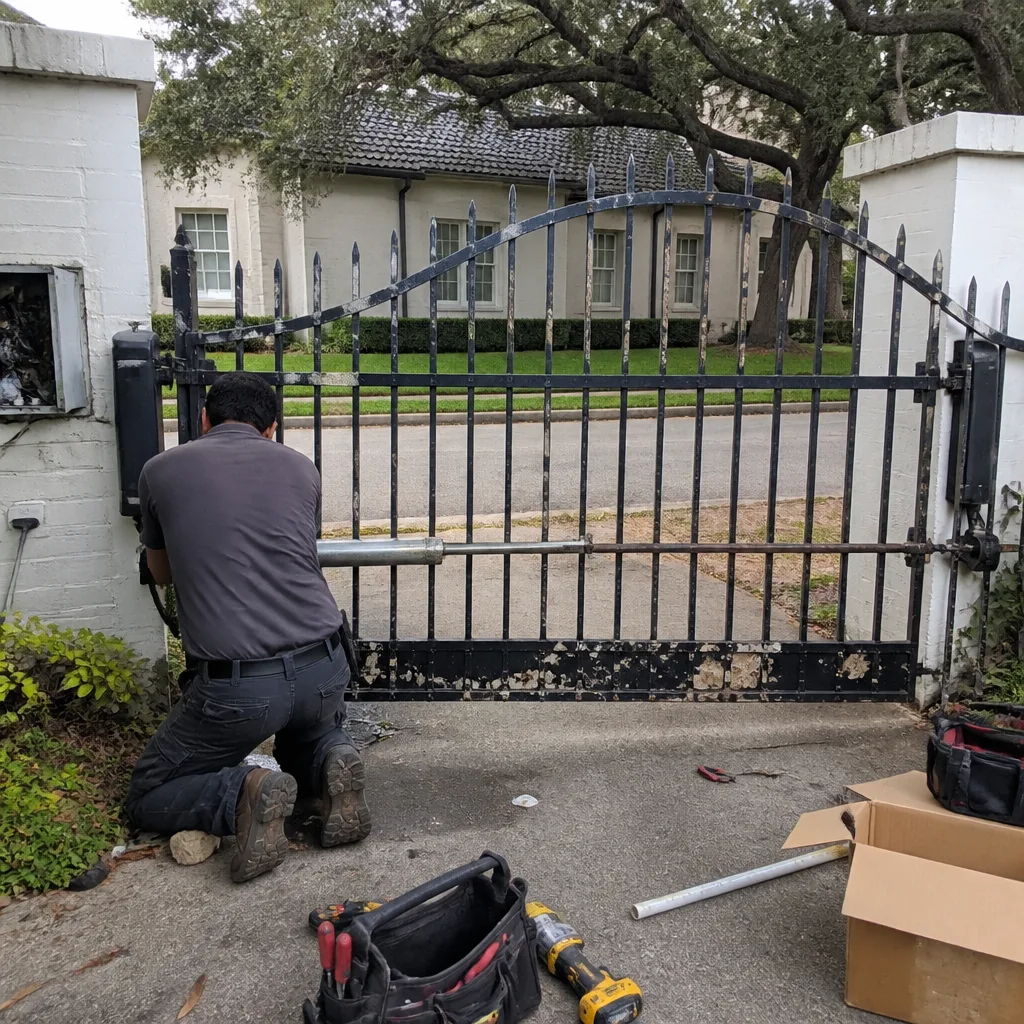 Before
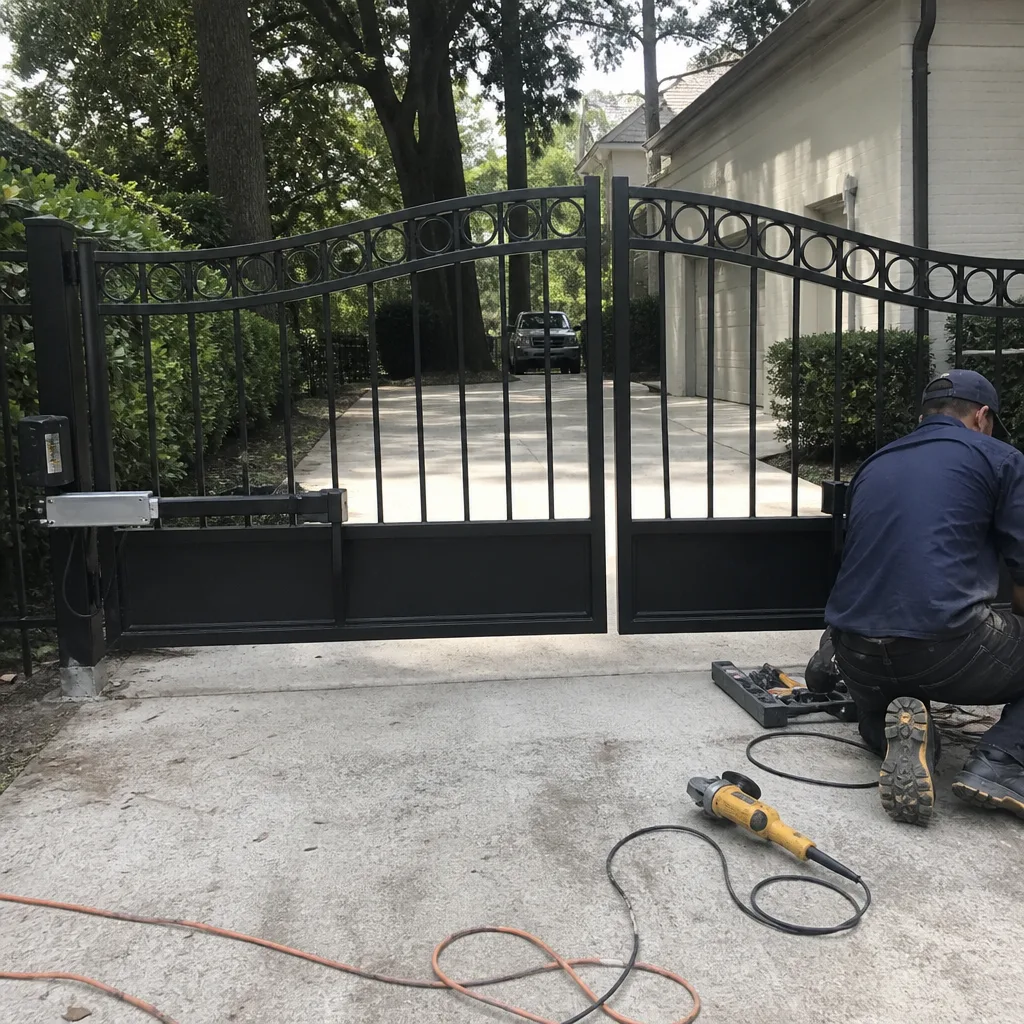 After
After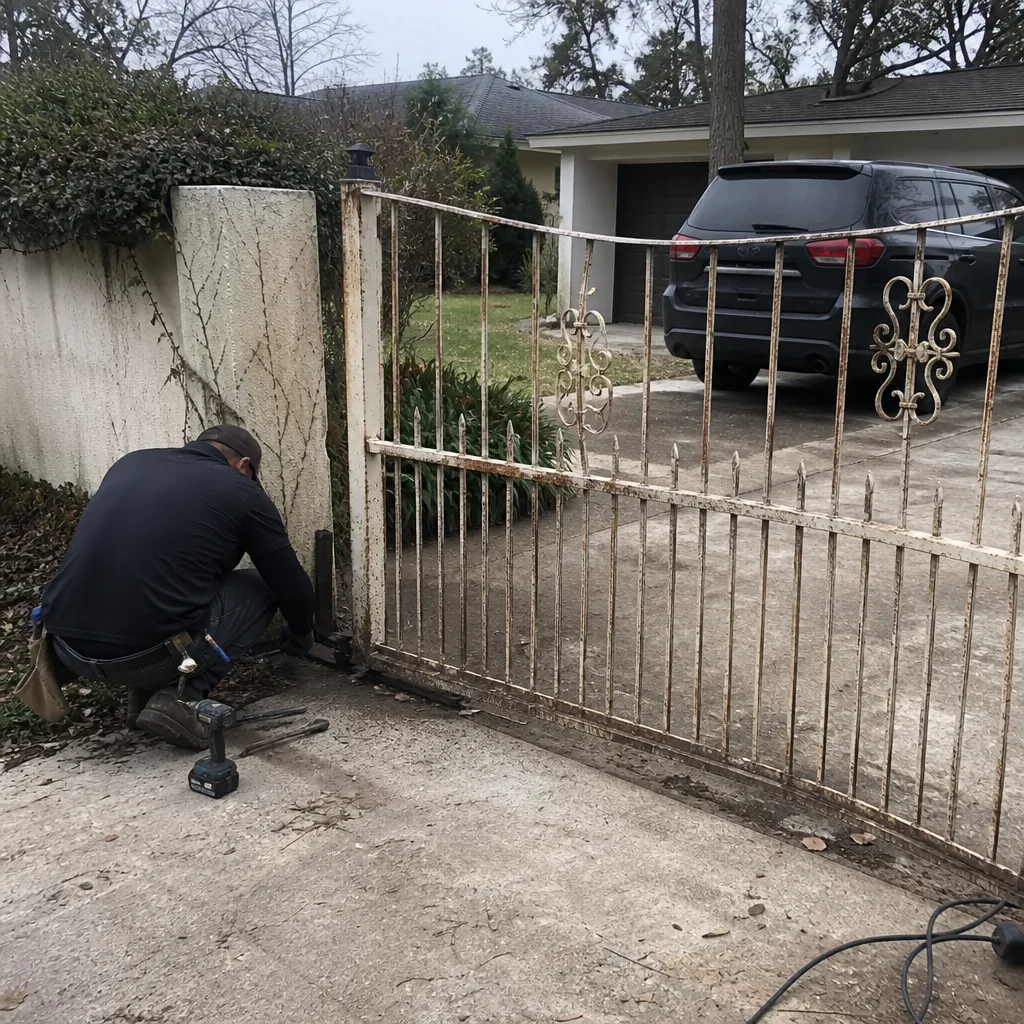 Before
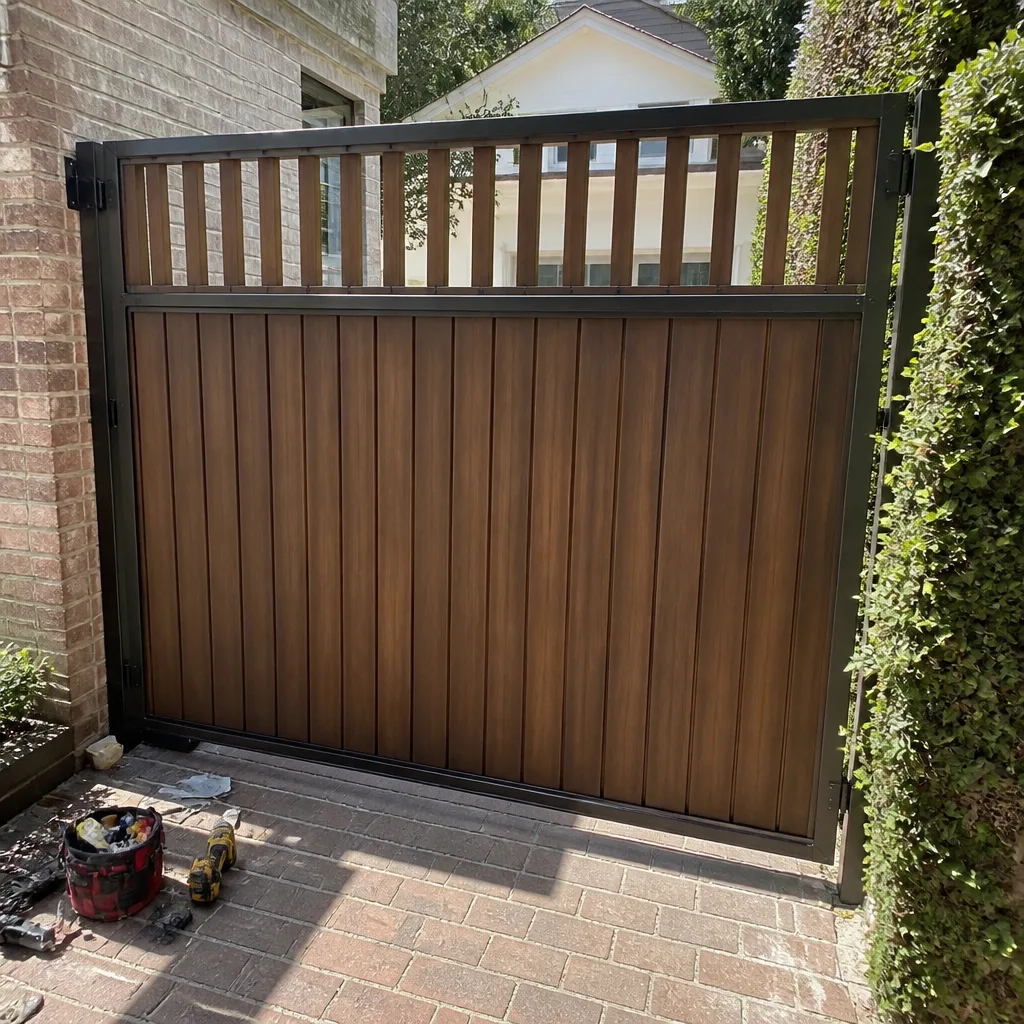 After
AfterSeasonal Gate Repair Care for West University Place: Year-Round Homeowner’s Guide
Gate guides written for the national market tell you to winterize your gate in October. In West University Place, October is still 85 degrees and the real threat is the salt-laden humidity that’s been accumulating since April. This guide stops pretending we have four seasons worth of gate stress. We have two: a six-month corrosive humidity window and a short freeze-event stretch that accounts for most operator and hinge failures. You’ll learn what to check each month, which lubricants actually survive Gulf Coast air, what to do after a named storm, and how to keep a photo record that shows you exactly when a part started wearing. For hands-on help, see our Gate Repair services.
Quick Answer
Seasonal gate care in West University Place means two focused checks per year: a late-spring corrosion inspection before the worst humidity arrives, and a January freeze-prep pass for the handful of ice events Houston averages. In practice, that comes down to inspecting hinges, photo-eyes, ground loops, and control boards, plus swapping to a marine-grade lubricant that won’t break down in wet air. Skip the October winterization routine built for northern climates: it doesn’t match the failure patterns we see in West University Place, and it doesn’t protect the components that actually fail here. For deeper reading, see DIY vs Professional Gate Repair: The West University Place Homeowner’s Decision Guide.
Table of Contents
- Why West University Place Has Two Seasons, Not Four
- The May-September Humidity Window: What It Actually Damages
- Lubricants That Hold Up in Gulf Coast Humidity
- Preparing for Freeze Events Without Over-Engineering
- Storm-Season Checklist: After a Named Storm or Flood
- Documenting Seasonal Wear So You Can See the Trend
- Common Mistakes to Avoid
- When to Call a Professional
BeforeAfterWhy West University Place Has Two Seasons, Not Four
West University Place sits in a subtropical climate. That’s not a throwaway line. It means the air carries moisture and salt into every hinge pin, every circuit board, every limit switch on your gate system from roughly April through October. The humidity doesn’t just sit there either. It cycles. Hot days push moisture into micro-crevices in metal and electronics. Slightly cooler nights pull it back out, leaving behind whatever the air brought with it: salt, road film, fine clay dust. Over six months, that cycle works like a slow pump, pulling contaminants deeper into components than you’d ever see in a dry climate.
The actual failure data matches this. In our experience across gate repair work in West University Place, the majority of corroded hinge pins, faulty photo-eyes, and dead control boards come in between August and November, not December and February. The damage happened during the humid season; the failure just showed up later.
The second season is short and sharp. Houston averages two to four freeze events per year, and they rarely last more than 48 hours. But those 48 hours can crack a plastic limit-switch housing, expand moisture inside a keypad, or snap a gate chain that lost its coating six months earlier to salt air. Freeze events are the reveal, not the cause. The cause was the humidity window.
So the practical takeaway is this: your maintenance calendar should front-load work into May and June, then do a light check in early January. That’s it. Two passes a year, aimed at the right components at the right time.
The May-September Humidity Window: What It Actually Damages
High humidity is a slow corrosion driver, not a dramatic one. It doesn’t blow a gate over like a hurricane. It doesn’t crack parts like a hard freeze. It oxidizes, it expands, it shorts, it seizes. And it does its work while the gate appears to be functioning normally. Here’s the order in which we see damage appear on West University Place gates:
1. Hinge pins and bearing surfaces
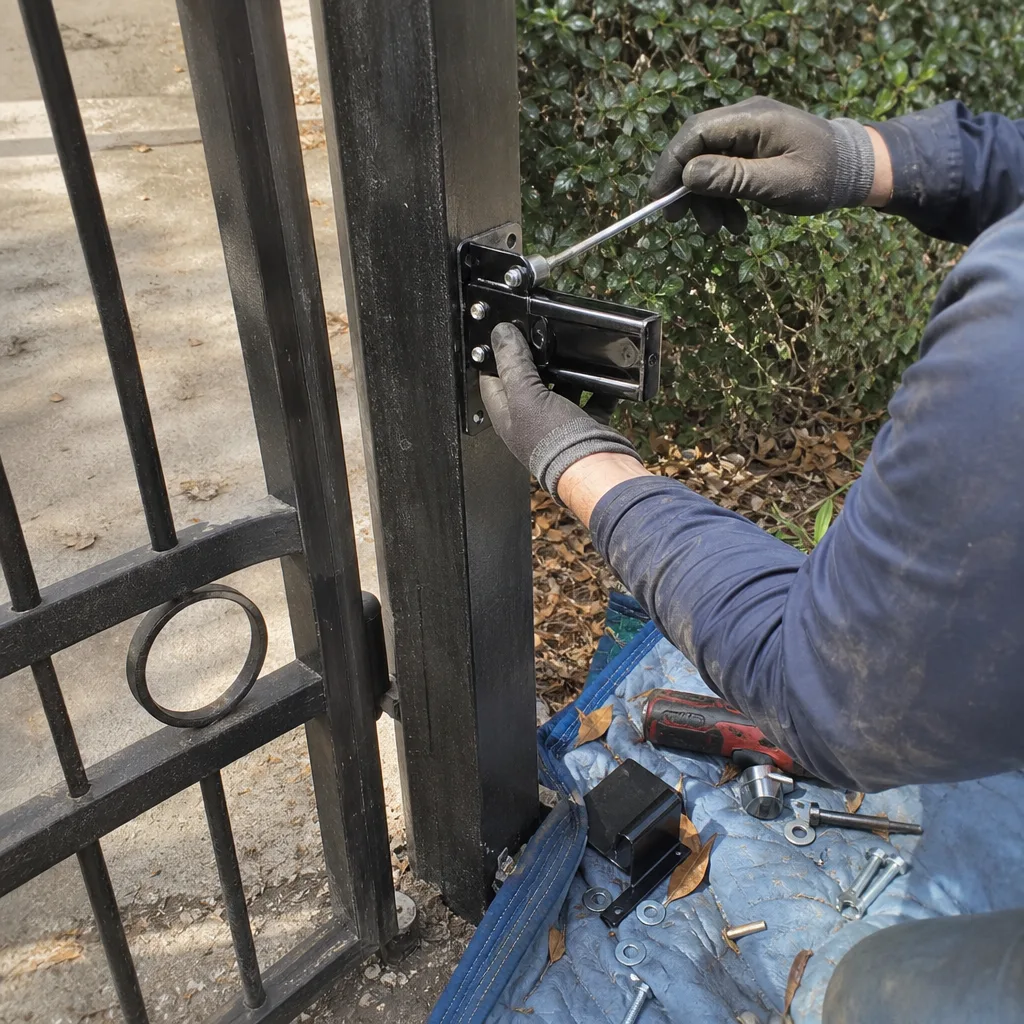
Hinges are the first to go. They’re constantly loaded, they’re exposed on every side, and they trap moisture where the pin meets the leaf. What starts as a light orange dusting becomes a rough surface, then a tight spot in the swing, then a seized hinge that overloads the opener. We’ve replaced plenty of openers that were killed not by their own failure but by a hinge that froze up and made the motor work against solid resistance for weeks.
What to do: in late May, lift the gate leaf slightly (or use a pry bar under the edge) and feel for vertical play. More than an eighth of an inch of movement at the hinge means the pin is wearing. Mark it. Photograph it. Schedule a hinge replacement before the heavy summer heat makes the problem worse.
2. Photo-eyes and safety edges
West University Place lots are tight. Gates often sit close to sprinkler heads, and spray drift gets into photo-eye housings and safety edge channels. Photo-eyes are especially vulnerable because they’re mounted low and their lens surfaces collect condensation. A photo-eye with moisture behind the lens will pass power but fail to reflect consistently, and the gate will reverse for no apparent reason or refuse to close at all.
What to do: wipe the lens with a dry cloth in late May, then check it again after the first significant rain. If the housing shows fog, the seal has failed and the eye needs to be opened, dried, and resealed with a marine-grade sealant. Don’t drill drain holes. That works in some climates and invites ants in this one.
3. Control boards and limit switches
Control boards don’t like temperature swings combined with moisture. In West University Place, the pattern is classic: a board works fine all winter, starts glitching in July, and dies in September. The failure often happens at a solder joint or a ribbon connector that absorbed moisture during a cool, wet spring and then cooked in a 100-degree cabinet during August. Limit switches (the components that tell the opener where the gate stops) are similarly vulnerable, especially the plastic-housed type used on some gate motor and opener models.
What to do: open the control box once in June. Look for any white, chalky residue on terminals or board edges. If you see it, call a technician before the board fails. Cleaning it early is a $150 visit. Replacing the board after it shorts is a $600 to $1,200 repair depending on the brand. On FAAC and BFT boards especially, corrosion tends to creep in from the low-voltage terminals.
4. Ground loops and vehicle detectors
West University Place soil holds water. When ground loops (the buried wire loops that detect a vehicle) sit in saturated soil for months, the wire insulation can break down and the loop stops detecting. The symptom is a gate that opens fine on the remote but won’t open automatically when you pull up to it.
What to do: test the loop in June by driving a vehicle onto the loop zone and watching whether the gate responds. If it doesn’t, note whether the problem is intermittent or constant. Intermittent loop failures are often a wire splice degrading in moist soil. Constant failures are more often a loop break. Both are fixable, but they require a loop detector and some trenching. The alternative, replacing the loop with a photo-beam or radar sensor, is sometimes a better long-term fix on West University Place properties where sprinkler systems and soil movement keep stressing buried loops.
Lubricants That Hold Up in Gulf Coast Humidity
Most gate maintenance articles recommend a silicone spray or white lithium grease and leave it at that. In this climate, that advice creates two predictable failures. Silicone spray washes off in weeks and does almost nothing for a loaded hinge. White lithium grease dries into a paste, then attracts dirt and turns into an abrasive compound that accelerates hinge wear. Neither holds up in 80% humidity with daily heat cycling.
What we use and recommend for West University Place gates:
- Marine-grade grease for hinge pins and bearing blocks. Look for a calcium-sulfonate or lithium-complex marine grease. These are designed for saltwater trailer bearings and they handle humidity without breaking down or washing out. A single application in May will last through October.
- Corrosion inhibitor for exposed steel surfaces. A lanolin-based spray or a light oil-based product like CorrosionX or Fluid Film penetrates existing rust and leaves a film that resists salt air. This goes on hinge plates, the base flange of slide gates, and the bottom rail of steel panels.
- Dry PTFE spray for slide-gate track rollers. You want lubrication without attracting dirt. A dry PTFE doesn’t leave a wet film, so it won’t pick up the fine dust that blows through West University Place alleys.
- No WD-40 as a lubricant. WD-40 is a water displacer and a cleaner. It lubricates for about a week. Use it to clean a rusted part, then apply a real lubricant over it.
One more thing worth knowing: over-greasing a hinge is worse than under-greasing. Excess grease holds grit, and grit in a hinge acts like lapping compound. A small amount of marine grease worked into the pin, wiped clean on the outside, is the right amount. If you can see a glob of grease, there’s too much.
Preparing for Freeze Events Without Over-Engineering
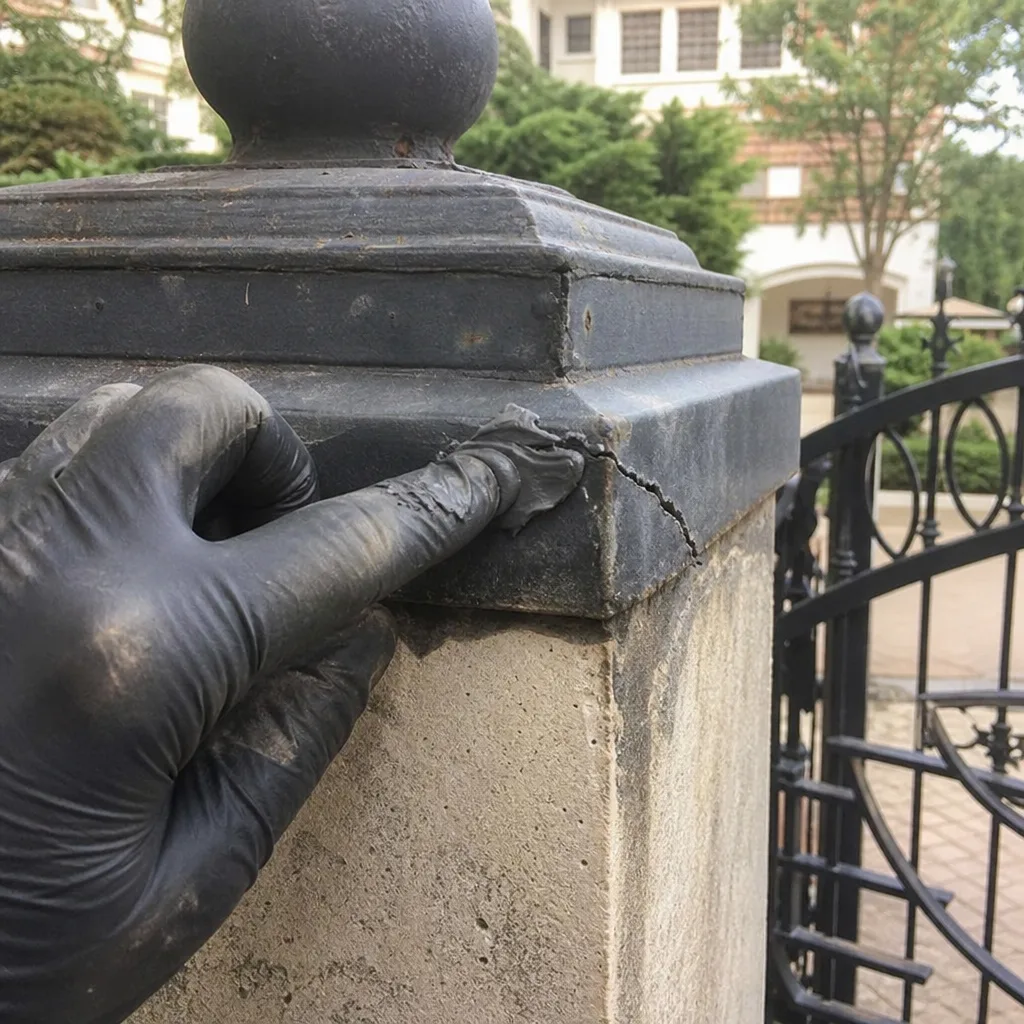
A lot of national gate advice is written for places where the ground freezes for months. West University Place gets a handful of cold nights, most of which stay just under 32 degrees for a few hours. The right preparation is light. You’re protecting against two things: moisture that freezes and expands inside components, and the rare hard-ice event that makes the gate heavy and the operator strain.
Early January checklist
- Check the weather seal on the control box. Open the box, inspect the gasket, and make sure the lid seats fully. If the gasket is cracked or missing, replace it. This is a $10 part that protects a $400 board.
- Blow out the keypad and photo-eye housings with compressed air. A can of compressed air or a leaf blower on low setting is enough. You’re removing any sitting moisture before it freezes.
- Test the manual release. Every automatic gate has a manual release mechanism. You want to know it works before you need it. If the gate loses power during a freeze event, the manual release is how you get in and out. Test it in January, not in the middle of an ice storm.
- Check the chain tension on slide gates. Cold contracts metal. A chain that was fine in August can be too tight in January, and an overtightened chain wears the sprockets and the motor bearing. About a half-inch of deflection at the midpoint of the chain run is right for most systems.
- Look at the gate’s bottom edge. If you have a swing gate and the bottom rail is within a few inches of the ground, ice can accumulate under it and block the swing. You can’t prevent ice, but you can make sure the gate isn’t already dragging on the ground from hinge wear.
That’s the whole list. No heat lamps, no pipe insulation on the gate, no special winter lubricant swaps. The gate systems on West University Place homes are overwhelmingly rated for colder temperatures than we ever see here. The real freezer risk is a small amount of trapped water, and that’s handled by the checklist above.
Storm-Season Checklist: After a Named Storm or Flood
Houston’s storm season is its own maintenance trigger. When a named storm passes or streets flood, the gate system may look fine while hiding real damage. Water can move through the control box, pool in the operator enclosure, or shift the gate posts a fraction of an inch. That fraction matters. A gate that’s out of plumb by even a quarter-inch puts uneven load on the hinges and the operator, and the resulting wear shows up months later as a failed motor or a sagging leaf.
After the rain stops and the streets drain, run through these checks before you re-energize the system if you shut it down, or before you trust it again if you left it running:
- Look inside the control box. Any moisture, mud, or insects? If you see water line marks inside the box, do not power the system back on. Water inside the enclosure means a risk of shorting, and the board needs to come out, be inspected, and be dried. A board that was submerged or heavily condensation-soaked is a replacement candidate, not a repair candidate.
- Check the concrete around the gate posts. Walk around each post and look for fresh hairline cracks in the concrete or soil that’s washed out around the base. If you can rock the post by hand, the gate is no longer safe to operate and needs a post reset before further use.
- Test the photo-eyes and safety edges twice. Wave a hand in front of each photo-eye while the gate is closing. Use a rolled-up towel if you don’t want to get close. The gate should stop and reverse. Test every safety device, not just one.
- Check the operator cover and mounting bolts. If the cover shows impact marks or the bolts have loosened, tighten what you can and photograph what you can’t. Debris moving through floodwater can hit a slide-gate operator and shift it on its mount.
- Run the gate through three full cycles and listen. A changed sound means changed mechanics. A new squeal, a slower travel speed, a hesitation on start, or a clunk at the end of travel all deserve a note in your maintenance log and a call if they persist.
One note on floodwater: if the water level reached the operator, the control board, or the battery backup, treat the system as compromised even if it appears to power up. Corrosion from floodwater starts immediately and doesn’t need weeks to cause damage. We’ve opened boxes that looked fine on the outside and found board corrosion starting at the lowest-mounted terminals within days of a flood event.
Documenting Seasonal Wear So You Can See the Trend
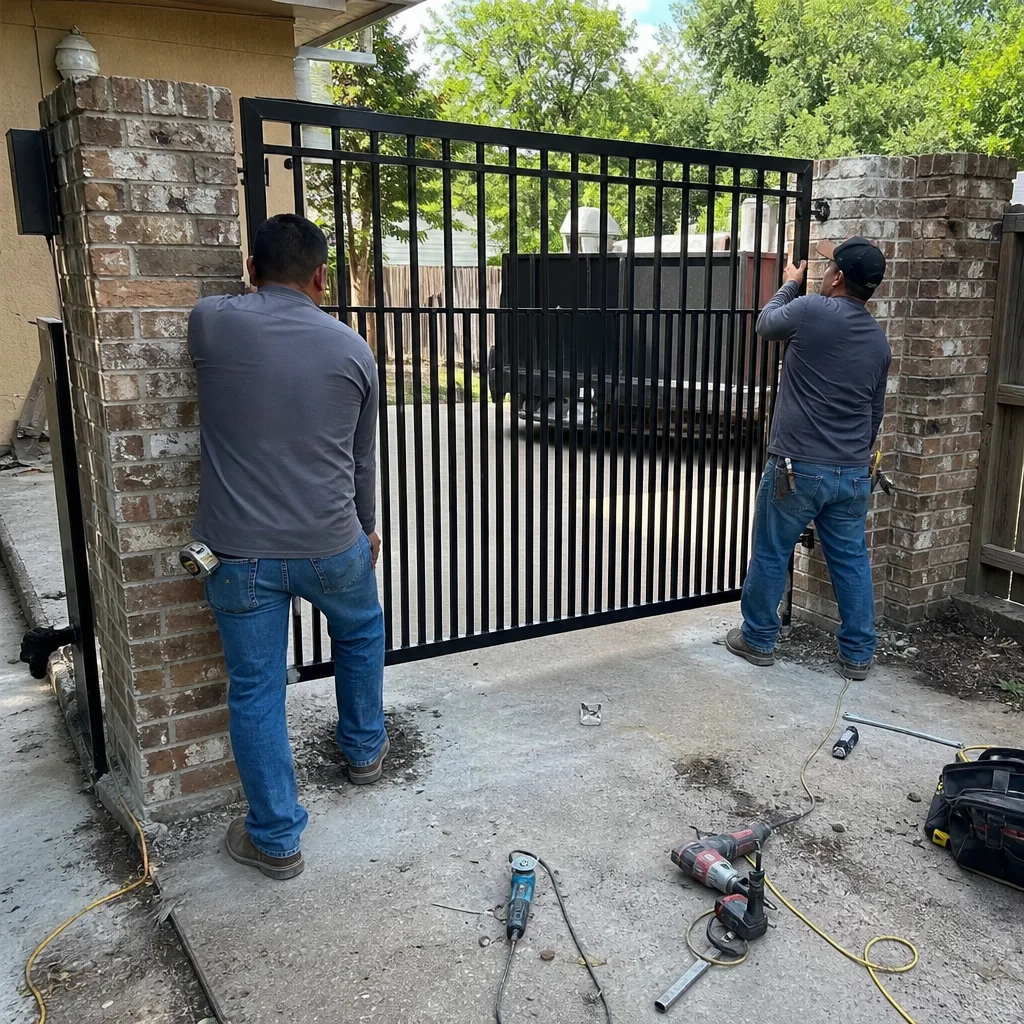
A single photo of a hinge tells you almost nothing. Two photos of the same hinge taken six months apart tell you everything. This is not an overcareful habit. It’s the cheapest early-warning system a homeowner has, and it’s the same method Vance Gate Repair uses on every commercial and residential gate we service: photograph the same components from the same angles on a schedule, and compare. For a full walkthrough, read The Complete Guide to Gate Repair in West University Place.
What to photograph:
- Each hinge pin from the top and side. You’re looking for rust color changes, visible play, or a growing gap between the hinge knuckles.
- The bottom edge of each gate leaf. This is where corrosion starts on most steel gates, and where you’ll first see rot on wood gates.
- The control board. A wide shot of the board and terminals. Use the same angle every time. You’re looking for color changes on the terminals, white residue, or insect activity.
- The photo-eyes. From the sensor side, showing the lens and the housing seal.
- The gate in the fully open position, standing back. You’re looking for a change in the resting angle, droop, or ground clearance.
Keep the photos in a folder on your phone or cloud drive with the date in the filename. Gate photos alone cost nothing and take five minutes twice a year. If a technician ever asks, “When did the hinge start wearing?” you’ll have the answer in the file. Under the Haven Standard, we do this documentation on every service visit. For homeowners, it’s the single highest-value habit in this entire guide.
Common Mistakes to Avoid
- Using WD-40 and calling it lubrication. WD-40 is a cleaner and water displacer. It evaporates, and there’s no film left behind after a week in this humidity. Use marine grease on hinges and dry PTFE on rollers.
- Ignoring a photo-eye that reverses intermittently. That intermittent reversal is early moisture or alignment drift. It won’t get better. It gets worse until the gate stops closing entirely, usually when you’re already late for work.
- Waiting until a freeze is forecast to test the manual release. The first time you pull a manual release should not be in the dark, in the cold, with ice on the ground. Test it in January before the weather arrives.
- Power-washing the gate and the control box. High-pressure water drives moisture into hinge seals, keypads, and the control enclosure. Use a hose with a spray nozzle at low pressure, and keep water away from the operator entirely.
- Ignoring a slower gate. Speed changes on an automatic gate mean something: a worn capacitor, a tired motor, a dragging hinge, or a stretched chain. The gate doesn’t slow down because it’s old. It slows down because something changed.
- Skipping the post-storm check because the gate opens. “It still works” is the most expensive sentence in gate maintenance. A gate can work fine while flood damage is eating the board from the inside. The second-most expensive sentence is “I’ll get to it next spring.”
When to Call a Professional
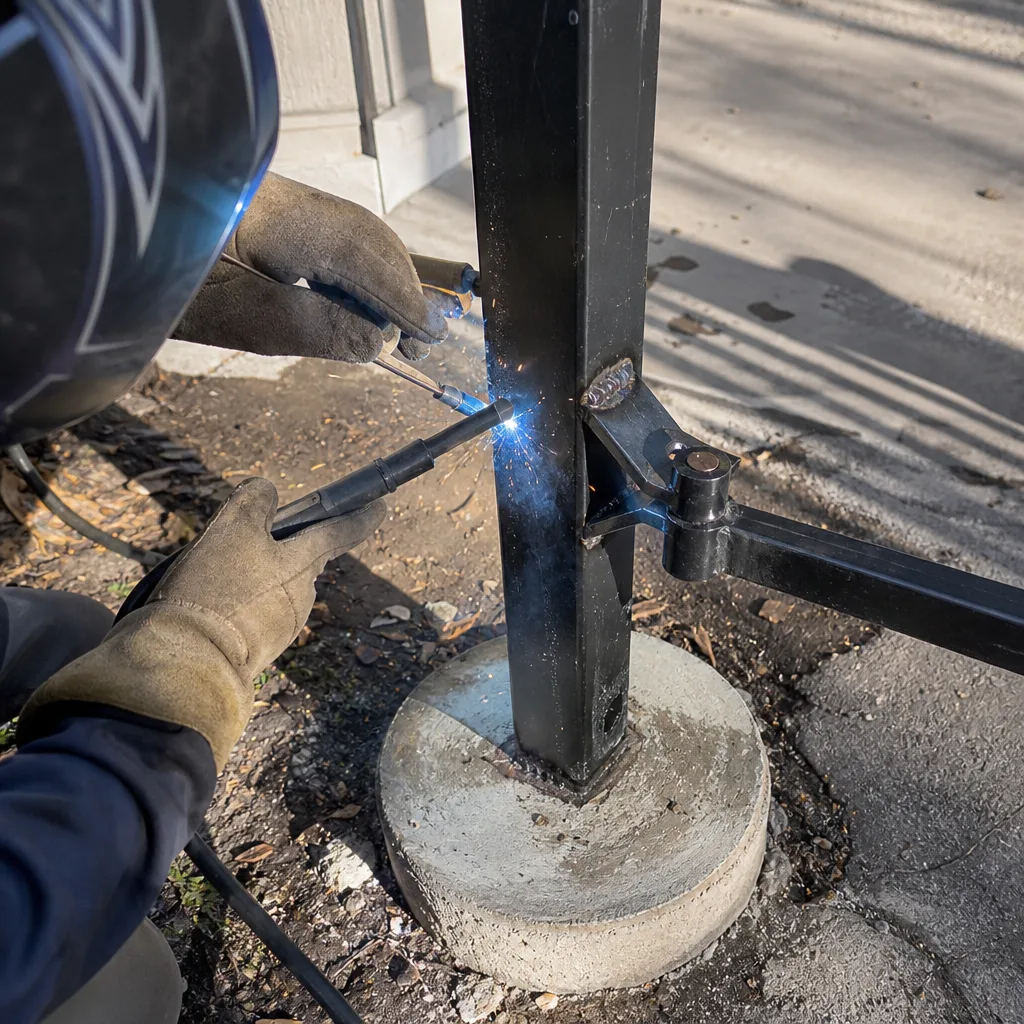
Some seasonal care is a homeowner job: checking for play, wiping photo-eyes, taking photos, testing the manual release. Some is not. Call a professional when you see white corrosion residue on a control board, when the gate post moves by hand, when the gate reverses for no reason after you’ve cleaned the photo-eyes, when you hear a new mechanical noise during travel, or when any safety device fails a self-test. These are not maintenance items. They’re failure-in-progress items, and the gap between noticing them and paying for a major repair is often measured in weeks, not months.
Vance Gate Repair West University Place provides written pricing before any work starts, and every visit includes a documented photo record of what was found and what was fixed. We work on nine major gate automation brands including Linear, Viking, FAAC, and BFT, and we serve homeowners throughout West University Place. The estimate is free. The Hablamos de su portón. The phone number is (346) 375-5416.
Frequently Asked Questions
Twice a year. Do a thorough inspection in late May before the humidity window fully opens, and a lighter freeze-prep check in early January. Monthly visual checks are nice to have but not necessary if you’re following the twice-yearly schedule consistently. Find more guides & resources on our blog. Call (346) 375-5416 if you find something during a check that you can’t identify.
Corroded hinge pins are the most common gate failure we see in West University Place, followed closely by moisture-related photo-eye failures and control board corrosion. Call (346) 375-5416 for a free estimate if your hinges are showing rust or play.
No. October in West University Place is typically warm and humid, and winterizing advice written for northern climates doesn’t address the failure patterns we see here. Do your major maintenance pass in late May or early June, and a lighter pass in early January before the freeze window. There’s no month in West University Place where an October-style winterization makes sense.
In this climate, no. Standard white lithium grease dries into a paste and holds grit. Use a calcium-sulfonate or lithium-complex marine-grade grease, applied lightly, once per year. If you’re not sure what you’re looking at on the shelf, call (346) 375-5416 and we’ll point you to a product we use in the field.
Do not assume it’s fine because it still opens. Inspect the control box for water lines or moisture, check the concrete around the gate posts for fresh cracks, test every safety device, and have a professional open and inspect the control board if the water reached the operator. If there’s any doubt, call (346) 375-5416 before re-energizing the system to avoid turning a wet board into a burnt one.
Most seasonal maintenance visits in West University Place run between $120 and $250 depending on what’s checked and whether minor adjustments or lubricants are included. A hinge replacement typically adds $85 to $200 per hinge depending on the gate material and access. If you’re considering a full gate installation in West University Place, a seasonal check is a good way to assess what’s worth keeping. Call (346) 375-5416 for an exact written price before any work starts.
The Bottom Line
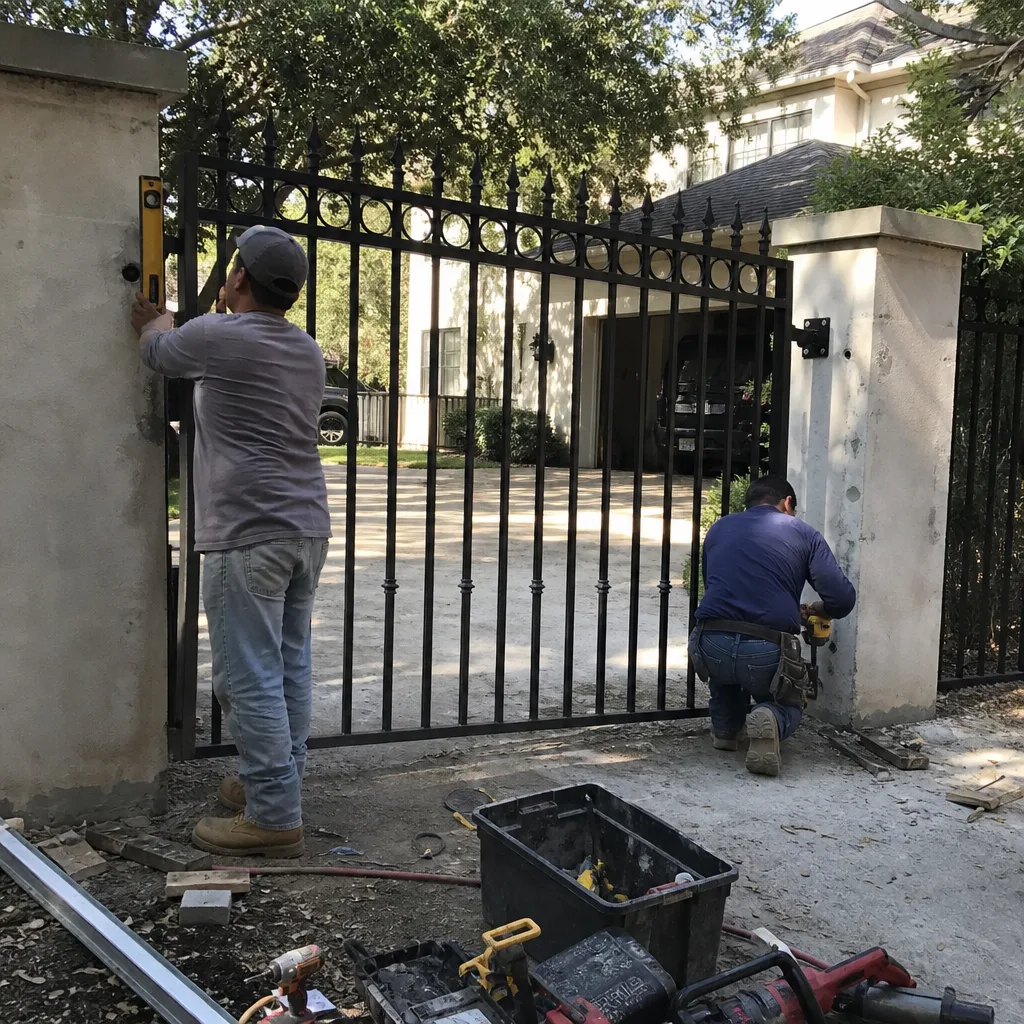
West University Place gate care is not a four-season calendar. It’s a two-threat calendar: a six-month humidity window that corrodes hinges, photo-eyes, and control boards, and a short freeze window that reveals whatever the humidity damaged. Your entire maintenance year hangs on two passes: a thorough inspection in late May with marine-grade lubrication, and a light freeze-prep in early January. Photograph the same components on a schedule and keep the files. After any named storm or flood, run the checklist before you trust the gate. And if you find corrosion, play, or a changed sound, call (346) 375-5416 and get the written price before the work starts.
Written by Adrian Vance, Owner at Vance Gate Repair West University Place, serving West University Place since 2014.